
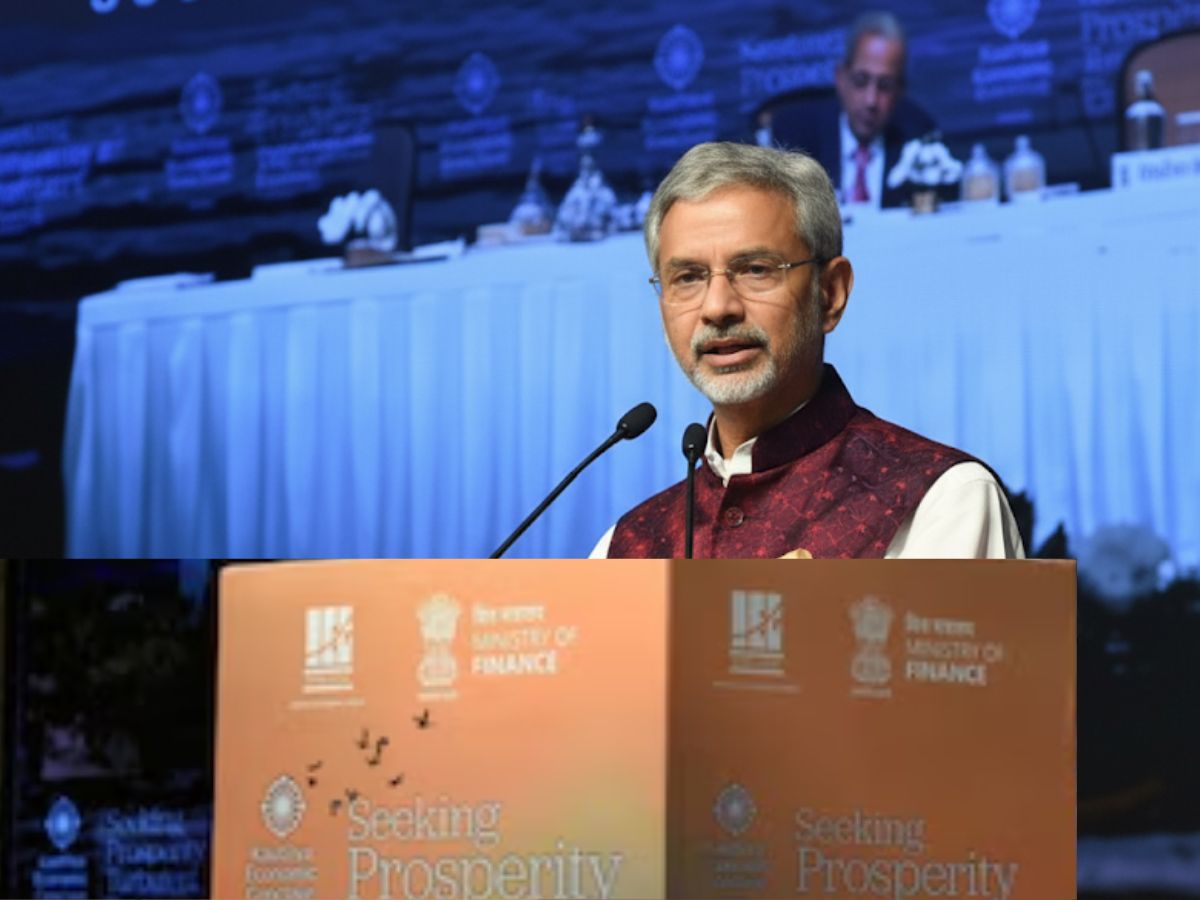
In a clear message to the United States, India’s External Affairs Minister, S. Jaishankar, stated that any future trade understanding must respect India’s “bottom lines” and “red lines.” This firm stance comes as the American administration under Donald Trump continues to press for wider access to the Indian market.
Jaishankar’s remarks show that both countries are struggling to close a trade deal that’s been stuck for months.
What Are India’s “Red Lines”?
So, what exactly are these non-negotiable points for India? While Jaishankar did not expressly list them during his discussion at the Kautilya Economic Enclave in New Delhi, he strongly hinted at their nature. The core “red lin es” are understood to be centered on protecting India’s sensitive agriculture and dairy sectors from foreign competition. This aligns with Prime Minister Narendra Modi’s repeated assurance that he “will protect the farmers at any cost.” For India, allowing easier access to these sectors is a point it is “not fine with,” making it a cornerstone of its defensive trade policy.
The Sticking Points in Trade Talks
The inability to find common ground on these and other issues has had direct consequences. Jaishankar pointed to the “certain tariff being levied on India” by the US. This refers to a 25% reciprocal tariff, plus an additional 25% levy that the Indian minister described as a “penalty” for buying Russian oil. He called this extra charge “very unfair,” noting that other countries with a “far more antagonistic relationship with Russia” are also purchasing Russian energy but have not faced similar punitive measures from the US.
A Relationship of Mixed Signals
The tough trade talk exists alongside a show of personal bonhomie between the leaders. Trade discussions resumed after a thaw in the relationship between Prime Minister Modi and President Trump. However, the path forward remains unclear. Will they be able to reach the first part of a deal this fall, as was initially envisaged? The uncertainty is compounded by mixed signals from the US. Trump has veered from calling PM Modi a “good friend” to labeling India a funder of Russia’s war in Ukraine. Meanwhile, US Commerce Secretary Howard Lutnick bluntly stated that countries needing to “open their markets” must “play ball with the President of the United States.”
Also Read: Who Is Mark Sanchez? NFL Star’s Net Worth, Career & Arrest in Indianapolis
Looking Inward for Solutions
Faced with these external pressures and what Jaishankar termed the “inward-looking policies of the US,” India is focusing on internal strength. The minister emphasized that the answer to a more difficult world is not just found externally; “a large part of that answer is inside.” This appears to be a direct allusion to the government’s heightened push for “swadeshi” or made-in-India goods and services. As global trade dynamics become trickier, self-reliance is being touted as a key strategy for navigating turbulent times.
Disclaimer: This article is based on factual statements and events derived from the provided content.