
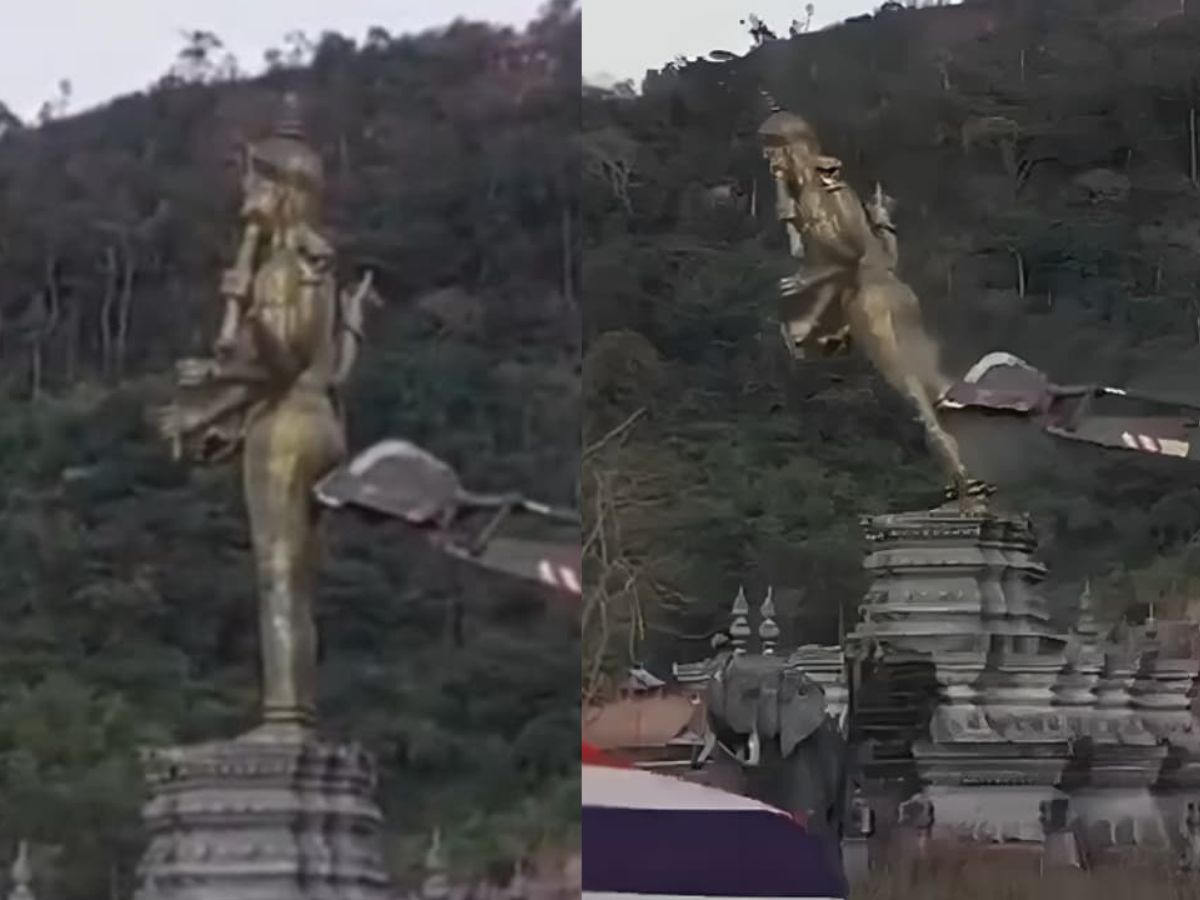
India has expressed strong concern over the demolition of a Lord Vishnu statue in a disputed area along the Thailand-Cambodia border, calling the act deeply hurtful to religious sentiments across the world. The response came as visuals of the statue being bulldozed spread rapidly on social media, triggering outrage among devotees and cultural groups.
The Ministry of External Affairs (MEA) said it had taken note of reports related to the destruction of the Hindu deity and stressed the importance of protecting shared cultural and religious heritage, even in conflict zones.
What India Said on Vishnu Statue Demolition?
Reacting to the incident, MEA spokesperson Randhir Jaiswal said, “We have seen reports on the demolition of a statue of a Hindu religious deity, built in recent times, and located in an area affected by the ongoing Thai-Cambodia border dispute. Hindu and Buddhist deities are deeply revered and worshipped by people across the region, as part of our shared civilizational heritage.”
India also urged restraint and dialogue, warning against actions that damage religious symbols. “Notwithstanding territorial claims, such disrespectful acts hurt the sentiments of followers around the world, and should not take place.
We once again urge the two sides to return to dialogue and diplomacy, to resume peace and avoid any further loss of lives, and damage to property and heritage,” the statement added.
Where and How the Statue Was Destroyed?
The Lord Vishnu statue stood near the Thailand-Cambodia border in an area affected by ongoing military tensions. Reports say Thai military engineers used a bulldozer to topple the statue, which was constructed in 2014. A video of the demolition quickly went viral, intensifying anger online. Thai authorities have not issued an official statement on the incident so far.
Cambodia’s Reaction to the Incident
Cambodia has also criticised the demolition, claiming the statue was located within its territory. “The statue was inside our territory in the An Ses area,” Kim Chanpanha, a Cambodian spokesman in Preah Vihear province, said. The statement added fuel to an already tense border situation between the two Southeast Asian neighbours.
Thailand-Cambodia Border Dispute Explained
Clashes between Thailand and Cambodia began in July following disagreements over border claims. Though both sides agreed to a ceasefire brokered by US President Donald Trump, fighting resumed earlier this month. The statue demolition has now added a cultural and religious dimension to the conflict.
Why the Issue Matters Beyond Borders?
The controversy highlights how cultural symbols often become silent victims during territorial disputes. Experts say damage to religious heritage risks widening conflicts by drawing emotional responses from communities far beyond the battlefield.
India’s response reflects its growing role as a voice for cultural diplomacy in the region. By stressing shared civilisational values, India has positioned the issue as one of global religious respect, not just a bilateral dispute.
Calls for Peace and Heritage Protection
As tensions continue, calls are growing for stronger safeguards for religious and cultural sites in disputed regions. Observers say protecting heritage during conflicts can help prevent further escalation and preserve long-term regional harmony.
For now, the demolished Vishnu statue stands as a reminder that conflicts not only claim lives but also erase symbols of shared history and belief.