
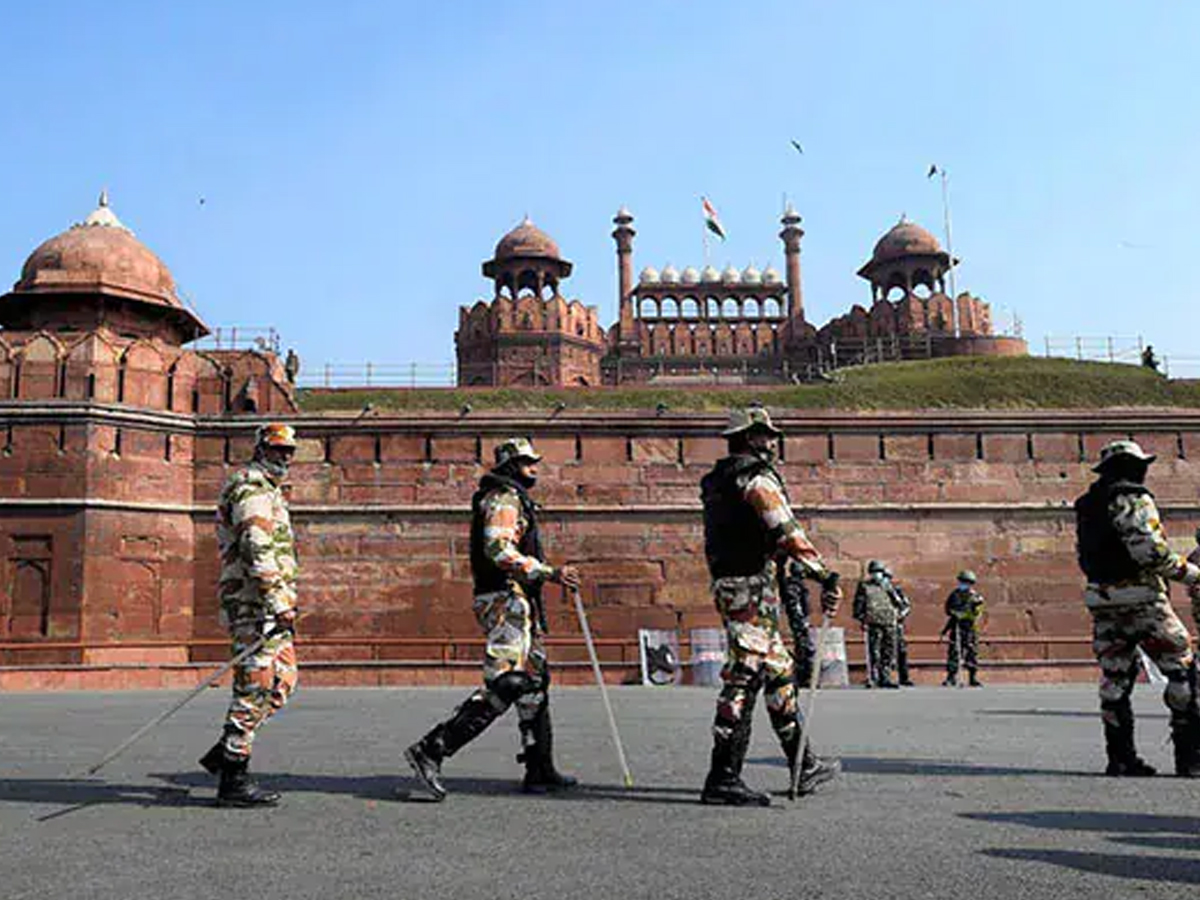
India is approaching its 79th Independence Day, so Delhi is transforming. The capital is being fortified like never before. From the Mughal-era Red Fort to the farthest border outposts, security measures are being tightened to ensure a safe celebration.
More than 10,000 personnel from Delhi Police, paramilitary forces, and specialised units will be deployed across the capital city. They will be supported by snipers, elite SWAT teams, and an invisible web of intelligence operatives.
Layers of Security Around the Red Fort
Senior officers say the arrangements are robust and well-coordinated. “Robust arrangements have been made for the successful celebrations. All major stakeholders are working in close coordination across the capital,” said one official.
The Red Fort will be at the centre of the security plan. Snipers will take up positions on rooftops. AI-powered facial recognition systems will monitor crowds in real time. Trained “kite catchers” will be on alert to intercept any airborne objects.
ALSO READ: Old Bullets and Circuit Board Found at Red Fort Amid Heightened Security Before Independence Day
The kite patrol is a precaution rooted in the memory of 2017, when a stray kite landed near the Prime Minister’s podium during his address.
Tech-Driven Vigilance
High-definition CCTV cameras have long kept watch over the Red Fort. This year, the coverage has been expanded to all approach roads and public gathering points nearby, and the feed will be integrated with AI systems for instant alerts.
Security teams will also sweep hotels and guesthouses around the Red Fort to detect suspicious activity. Similar measures will be in place at IGI Airport, railway stations, interstate bus stands, markets, and malls.
Coordination Beyond Delhi’s Borders
Security preparations go beyond the capital. Delhi Police Commissioner SBK Singh chaired an interstate coordination meeting with officials from Haryana, Punjab, Uttar Pradesh, Madhya Pradesh, Himachal Pradesh, Jharkhand, Uttarakhand, Bihar, Rajasthan, and Chandigarh.
“Close coordination with neighbouring states is a crucial aspect of security,” said an official. Borders will see increased patrolling, vehicle checks, and special patrols. The crackdown on criminal gangs with cross-border or international links is also being intensified.
Airspace Under Complete Lockdown
The skies over Delhi will be closed to drones, paragliders, microlights, and other flying platforms from August 2 to August 16. Section 163 of the Bharatiya Nagarik Suraksha Sanhita, 2023, was used to issue this order, which aims to stop terrorists and anti-social elements from abusing it.
ALSO READ: Independence Day 2025: 78th or 79th? The Confusion Explained
The ban covers UAVs, UASs, para-motors, hang-gliders, hot air balloons, and remotely piloted aircraft. It applies to both recreational and commercial activities.
Traffic — The City’s Other Frontline
For most Delhiites, the biggest visible impact will be on traffic. Over 3,000 traffic police personnel will manage diversions and keep essential movement flowing.
Eight major road stretches, including Netaji Subhash Marg, Lothian Road, SP Mukherjee Marg, Chandni Chowk Road, Nishad Raj Marg, Esplanade Road, and parts of Ring Road and Outer Ring Road, will be closed to general traffic until the event concludes.
Central Delhi areas such as India Gate, Mandi House, and Tilak Marg will be restricted for vehicles without official parking labels.
Alternative north-south routes include Aurobindo Marg, Safdarjung Road, Kamal Ataturk Marg, SP Marg, Mother Teresa Crescent, and Rani Jhansi Road. East-west commuters can use NH-24 (NH-9), Barapula Road, and bypasses to avoid central restrictions.
Bridge and Vehicle Restrictions
The Old Iron Bridge and Geeta Colony Bridge will be closed towards Shanti Van. Heavy goods vehicles are barred between Nizamuddin Khatta and Wazirabad Bridge from the evening of August 14 until 11 am on August 15.
Interstate buses will be prohibited from central corridors during the same period. DTC and local buses will be diverted, with normal services resuming after 11 am on August 15.
The Ceremony at the Red Fort
On August 15, Prime Minister Narendra Modi will arrive at the Red Fort in a sequence steeped in tradition. He will be received by the Defence Minister, Minister of State for Defence, and the Defence Secretary before inspecting the Guard of Honour.
From the ramparts, he will hoist the Tricolour and deliver his 12th consecutive Independence Day address — a record that began with his first speech in 2014, when he described himself as the “prime servant” of the nation.
Last year, the government’s “Jan Bhagidari” initiative brought around 6,000 special guests, including youth achievers, tribal representatives, farmers, women leaders, and beneficiaries of government schemes, to witness the event.
MUST READ: Independence Day 2025: 78th or 79th? The Confusion Explained