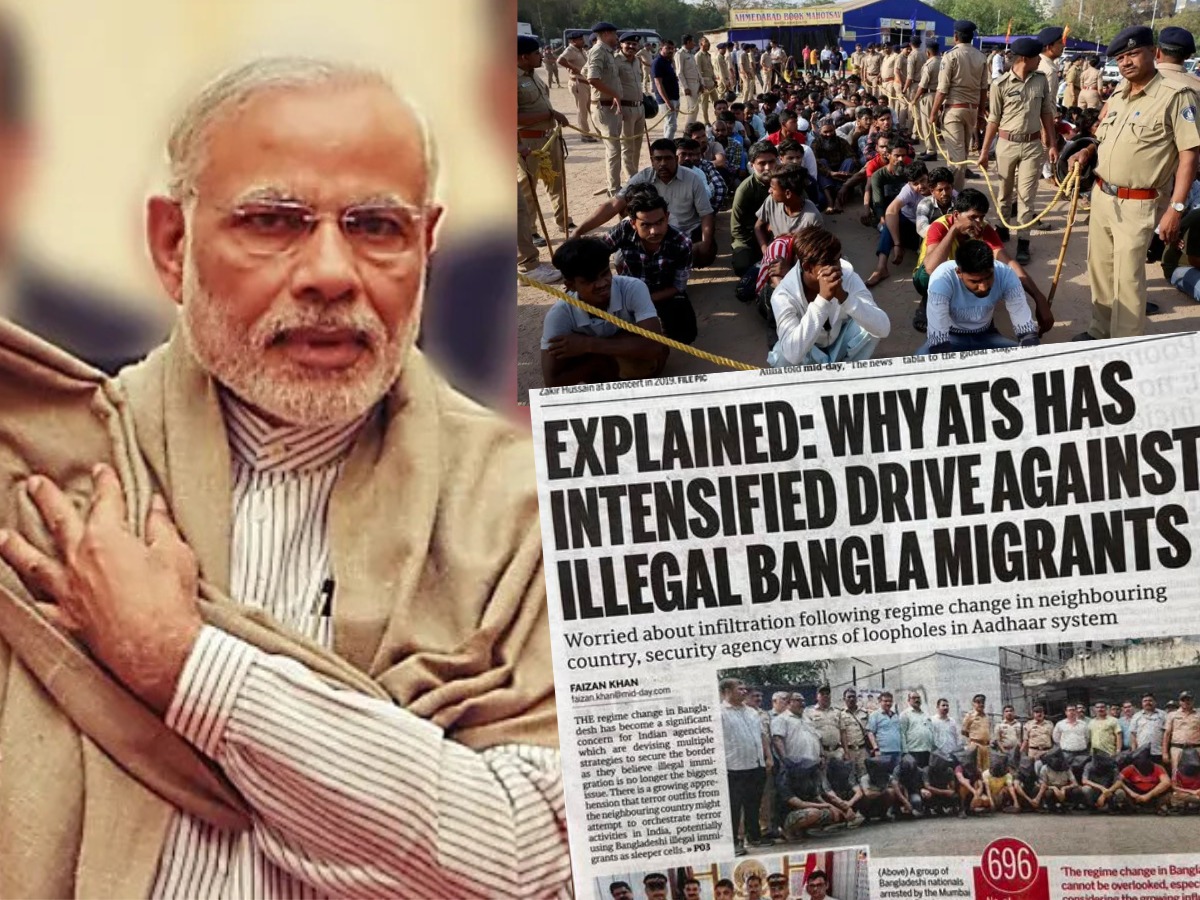
India has been struggling with illegal Bangladeshi and Rohingya immigrants, among others and the government’s stance finally seems to be changing, devising new policies. India finally seems to be shaping a strategy The scanning drives have been catalysed post-Operation Sindoor and the deportations have been silently carried out, according to the reports by Times of India and Amnesty International.
Europe’s softness and immigrants’ mayhem
Europe’s soft approach towards immigration had led to the chaos and debate all around the continent, and in fact, the world. The grooming gangs’ mayhem and the rioting situations have instigated public sentiment against the government policies, specially in UK and France. The demographic changes and the instability arising from this has disseminated staunch lessons to the nations all around the world.
India’s Scan-Verify-Deport approach
India has accelerated its approach to a pro-active stance on illegal immigrants, specially following Operation Sindoor, the military reaction from India towards Pakistan. A series of large scale crackdowns has been carried out throughout the country, specially in the urban centres such as Delhi, Noida and Gurugram. Authorities follow the modus operandi of scanning, verifying and transferring the identified illegals to the detention centres, reportedly in Assam, from where they are supposed to be deported. The reports also suggest that Bangladesh’s border forces, namely Border Guard Bangladesh (BGB) apparently offer no physical resistance while India pushes the immigrants across the border, which may be a surprising fact for many people.
The police across states have been strengthened and the national security issues have been pursued with seriousness. Mentioning social stability and threat to internal security, Union government asserts its intentions and the administration echoes the efforts in the ‘cleaning drive’. The legal mechanism has been clear on the issue and the illegal channels are pre-specified, with punishments and action to be taken.
The Social strain and the congestion
India fears of the approach being ‘too little too late’. The response seeks to employ preventive measures to avoid circumstances like Europe’s, such as active grooming gangs, demographic changes and cultural assertion. By posing a stricter enforcement, recent crackdowns and deportations have been centre of activities and, like the recent crackdowns and deportations of illegal Bangladeshi migrant workers in cities such as Gurugram, the government is trying to signal a strong deterrent and also addressing public mood on the issue of resource distribution and security.
Cross-Learning and Dialogue
Of particular interest is how India has strengthened its policy engagement with Europe itself, learning both from the dangers of reactive policy changes and the virtues of capacity development, mobility management, and selective legal migration streams. The objective is to prevent a replication of the cycle of ‘leniency-gone-wrong’ that eroded social cohesion and public trust in Europe.
Summing up, India’s modern immigration policy is an intentional attempt to shield itself from the unforeseen ramifications seen within the experience of Europe, combining stringent enforcement with judicious openness, and guided by both internal requirements and international best practices.