
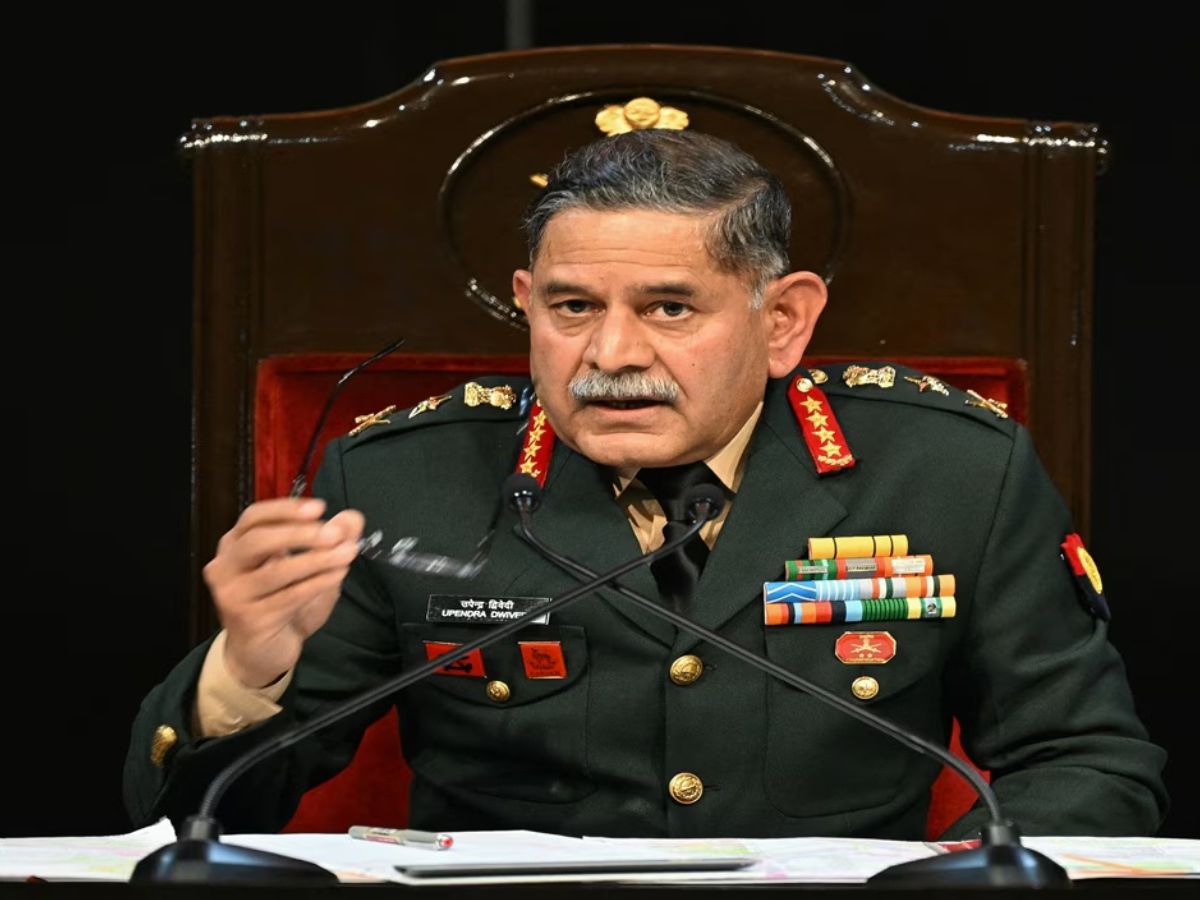
Chief of Army Staff General Upendra Dwivedi took a pointed jab at Pakistan on Saturday, dismissing its claims of victory in the recent clashes following India’s launch of Operation Sindoor on May 7. Speaking at an event in IIT Madras, Dwivedi highlighted Islamabad’s contradictory narrative amid its military setbacks.
Pakistan’s Field Marshal Promotion: A Facade of Victory
Dwivedi sarcastically noted Pakistan’s promotion of its Army Chief, Asim Munir, to five-star general and field marshal despite suffering losses against Indian forces. “If you ask a Pakistani whether they lost or won, he’d say, ‘My chief has become a field marshal. We must have won,’” Dwivedi remarked.
The Chief of Army Staff pointed out this move as part of a narrative-building exercise aimed at masking Pakistan’s actual military failures during the four-day conflict.
Political Backing Fueled Operation Sindoor’s Success
Dwivedi lauded the Indian government’s decisive political support that gave the armed forces a “free hand” to execute Operation Sindoor with clear authority and autonomy.
“What happened on April 22 in Pahalgam shocked the nation. On the 23rd, Defence Minister Rajnath Singh declared, “Enough is enough,” he said. He added that the collective clarity and confidence from political leadership allowed military commanders to act swiftly and effectively on the ground.
“That is what raises morale. It empowered our army chiefs to use their wisdom without hesitation.”
Air Chief Marshal AP Singh Echoes Political Will as Key to Success
Chief of the Air Staff Air Chief Marshal AP Singh reiterated that the mission’s success stemmed from “very clear political will” and unrestrained operational freedom.
“No restrictions were placed on us. The forces set their own rules of engagement and controlled escalation,” Singh explained during an event in Bengaluru.
Also Read: From Tampa To The Indus: Pakistan’s Army Chief Hints At Nuclear Showdown Over India Dam Plan
Operation Sindoor: The Response to Pahalgam Terror Attack
Operation Sindoor was launched as retaliation after the April 22 terror attack in Pahalgam that killed 26 civilians. Over 100 terrorists connected to terror organizations, including Jaish-e-Mohammed, Lashkar-e-Taiba, and Hizbul Mujahideen, were killed by Indian forces that targeted terror infrastructure in Pakistan and Pakistan-occupied Jammu and Kashmir.
In response, Pakistan engaged in cross-border shelling, drone attack attempts, and air defence operations. India retaliated by attacking and destroying vital Pakistani military facilities, including airfields spread across 11 locations, particularly the Nur Khan air base, radar systems, and communication hubs.