“As the world races towards AI, let us not forget Ancient Intelligence – a world where data is dharma and intelligence is not just artificial but deeply rooted in wisdom.” When Nita Ambani said this at the WAVES Summit 2025, she named something most foreign policy experts miss. While nations compete through technology and military strength, India wins through something else entirely: a cultural pull so strong it needs no push.
I am proof. As a 13-year-old in Belarus, I saw one dance video—and years later, I am studying Hindi, dancing Bharatanatyam, and researching Indian culture. My story isn’t unique; it is happening to millions worldwide. This is exactly why India’s soft power isn’t just a strategy—it is a fact.
I grew up in Belarus, thousands of miles from India. At thirteen, a Bharatanatyam reel crossed my feed and something clicked. The gestures, the music, the discipline—I had never seen anything like it. India found me before I ever set foot here. Across Africa, Europe, and Asia, people are discovering India through its vibrant heritage. A teenager in Cairo learns Hindi from Bollywood songs; a businessman in London starts his day with yoga; a musician in Berlin discovers the meditative depth of the sitar. None of this is orchestrated by ministries. It happens organically, amplified by social media where a single reel can spark curiosity in places no diplomat could ever reach.
What makes this possible is India’s greatest asset: plurality. One country, many cultures—each with its own entry point. Yoga speaks to the spiritual seeker, Bollywood speaks to the heart, and classical dance—whether Bharatanatyam from Tamil Nadu or the vibrant folk traditions of Rajasthan—speaks to the artist. There is no single “Indian culture” to export; there are many.
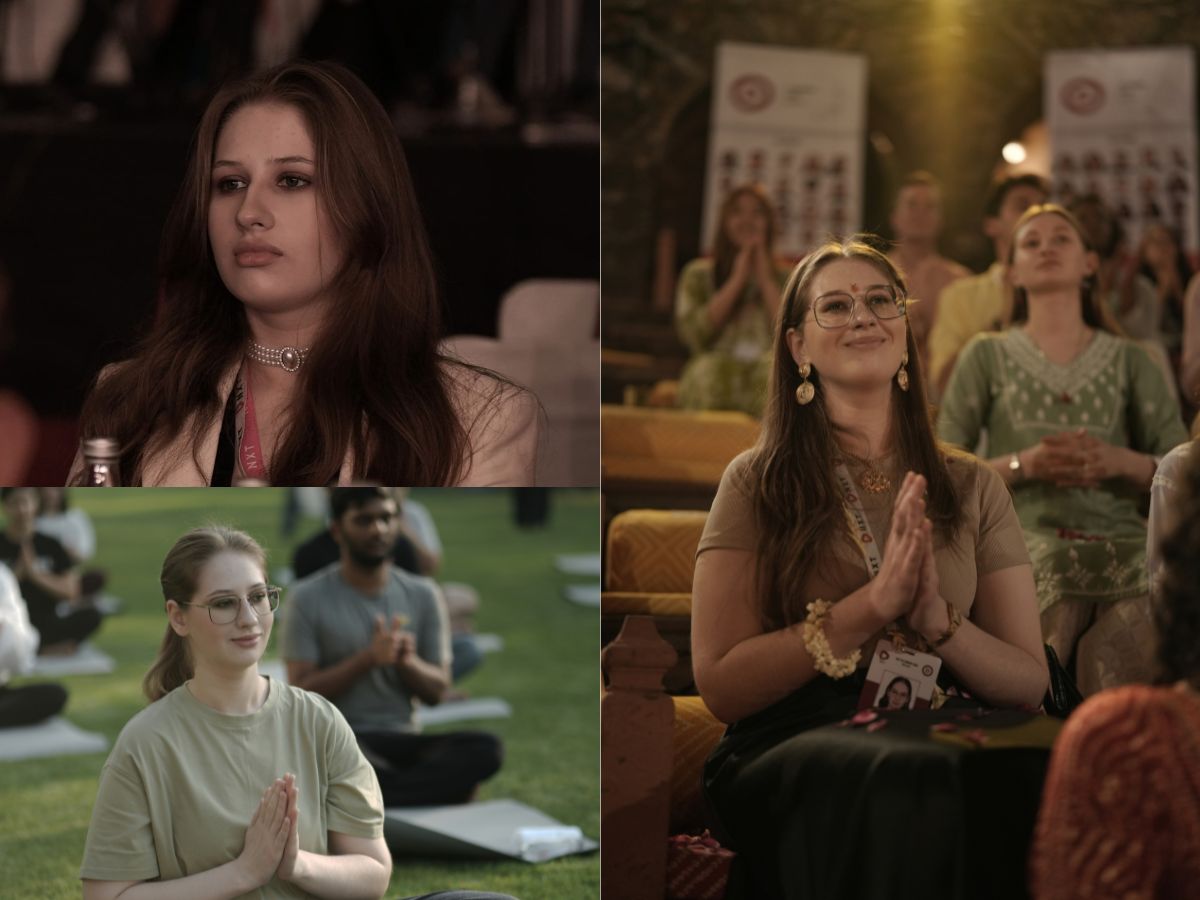
I saw this firsthand during the NXT Fellowship. One evening at Neemrana Fort-Palace, artists from Rajasthan performed. Within minutes, fellows from more than thirty countries were clapping and smiling, completely absorbed. No one explained why they should care—they just did.
That moment is a small picture of a larger truth. When Indian dancers perform at G20 summits or state banquets, they do more than entertain—they connect. A Kathak recital for a Central Asian leader evokes shared history, and an Odissi performance at UNESCO conveys refinement. These are not diplomatic strategies in the traditional sense. They are diplomatic facts—already present, already working.
India’s global rise isn’t just about culture, of course. Its economy, technology, and infrastructure are the “hard power” that makes the world take notice. But if hard power opens doors, soft power makes people want to walk through them. As India moves toward 2047, its cultural pull will only grow. Not because of campaigns, but because the world is already leaning in. I came for the dance; I stayed for the country. After that evening at Neemrana, I finally understood why.