
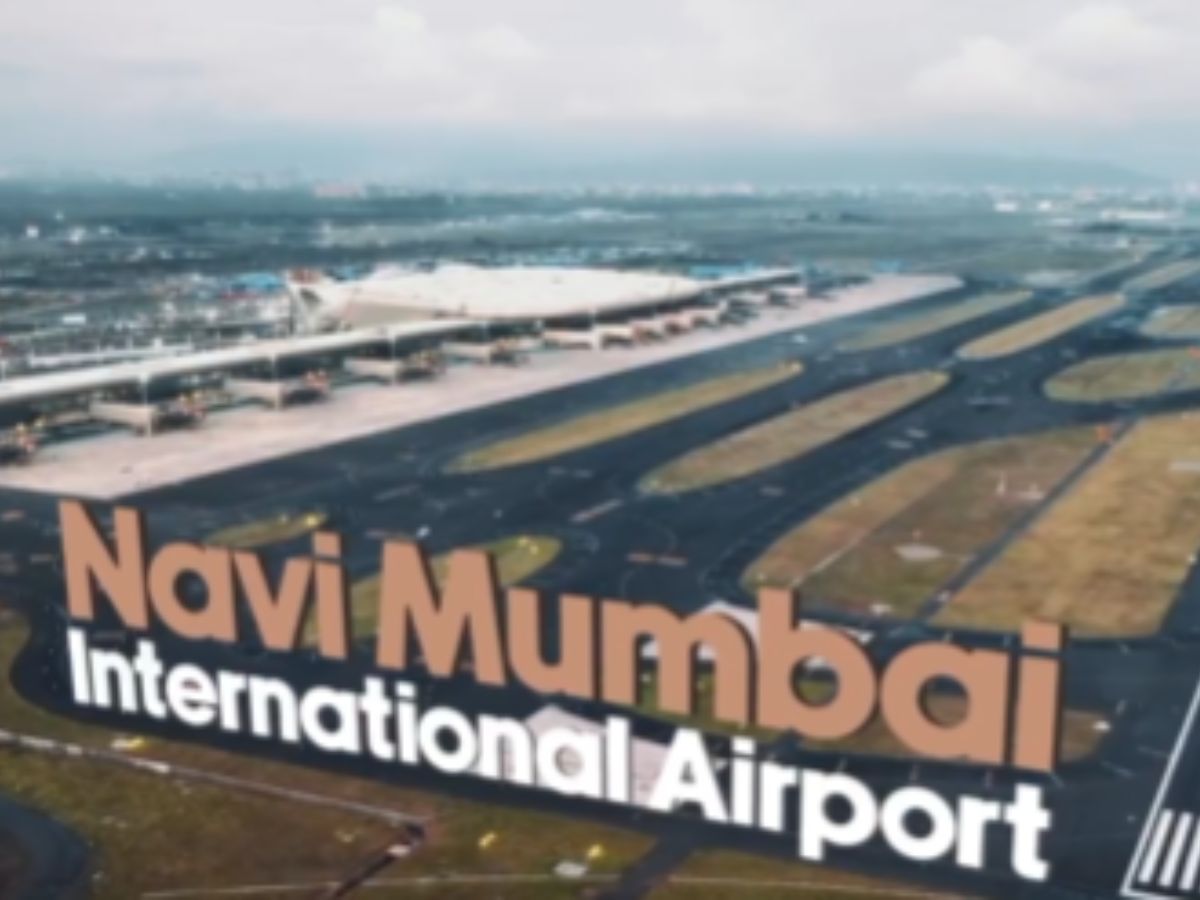
Mumbai has officially got its second international airport as Prime Minister Narendra Modi inaugurated the Navi Mumbai International Airport (NMIA). This new facility is set to ease air traffic pressure on Chhatrapati Shivaji Maharaj International Airport (CSMIA) and improve connectivity across the Mumbai Metropolitan Region.
PM Modi’s Message: Boosting Mumbai’s Connectivity and Ease of Living
PM Modi shared his excitement about the launch on X (formerly Twitter), saying: “On the way to Navi Mumbai to take part in the programme marking the inauguration of Phase-1 of the Navi Mumbai International Airport. With this, the Mumbai Metropolitan Region will get its second major international airport, thus boosting commerce and connectivity. The final phase of the Mumbai Metro Line-3 will also be inaugurated. We are committed to enhancing Mumbai’s infrastructure and boosting ‘Ease of Living’ for the people of this dynamic city.”
Navi Mumbai Airport Project Overview: Cost, Capacity, and Design
The Navi Mumbai International Airport is a ₹19,650 crore mega project developed over 1,160 hectares in Ulwe, Navi Mumbai.
It stands out for its lotus-inspired architecture, futuristic design, and sustainable planning.
Key facts about NMIA:
- Project Cost: ₹19,650 crore (Phase 1)
- Total Area: 1,160 hectares
- Design Concept: Lotus-themed modern structure
- Passenger Capacity: 9 crore passengers annually (after full completion)
- Cargo Capacity: 3.25 million metric tonnes (MMT) per year
- Runway Length: 3,700 metres
- Objective: Reduce congestion at CSMIA and improve flight operations
How to Reach Navi Mumbai International Airport: Routes and Travel Time
After the inauguration, passengers can access NMIA through multiple routes by road, metro, rail, and the Mumbai Trans Harbour Link (MTHL).
By Road: Sion–Panvel Highway Route
Travelers from Mumbai can reach NMIA via Sion-Panvel Highway through Chembur, Vashi, Nerul, Belapur, and Panvel.
Use NH 4B and Aamra Marg for a direct connection.
The Eastern Freeway can also bring vehicles from South Mumbai to Chembur for onward travel.
Estimated travel time: 1 to 1.5 hours (depending on traffic)
Slightly faster from Mumbai’s eastern suburbs
By Mumbai Trans Harbour Link (MTHL) – Atal Setu
For faster access, commuters can use the Mumbai Trans Harbour Link (Atal Setu), which connects Sewri (South Mumbai) to Nhava Sheva, bringing travelers close to the Ulwe airport terminal.
The upcoming Ulwe Coastal Road will further enhance connectivity by directly linking MTHL to the airport.
Travel time: Around 20–25 minutes after crossing MTHL
Time saving: Nearly 20 minutes compared to traditional routes
By Bus: New Airport Express Bus Service
The government and CIDCO plan to start Airport Express Buses and state transport buses from major locations including Dadar, Thane, Vashi, and Panvel.
Travel time: Varies based on starting point and stops on the route
By Train: Harbour Line and Metro Connectivity
Passengers can reach Panvel railway station via the Central Railway’s Harbour Line from CSMT passing through Wadala, Mankhurd, Vashi, Nerul, and Belapur.
CSMT to Panvel: Around 1.5 hours
Thane to Panvel: Around 45–50 minutes
From Panvel, local transport options and metro connectivity will help reach the airport. The Navi Mumbai Metro Line 1 (Belapur–Pendhar) is already operational and will soon connect with the airport corridor.
Why Navi Mumbai Airport Matters: A Game Changer for Maharashtra
The Navi Mumbai International Airport is not just another infrastructure project it’s a symbol of Mumbai’s growth and modernization.
Once fully operational, NMIA will significantly reduce congestion at CSMIA, increase cargo handling capacity, and support tourism, trade, and job creation.
It is expected to become one of India’s top aviation hubs, improving passenger convenience and enhancing Mumbai’s global competitiveness.
Transforming Mumbai’s Air Travel Future
With its world-class design, advanced facilities, and seamless connectivity, the Navi Mumbai International Airport will transform air travel in western India. It represents a major leap in India’s infrastructure development, aligning with PM Modi’s vision of “Ease of Living” and “Ease of Travel” for every citizen.
Also Read: Air India unveils operation plans for Navi Mumbai airport