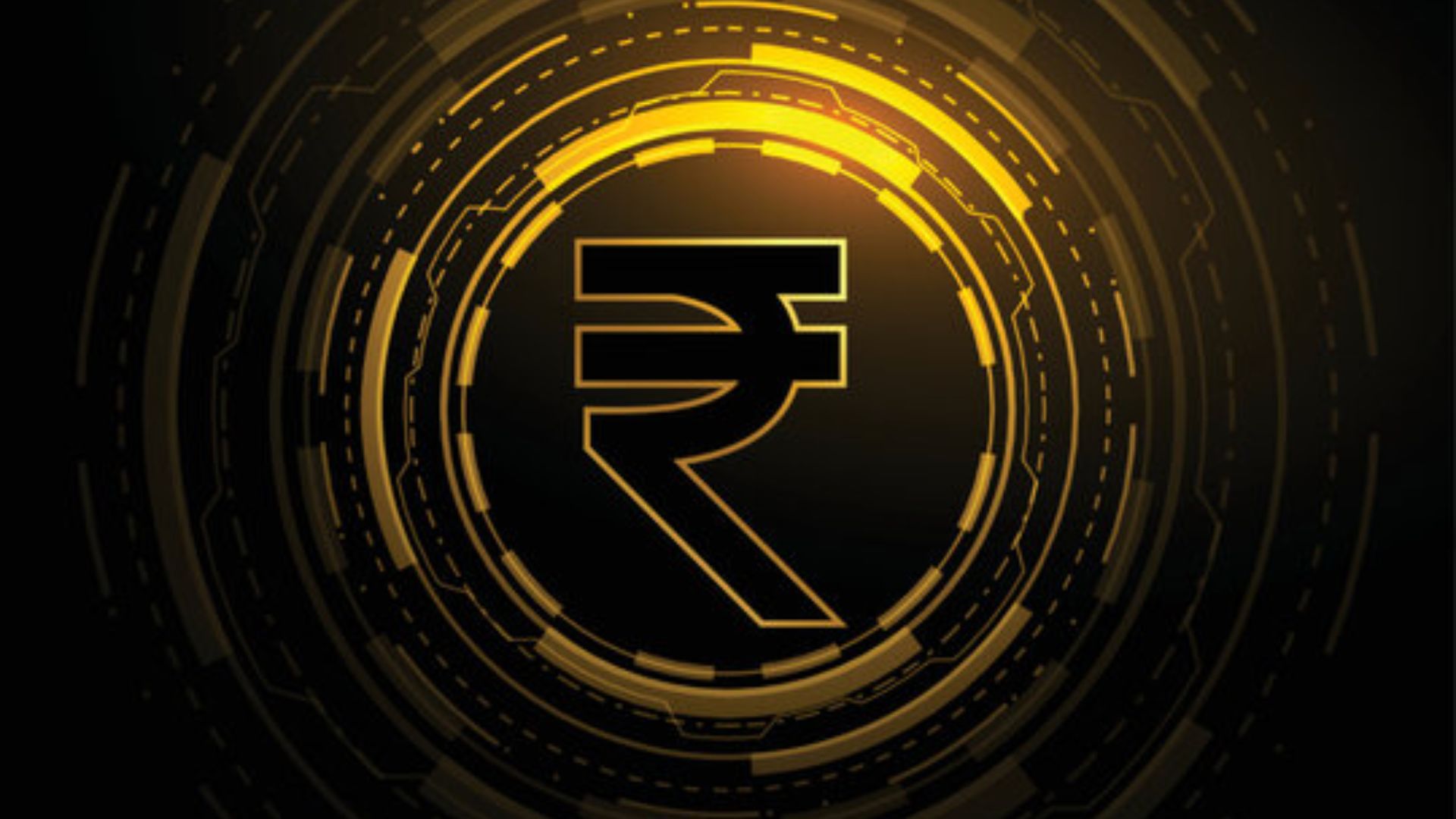
We see the Indian rupee sign (₹) everywhere: on billboards, banknotes, and our phone screens. It’s become so ubiquitous now that we rarely take the time to ask where exactly it came from. But its history is much richer and more complex than most people know.
A viral Instagram video mapping the ‘Behind the Scenes’ evolution of this symbol has recently appeared, providing views about how this iconic sign imparted a unique identity to India’s currency.
Prior to 2010, India lacked a formal currency symbol. The abbreviation “Rs” was used everywhere. It was plain, utilitarian, but devoid of any distinctiveness. It changed the day the Indian government initiated a National Design Competition to design a new symbol.
Origin of ₹ Symbol
The winner was the work of a young architect, Uday Kumar. His elegant design merged the Devanagari ‘Ra’ (र) and the Roman ‘R’, both crossed by two parallel lines. Contemporary, abstract, and immediately identifiable, the symbol soon found its place in the limelight. Uday Kumar, naturally, was accorded much of the glory, and his work became the very face of Indian money.
But there’s another chapter to this story that is not always well told.
“Five years prior to the competition, another architect named Nondita Correa-Mehrotra, who also thought of this,” the video noted. “In 2005, she posed a question that was simple yet impactful: Why does India not have a proper symbol for its currency?”
Watch:
Nondita saw how global symbols such as the dollar, euro, and yen represented more than monetary value; they represented national pride and global identity. Inspired by them, she created her own, a Devanagari ‘Ra’ (र) with two horizontal strokes at the top, small in size. She took a step further, sending her design to the Reserve Bank of India (RBI) and even to the Prime Minister’s Office (PMO). Silence followed. She received no reply.
When the official competition was launched in 2010, a fascinating fact came to light: several of the shortlisted schemes had a surprising likeness to Nondita’s initial design. She competed herself and made it into the final five.
The video concluded with the words, “Let’s be honest: Uday Kumar’s design was clean, clear, and deserved to win. But Nondita’s early effort may have sparked the idea in the first place. She helped start a conversation long before it was trendy or official.”
Perhaps it’s no coincidence that both designers were architects by training. After all, architecture isn’t limited to buildings—it’s about systems, symbols, and how thoughtful design can shape an entire nation’s identity.