
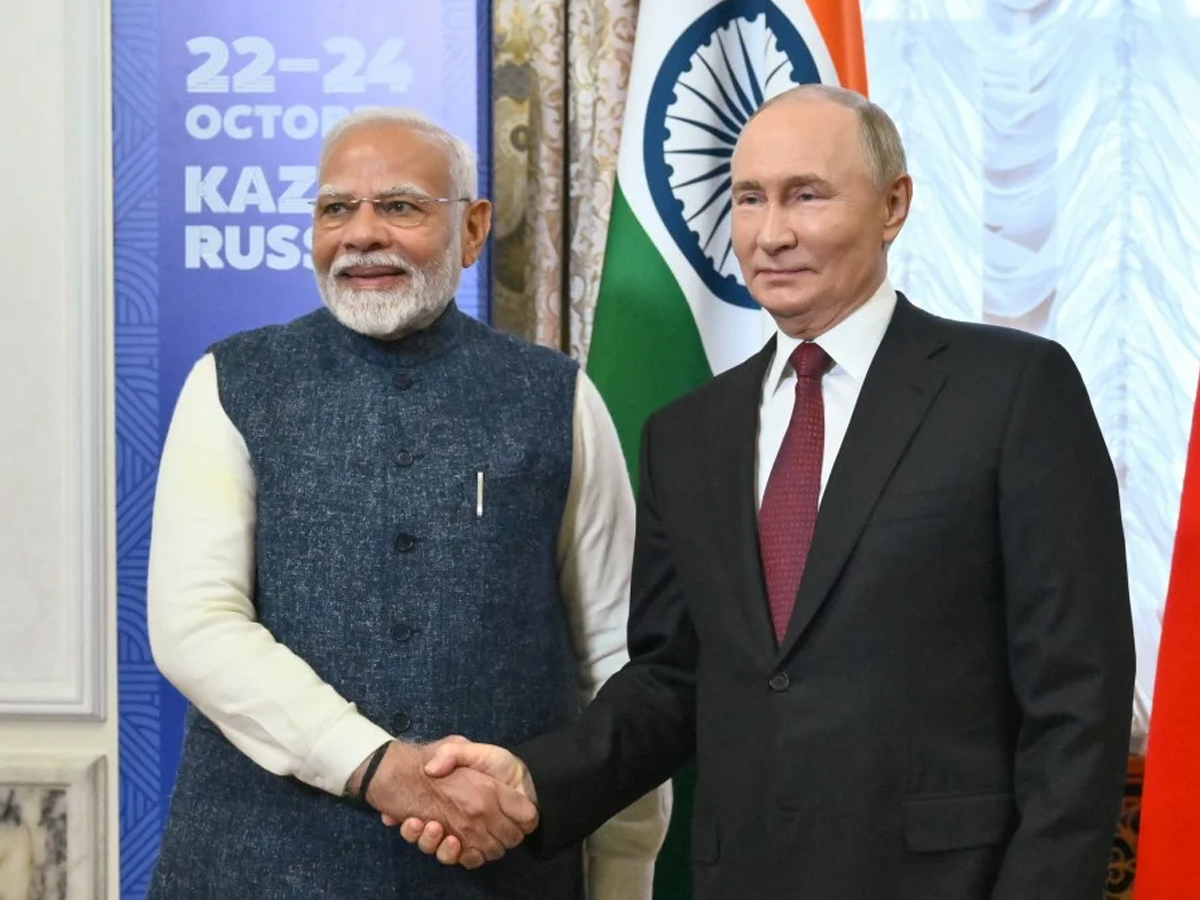
Russian President Vladimir Putin will travel to India from December 4 to 5, accepting an invitation from Prime Minister Narendra Modi, the government announced on Wednesday. The visit will feature the 23rd India-Russia Annual Summit, high-level talks, and a state banquet hosted by the President of India. The two nations plan to review progress on their “Special and Privileged Strategic Partnership” and discuss regional and global issues of shared interest.
This will be Putin’s first official visit to India since 2021. The trip follows a recent meeting between the two leaders on September 1 this year at the SCO Summit in Tianjin, China.
How many times did Putin visit India?
| Date | Trip Occasion |
|---|---|
| December 2000 | One of Putin’s earliest visits to India after becoming the Russian President. |
| 24 December 2012 | State visit for the Annual India–Russia Summit. |
| 10–11 December 2014 | Attended the 15th Annual India–Russia Summit. |
| 4–5 October 2018 | Attended the 19th India–Russia Annual Summit. |
| 6 December 2021 | Attended the 21st India–Russia Annual Summit. |
Putin’s India Visit – December 2000: One of his earliest state visits as the newly elected Russian President
This visit marked a reset in India–Russia ties after the collapse of the Soviet Union. Putin aimed to revive the historically strong Indo-Russian partnership.
Key Highlights
- Strengthening political and diplomatic trust
- Defence cooperation framework renewed
- Expanding energy and space collaboration
- Major Deals & Agreements Signed
- Declaration on the India–Russia Strategic Partnership (2000) — a milestone treaty
- Agreements in defence, energy, and space technology
- Steps towards joint military projects
Putin’s India Visit – 24 December 2012: Annual India–Russia Summit
The focus was on enhancing bilateral trade, deepening defence ties, and discussing regional issues such as Afghanistan.
Key Highlights
- Strengthening military-technical cooperation
- Discussion on political coordination in global platforms
- Expanding energy partnerships
- Major Deals & Agreements Signed
- MoUs in trade, science & technology, and cultural cooperation
- Discussions held on the FGFA (Fifth-Generation Fighter Aircraft) project
- Progress on nuclear power units in Kudankulam
Putin’s India Visit – 10–11 December 2014: 15th India–Russia Annual Summit
This visit focused on reviving trade, boosting energy and defence partnerships, and signalling the depth of diplomatic trust between the countries.
Key Highlights
- Emphasis on nuclear power collaboration
- Expanding long-term economic ties
- Strengthening joint defence manufacturing
- Major Deals & Agreements Signed
- Kudankulam Nuclear Power Plant Units 3 & 4 agreement sealed
- Over 20 agreements, including in trade, energy, diamonds, and defence
- Proposal for 24 nuclear reactors in India from Russia over the coming decades
Putin’s India Visit – 4–5 October 2018: 19th India–Russia Annual Summit
The visit aimed to boost strategic and military cooperation at a time when India was balancing its ties between Russia and the U.S.
Key Highlights of the Visit
- Enhancing defence ties
- Expanding nuclear energy cooperation
- Addressing global security and multilateral issues
- Major Deals & Agreements Signed
- Landmark ₹39,000 crore S-400 missile defence system deal
- Agreement on space cooperation, including India’s Gaganyaan programme
- Several MoUs on agriculture, railways, and trade
Putin’s India Visit – December 2021: 21st India–Russia Annual Summit
This was Putin’s first foreign trip after the COVID-19 pandemic, underscoring the importance Moscow places on its partnership with India. The meeting aimed to reaffirm the “Special and Privileged Strategic Partnership,” especially amid global geopolitical shifts and tensions.
Key Highlights of the Visit
- Strengthening defence and energy cooperation
- Expanding counter-terrorism and regional security discussions
- Dialogue on the Afghanistan situation post Taliban takeover
- Major Deals & Agreements Signed
- S-400 Triumf missile defence system deliveries confirmed
- India–Russia 10-year defence cooperation programme (2021–2031) finalised
- AK-203 assault rifles manufacturing deal approved for production in Uttar Pradesh
- Several agreements related to oil & gas cooperation
Scheduled Events in 2025 Meeting: What’s on the Agenda
Heads of state and senior ministers at the summit to assess bilateral relations.
- A state banquet where Indian dignitaries will formally host Putin.
- Discussions on defence cooperation, energy, and strategic modernisation.
- Talks on regional security, global geopolitics, and collaborations on trade and technology.
- The summit is expected to yield concrete agreements on cooperation and future projects across multiple sectors.
Why This Visit Matters for India and Russia
For India, the visit comes at a critical time, with defence modernisation, energy security, and global diplomacy at the forefront. Access to Russian military technology, energy supplies, and strategic coordination could help New Delhi accelerate its long-term plans.
For Russia, renewing deep ties with India helps balance its global diplomacy. As many Western countries tighten restrictions, Russia’s partnership with India gains renewed significance. The visit could reinforce Moscow’s role as a reliable partner for New Delhi in defence, energy, and trade cooperation.
Historic Context: Earlier Russian Leaders in India
India and Russia share a long friendship. Earlier, top Russian leaders visited India:
- Dmitry Medvedev visited India in December 2008 and again in 2010 during his presidency, expanding cooperation in nuclear energy, defence, and trade.
- Boris Yeltsin visited India in January 1993, when the two nations negotiated debt, military-technical cooperation, and cooperation on counter-terrorism and strategic interests.
These visits laid the foundation for India-Russia strategic cooperation, which this upcoming summit aims to strengthen further.
Expectations: What Both Sides Might Seek
Observers expect the summit to address several key areas:
- Expanding defence cooperation and possible technology transfers.
- Agreements on energy, especially in light of global energy uncertainties.
- Enhancing trade, especially in critical sectors like infrastructure, aerospace, and defence.
- Coordinated foreign policy approaches on regional conflicts and global stability.
The summit could produce agreements, memorandums of understanding (MoUs), and medium-term strategic plans to deepen bilateral ties.