
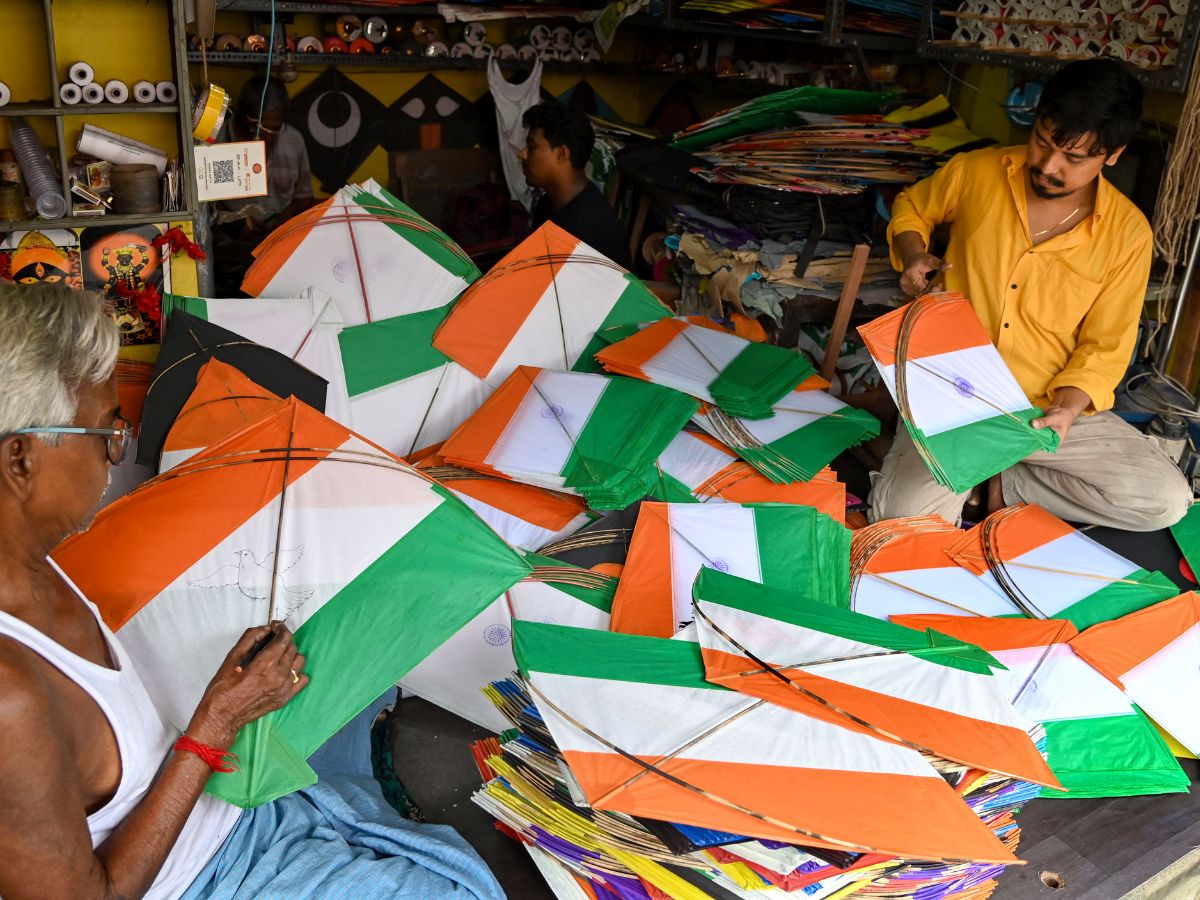
On August 15, India will celebrate its 79th Independence Day. People will gather on rooftops and in parks to fly kites. The skies will fill with colours, with many kites carrying the tricolour. For many, it is a game.
But this tradition started as a protest almost a century ago. Kite flying became a way to show the fight for freedom. Over time, it turned into a symbol of unity and pride.
Tradition of North India
In North India, particularly in Uttar Pradesh, Rajasthan, Delhi, and Gujarat, kite flying is very popular. On Independence Day, people gather on rooftops, open spaces, and parks to try to pull each other’s stings in friendly competitions that, despite their seemingly happy appearance, have a history rooted in political conflict.
ALSO READ: Why India and Pakistan Celebrate Independence on Different Dates
Simon Commission Protest
In 1928, the British sent the Simon Commission to discuss reforms in India. Not a single Indian was part of it. People were angry. Raja Mohammad Ali Mohammad Khan, a Zamindar from Mahmudabad, suggested a new way to protest. He told the Congress President to use kites and balloons to send a message.
Protesters flew them with bold letters saying, “Simon, Go Back.” As the Commission moved, kites filled the air, some dropping messages on streets and poles. The skies became a stage for protest.
Memory That Lives On
This act stayed in people’s minds. Kite flying became a simple, cheap, and colourful way for everyone to join in celebrations. Over the years, August 15 became the day when people flew kites not just for fun, but as a mark of unity.
ALSO READ: Hajj Qurrah 2026: How to Check Results, Step-by-Step Guide & Official Link
Sign of Freedom and Dreams
A kite rising into the sky is like the nation aiming higher. It shows liberty, growth, and hope. Cutting another kite’s string feels like breaking free from control. The wide sky reminds people of endless possibilities.
Modern Relevance
Today, kite flying also faces challenges. Urbanisation has eaten into open spaces. Cheaper, synthetic strings harm birds. Yet, the tradition endures and many communities now use eco-friendly materials and organise safe, large-scale kite festivals.
This shift keeps the spirit alive while adapting to new realities. It shows that even old traditions can evolve to reflect modern responsibilities.
ALSO READ: No Return for Convicts? India Amends Overseas Citizen Card Regulations