
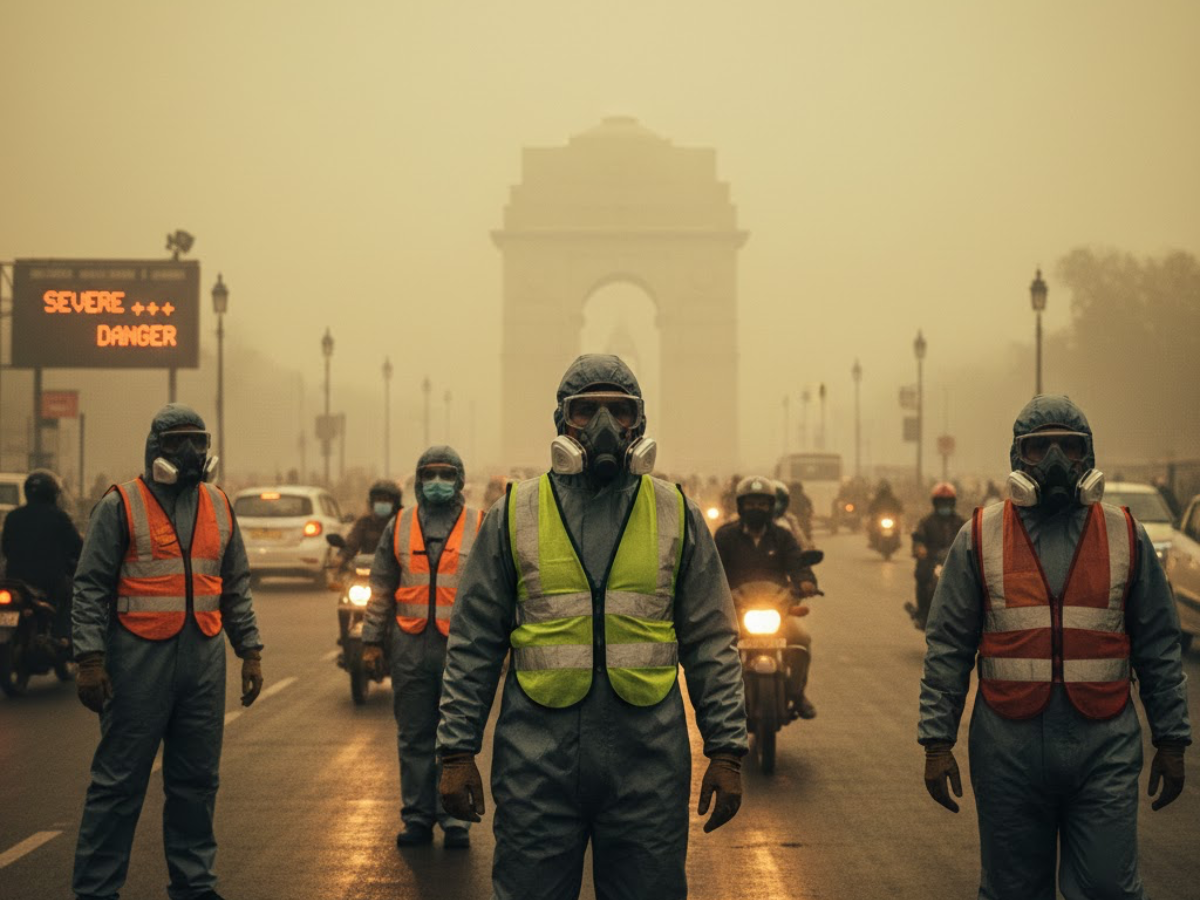
Delhi’s long winter has arrived with its usual hardships. The city is once again pushed to the edge by toxic air and fog thick enough to blur even familiar roads. While residents try to limit their exposure, one group is out there every day with little choice.
Delhi’s traffic police, scattered across busy intersections for hours, face some of the toughest conditions. Their department has now launched an expanded winter safety plan to protect them from the twin threats of pollution and poor visibility.
Exposure on the Frontline
Traffic personnel spend most of their shifts in the open, often without shelter and surrounded by idling vehicles. Many remain stationed in the same spot for eight to ten hours.
With the Air Quality Index crossing into the severe range repeatedly this winter, officials acknowledge that the health risks have become impossible to ignore.
ALSO READ: UK Citizenship Laws Under Fire: 9 Million & Mostly British Muslims Could Lose Nationality Under ‘Secretive’ System
Protective Gear & Visibility Support
This season, the force has already distributed thousands of N-95 masks and insulated clothing to help officers breathe easier and stay warm. High-visibility jackets are now part of their standard winter kit, especially crucial when visibility collapses in dense fog.
Nearly 50,000 high-grade masks have been stocked for use across the department, allowing more officers to rotate protective gear during long shifts.
Safer Roads for Everyone
Visibility drops raise the risk of nighttime collisions, so police barricades are being fitted with reflective strips to alert approaching motorists. Drivers are being urged to use fog lights and switch on parking lights when stationary. The goal is to reduce avoidable accidents at a time when the simplest lapse can prove dangerous.
ALSO READ: Mumbai Civic Polls Announced: BMC Elections Scheduled for January 15 & Results on January 16
Health Monitoring Through Regular Camps
To keep officers healthy, the Delhi Police continues to run medical camps at its Todapur headquarters several times a month. Specialists check respiratory health, eyesight and mental wellbeing, offering early intervention where needed. The camps also help identify stress caused by long hours in polluted environments.
Broader Welfare Push
Rotational postings, hydration support and closer monitoring are being added as the winter deepens. The force knows the challenges will not disappear overnight, but these steps aim to ease the burden on those who keep traffic moving even when the city struggles to see beyond a few metres.
ALSO READ: Delhi Schools Implement Hybrid Learning as Pollution Levels Worsen Across NCR
Disclaimer: This article provides general information based on current conditions and should not be taken as official policy guidance.