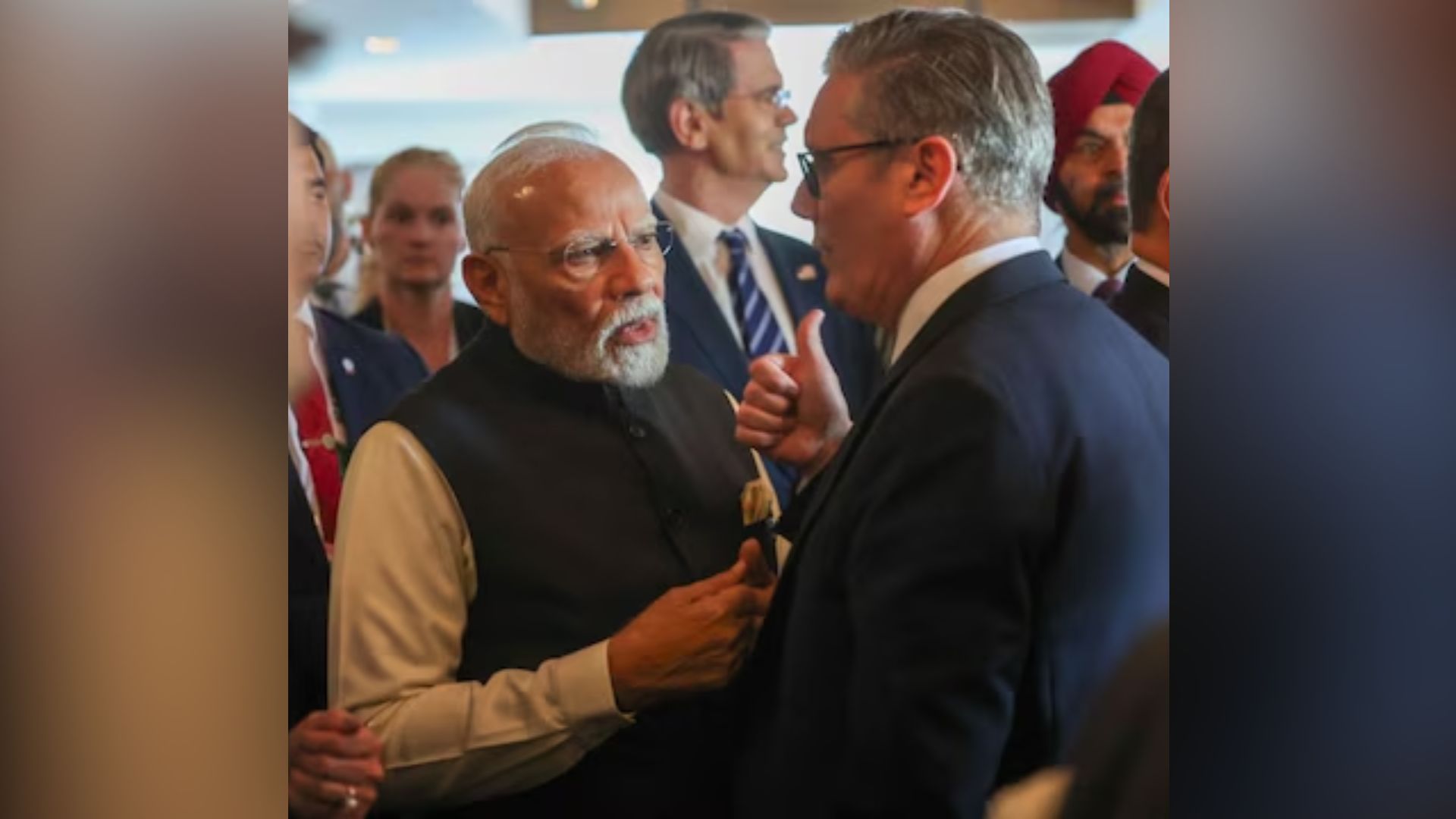
UK Prime Minister Keir Starmer will welcome Indian Prime Minister Narendra Modi to London on Thursday, where the two countries will formally sign a historic trade agreement designed to boost bilateral trade by £25.5 billion a year. In addition to opening up thousands of new jobs, the agreement is predicted to boost economic growth in both nations.
Regarded as the most comprehensive trade agreement India has ever signed, and the most economically significant one for the UK since it voted to leave the European Union, this agreement promises more market access to businesses across both nations. This would translate into more affordable goods and services to consumers.
The trade agreement, however, is just one part of a broader strategic partnership. During the visit, the leaders will also unveil the UK-India Vision 2035, a decade-long roadmap for collaboration that goes beyond trade. This shared vision focuses on strengthening ties across defence, clean energy, education, innovation, and climate action in a rapidly evolving global landscape.
Marking one year since the UK-India Technology Security Initiative was signed, the two governments will reaffirm their commitment to national security through harnessing frontier technologies and collaborating on shaping future innovations.
Our historic trade agreement with India is a huge victory for Britain. It will create British jobs in the thousands throughout the UK, open up new markets for businesses and boost growth in all parts of the country, keeping our Plan for Change on track,” said PM Starmer before the official signing.
“We’re putting more money in the pockets of hardworking Brits and helping families with the cost of living, and we’re determined to go further and faster to grow the economy and raise living standards across the UK,” he added.
The UK Business and Trade Secretary Jonathan Reynolds highlighted India’s growing global leadership, declaring, “India is one of the fastest growing global economies in the world and an emerging economic superpower of the 21st century. Our historic trade agreement is the most ambitious agreement India has ever signed positioning the UK to be best-placed to collaborate with India for the next ten years, to unlock thousands of jobs and drive growth in both our economies.”
As Reynolds said, almost £6 billion in new investments and export deals have already been announced. These progress updates indicate more intensive cooperation in future advanced technology, critical minerals, green finance, and other emerging areas.
For Indian consumers, the deal will mean more access to quality British products; be it cosmetics and medical equipment or cars and soft drinks, thanks to lower average tariffs than before, down from 15% to 3%. Indian exports to the UK, too, will be made more competitive and affordable thanks to liberalised trade rules.
The renewable energy industry is another prominent beneficiary. British companies will receive unprecedented access to India’s huge and fast-growing procurement market as the nation moves towards non-traditional energy sources to fulfill its increasing energy demands.
UK financial and professional services providers will also gain assured access to India’s expanding markets. Measures like capping of India’s foreign investment in the insurance industry at a binding level will provide a level playing field for UK companies with their Indian counterparts.
Further intensifying the bilateral relationship, the two governments have committed to increasing cooperation on security issues. This includes combating organised crime, corruption, serious fraud, and irregular migration through enhanced intelligence-sharing and cross-border operations.
As an indication of increased commercial involvement, 26 British companies have made new business arrangements in India. Among them, Airbus and Rolls-Royce will start supplying aircraft to leading Indian carriers, more than half being Rolls-Royce-powered under a £5 million deal recently sealed.
With this comprehensive agreement, the UK and India are not only mapping a path towards enhanced economic ties but also reaffirming their common commitment to prosperity, sustainability, and global leadership in innovation.