
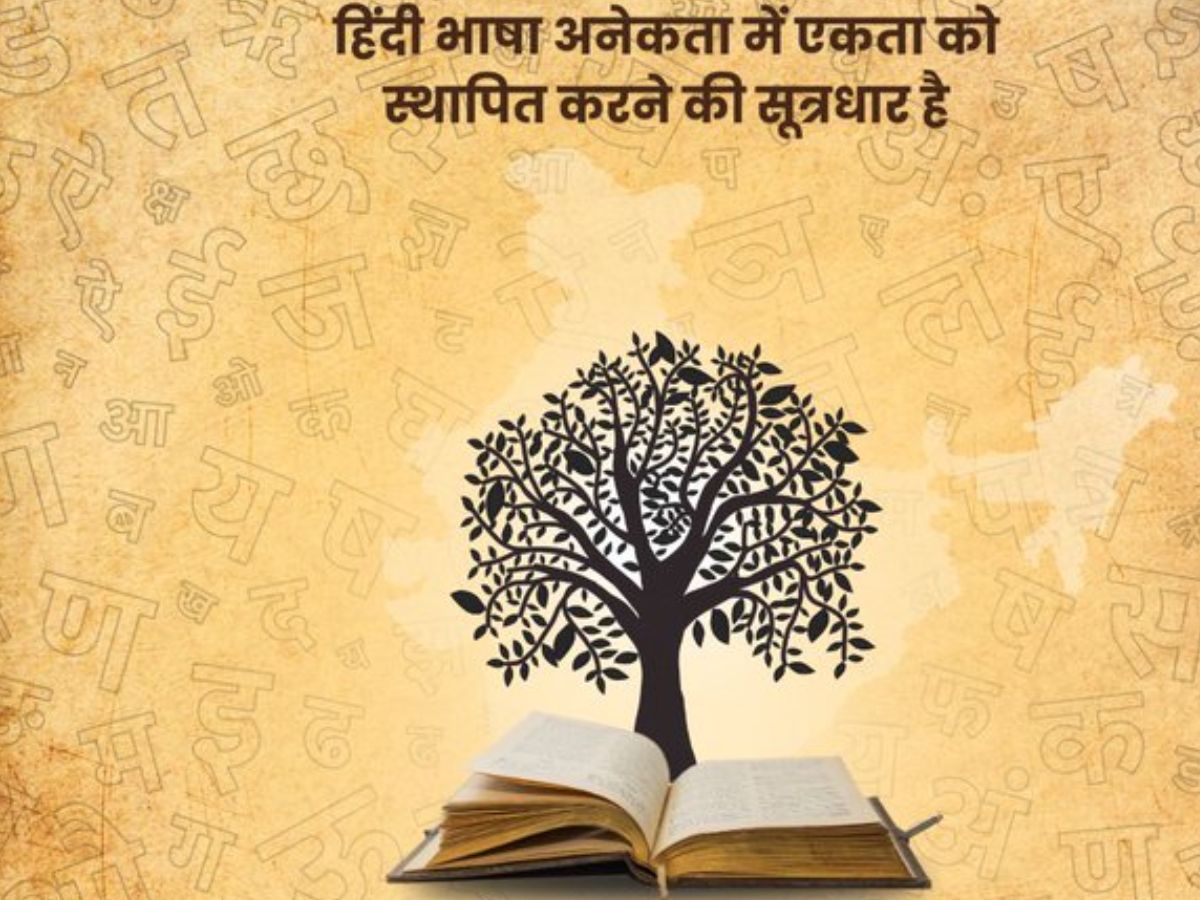
Hindi Diwas is celebrated every year on September 14 to mark the day in 1949 when the Constituent Assembly of India officially adopted Hindi in the Devanagari script as the official language of the Republic of India. The decision aimed to unify India’s vast linguistic diversity by promoting a common language for official communication, while still respecting the rich variety of regional languages spoken across the country.
The first official celebration of Hindi Diwas took place in 1953, and since then, it has become an annual event focused on promoting the Hindi language, raising awareness of its cultural importance, and encouraging its use in education, administration, and daily life.
How Many People Speak Hindi in India? A Detailed Look
Hindi as the Most Spoken Language
According to the 2011 Census of India, approximately 43.63% of India’s population speaks Hindi as their first language. This includes not just Standard Hindi but also various regional dialects such as Bhojpuri, Rajasthani, and Chhattisgarhi, which are categorized under the broader “Hindi” label in official statistics. In addition to native speakers, millions more use Hindi as a second language, bringing the total number of Hindi speakers to around 57.1% of the population.
This makes Hindi the most widely spoken language in India, serving as a key link across the country’s diverse regions.
State-wise Distribution of Hindi Speakers
Hindi is most commonly spoken in the northern and central parts of India. States like Uttar Pradesh, Bihar, Madhya Pradesh, and Rajasthan have the highest percentage of Hindi-speaking populations. For example, in Uttar Pradesh, around 97.4% of the population speaks Hindi as their mother tongue.
In contrast, southern states such as Tamil Nadu, Kerala, Karnataka, and Andhra Pradesh primarily speak regional languages like Tamil, Malayalam, Kannada, and Telugu. Similarly, northeastern states like Assam, Manipur, and Mizoram have dominant local languages such as Assamese, Manipuri, and Mizo, where Hindi speakers form a much smaller percentage of the population.
This variation highlights the rich linguistic diversity of India and demonstrates that Hindi functions both as a regional language and a national bridge.
The Role and Importance of Hindi Today
Hindi is more than just a language spoken by millions. It holds a significant place in education, administration, media, and entertainment. Hindi acts as a lingua franca, enabling communication between people from different states and backgrounds in a country that officially recognizes over 22 languages.
-
In government offices, Hindi is often used for official documentation and communication, especially in northern and central India.
-
In education, Hindi is taught as a subject across many schools and universities, while several institutions also offer instruction in Hindi medium.
-
The Indian film industry (Bollywood) primarily produces content in Hindi, making it influential not only in India but also internationally.
- With over 22 official languages recognized in India, Hindi serves as a crucial bridge, enabling people from different regions to communicate and share cultural values.
Why Hindi Matters
Hindi plays a crucial role in fostering national unity and cultural pride. It serves as a cultural thread that connects diverse communities, helping people share ideas, traditions, and values across state boundaries. Hindi Diwas, celebrated annually on September 14, emphasizes this unifying role by promoting the language and encouraging its use in everyday life.
As India progresses globally, Hindi continues to grow in importance, symbolizing both India’s cultural heritage and modern communication.
How Is Hindi Diwas Celebrated?
On Hindi Diwas, a wide range of activities are organized by government bodies, schools, universities, and cultural institutions all over India to honor and promote the language:
-
Essay Writing and Debate Competitions: Students participate in contests that emphasize the significance of Hindi in India’s national unity and cultural identity.
-
Poetry Recitations and Storytelling Sessions: These events showcase the beauty and literary richness of Hindi by presenting classic poems, folk tales, and original works.
-
Cultural Performances: Schools and organizations arrange plays, songs, and dances that reflect the Hindi-speaking culture, connecting tradition with modernity.
-
Awards and Felicitations: The government and various institutions recognize writers, scholars, and activists who have made significant contributions to the promotion and development of Hindi.
These activities help spread awareness about Hindi’s role in bringing people from different parts of India together and emphasize its importance in official communication and everyday use.
Quotes from Political Leaders on Hindi Diwas
Prime Minister Narendra Modi said, “Hindi is the symbol of our national pride and cultural heritage. On Hindi Diwas, we celebrate this beautiful language that unites us as a nation.”
Home Minister Amit Shah remarked, “The spread of Hindi promotes not only communication but also the values of unity and integrity across India.”
Union Minister of Education Dharmendra Pradhan added, “Hindi Diwas reminds us to embrace our mother tongue and promote its use, especially among the younger generation, for a stronger and united India.”
Why Hindi Diwas Matters
Hindi Diwas is not just about celebrating a language. It is a reminder of the role Hindi plays in strengthening India’s unity, cultural identity, and democratic spirit. The day encourages people to use Hindi in official work and daily life, helping preserve it as a living language for future generations.
In a country as linguistically diverse as India, Hindi acts as a common thread that connects people from various regions, enabling them to share ideas, culture, and values in a harmonious way.
As India progresses on the global stage, Hindi continues to be one of its most treasured cultural assets. Hindi Diwas serves as a special occasion to honor this legacy and inspire people to keep the language vibrant, alive, and respected across generations.