
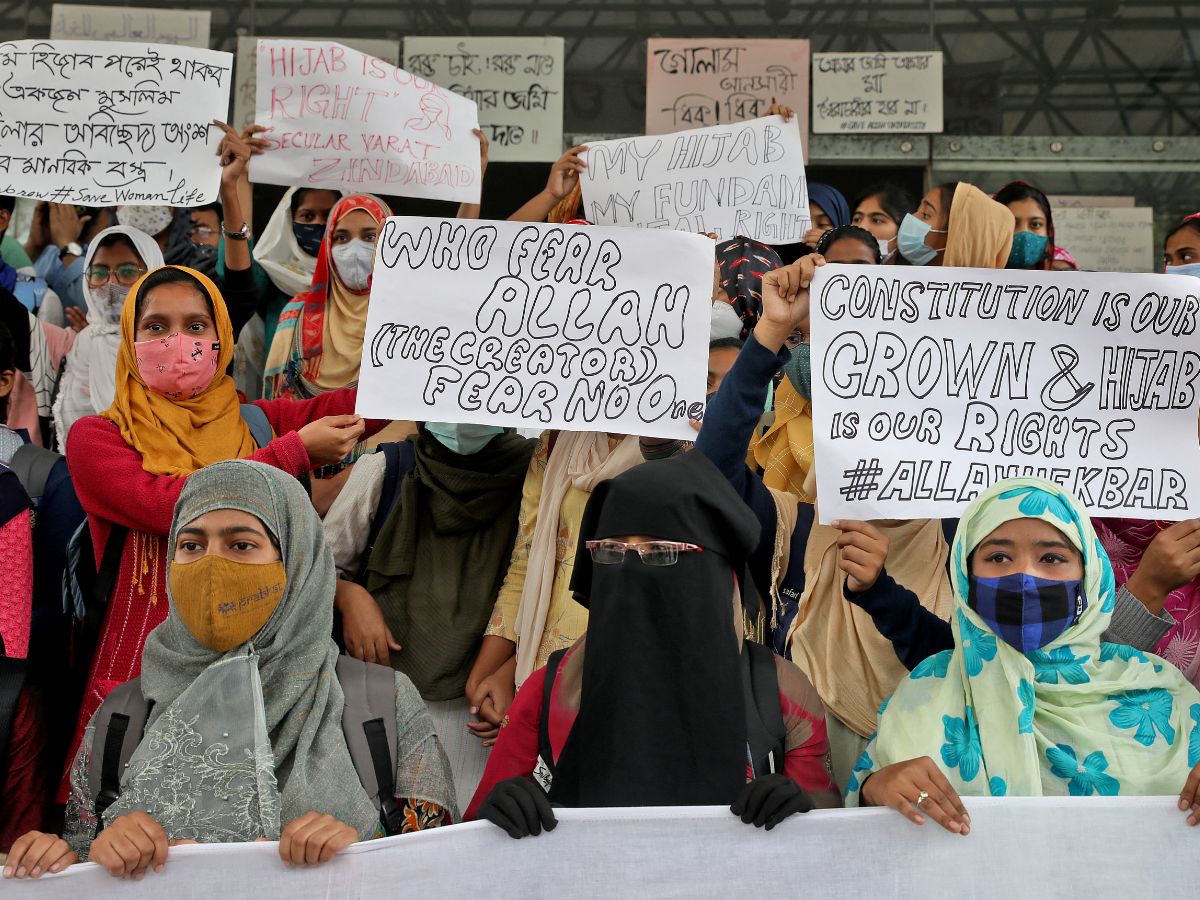
The hijab row is likely to intensify in Karnataka with educational institutions reopening on June first week after vacations – with Hindu organisations including the Vishwa Hindu Parishad (VHP), opposing the state government’s decision to repeal the government order passed to restrict religious outfits like hijab and other religious symbols, and now they are going to allow hijab and other accessories like turban, kada, tilak, holy ash, Cross and sacred thread in educational institutions – while ruling out the use of saffron shawls.
The authorities are closely monitoring the turn of events, as the hijab controversy had threatened to disturb law and order situation especially in the coastal Karnataka and across the State in 2022.
Despite the state government’s order prohibiting saffron shawls in educational institutions, Hindu organisations have maintained that they would continue to support students who choose to wear saffron shawls to schools and colleges.
While the controversy currently remains limited to statements and political reactions, tensions are expected to rise from June 1 onwards when most schools and colleges across the state reopen for the new academic year after the summer vacations.
Condemning the government’s decision, VHP regional secretary Sharan Pumpwell on Wednesday warned that the state government would be held responsible for any future consequences arising from the move. He also appealed to students to protest against the government’s decision.
Accusing the Congress government of pursuing appeasement politics, Pumpwell alleged that the administration was encouraging “regional extremism” through its latest directive.
He further stated that educational institutions should maintain discipline and uniformity, and alleged that the sanctity of school and college campuses had been disturbed by allowing students to wear hijabs again.
The development has triggered concern among academicians, parents and students over the possibility of communal confrontation between student groups on campuses. Authorities in Karnataka’s communally-sensitive coastal region are also said to be closely monitoring the situation.
The hijab controversy in Karnataka first erupted in early 2022 during the BJP government led by then Chief Minister Basavaraj Bommai.
The Bommai government had issued a dress-code order in February 2022 prohibiting students from wearing religious attire, including hijabs, in classrooms where uniforms were prescribed.
The controversy began after Muslim students were allegedly denied entry into colleges in Udupi for wearing hijabs. Subsequently, the government issued a directive stating that clothes disturbing “equality, integrity, and public law and order” should not be worn in educational institutions, effectively resulting in a hijab ban in uniform-mandated institutions.
The Karnataka High Court upheld the ban in March 2022, following which the matter reached the Supreme Court. The apex court delivered a split verdict, and the matter remains pending.
The controversy has now resurfaced after the ruling Congress government withdrew the Bommai-era restrictions. Under the revised directive, students are permitted to wear “limited traditional and practice-based symbols” including hijabs that complement the prescribed school uniform.