
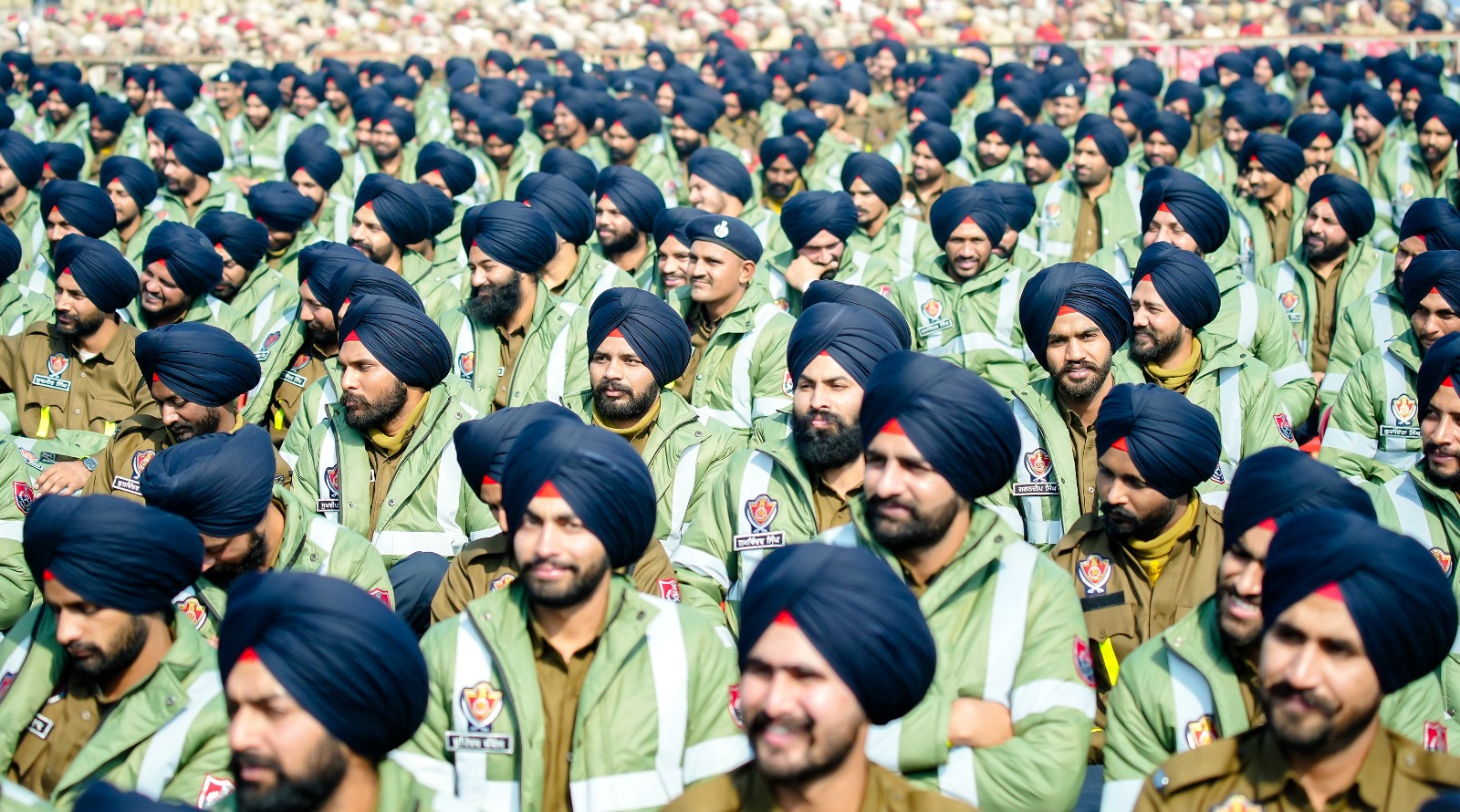
Exposure to international best practices in road safety through collaboration with institutes in California, Australia, and Hyderabad. Crash scene documentation and legal training to support post-accident FIRs and court proceedings. The teams are also evaluated monthly through command centre feedback, performance audits, and public satisfaction metrics. Punjab Police Headquarters works closely with the Road Safety Secretariat to maintain service quality.
Accountability and Transparency
To prevent abuse and ensure clean operations, the SSF’s entire system is digitally monitored:
Body-worn cameras record every rescue and intervention
All calls, dispatches, and response durations are digitally logged
Dashcam footage is archived and used for post-incident review and traffic enforcement
Mobile devices used by SSF teams are configured with pre-loaded checklists and reporting apps
The objective is to provide zero-delay, zero-leakage, and zero-corruption service at accident sites—setting a new benchmark in traffic policing in India.
Complementary State Initiatives
While the SSF has been the most visible change on Punjab’s roads, the state government has also rolled out allied initiatives to enhance the impact:
1. Rectification of 750+ identified black spots through engineering changes—signage, reflective paint, rumble strips, crash barriers
2. Launch of Intelligent Traffic Management Systems (ITMS) in urban clusters and toll plazas for speed and red-light monitoring
3. Helmet and seatbelt enforcement campaigns with integration of e-challan systems
4. Public outreach and awareness campaigns in schools, panchayats, and transport hubs on road discipline
5. Emergency corridor protocols with hospitals to pre-book trauma beds for patients arriving via SSF units
6. Capacity-building workshops for hospital staff to handle trauma cases better
7. Monthly performance reviews shared publicly to increase transparency and public confidence
Challenges and the Road Ahead
Despite the impressive figures, challenges remain. Critics point out:
The 35,000 lives saved metric, while credible, lacks granular public disclosure
Interior rural areas still lack immediate coverage compared to major highways
Budget constraints could affect SSF’s future expansion if not ringfenced
However, the Punjab government maintains that it is already working on Phase II of SSF expansion to state rural roads and urban peripheries. A pilot project to include drones for remote site surveillance and ambulance pairing is also under consideration.
Additionally, the Road Safety Secretariat is in talks with medical colleges and private hospitals to develop an integrated trauma response grid that works seamlessly with the SSF network.
With fatalities on highways dropping by more than 45%, over 35,000 lives saved, and accident response time reduced to under 8 minutes, the Sadak Suraksha Force is being lauded as a national model in road safety governance.
Chief Minister Bhagwant Mann has proposed that this model be studied and replicated by other states. Delegations from Haryana, Himachal Pradesh, and Madhya Pradesh have already conducted field visits to assess SSF operations.
Punjab’s roads, once notorious for frequent fatal crashes, are now being viewed as examples of intervention-driven safety transformation. As the state continues to invest in infrastructure and technology, the SSF stands as a clear reflection of what determined governance can achieve in saving lives, reducing grief, and restoring public trust in law enforcement systems.
The success of the SSF could very well be the foundation for a nationwide shift in how India tackles road safety, trauma care, and emergency response in the years ahead.
* Emergency corridor protocols with hospitals to pre-book trauma beds for patients arriving via SSF units
* Capacity-building workshops for hospital staff to handle trauma cases better
* Monthly performance reviews shared publicly to increase transparency and public confidence
Challenges and the Road Ahead
Despite the impressive figures, challenges remain. Critics point out:
· The 35,000 lives saved metric, while credible, lacks granular public disclosure
· Interior rural areas still lack immediate coverage compared to major highways
· Budget constraints could affect SSF’s future expansion if not ringfenced
However, the Punjab government maintains that it is already working on Phase II of SSF expansion to state rural roads and urban peripheries. A pilot project to include drones for remote site surveillance and ambulance pairing is also under consideration.
Additionally, the Road Safety Secretariat is in talks with medical colleges and private hospitals to develop an integrated trauma response grid that works seamlessly with the SSF network.
With fatalities on highways dropping by more than 45%, over 35,000 lives saved, and accident response time reduced to under 8 minutes, the Sadak Suraksha Force is being lauded as a national model in road safety governance.
Chief Minister Bhagwant Mann has proposed that this model be studied and replicated by other states. Delegations from Haryana, Himachal Pradesh, and Madhya Pradesh have already conducted field visits to assess SSF operations.
Punjab’s roads, once notorious for frequent fatal crashes, are now being viewed as examples of intervention-driven safety transformation. As the state continues to invest in infrastructure and technology, the SSF stands as a clear reflection of what determined governance can achieve in saving lives, reducing grief, and restoring public trust in law enforcement systems.
The success of the SSF could very well be the foundation for a nationwide shift in how India tackles road safety, trauma care, and emergency response in the years ahead.