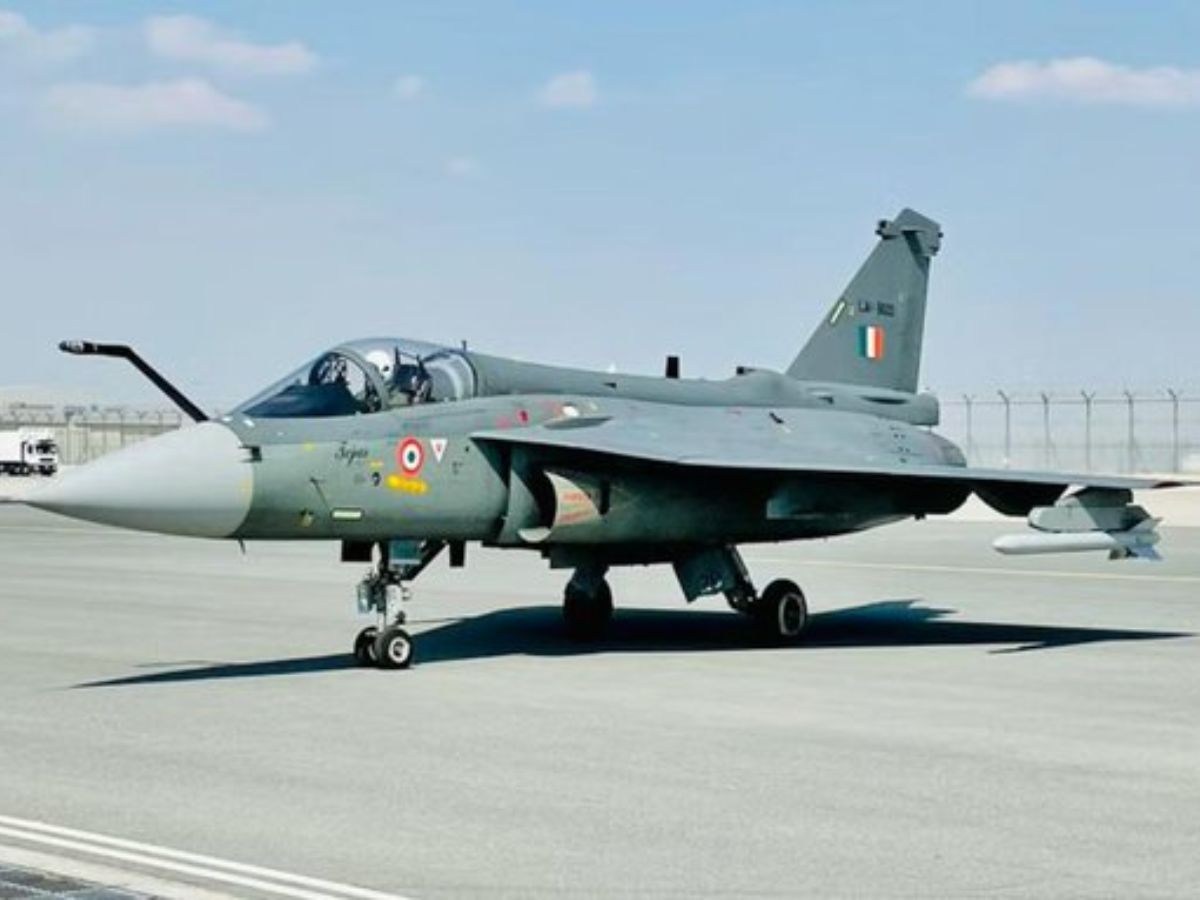
India’s Hindustan Aeronautics Ltd (HAL) has responded to the recent Tejas fighter jet crash in Dubai. The state-owned defence manufacturer said the incident was an isolated occurrence caused by “exceptional circumstances”.
The company did not share further details but assured that the crash would not affect its business operations, financial performance or future aircraft deliveries. The remarks come days after a Tejas jet crashed during an aerial display at the Dubai Airshow, drawing global attention to India’s indigenous fighter program.
Tejas Dubai Crash Sparks Concern
On Friday, a Tejas fighter jet plunged to the ground in a ball of fire during a live demonstration. The crash happened in front of thousands of shocked spectators. According to officials, the crash killed the pilot and triggered immediate discussions about the safety and export prospects of the aircraft.
The Indian Air Force (IAF) announced that it will set up a court of inquiry to determine the exact cause. HAL and the aircraft’s engine supplier, General Electric (GE), have both stated that they will support the investigation.
Tejas: Key Part of India’s Air Force Modernisation
Tejas, which means “brilliance” in Sanskrit, plays an important role in India’s plan to upgrade its ageing fleet. Much of the IAF’s current inventory consists of Russian and ex-Soviet aircraft. Tejas represents India’s push toward a home-grown defence ecosystem after nearly four decades of development.
The jet has become a symbol of India’s technological ambition and self-reliance in defence production. The government also hopes to use it as a competitive export offering for friendly nations looking for lightweight fighter jets.
Tejas Crash Dampens Export Prospects
While India has worked hard to promote Tejas at global events, the Dubai crash has raised concerns among international buyers. Analysts say such a public loss could slow India’s efforts to pitch the jet overseas. They also warn that the incident may temporarily shift attention away from India’s progress in domestic defence manufacturing.
However, experts also note that aircraft accidents during displays are not unprecedented. They highlight that many air forces and manufacturers have faced similar incidents without long-term damage to their programs.
HAL Says Operations Will Continue Normally
HAL said on Monday that the crash would not impact scheduled deliveries or the company’s overall business. The company’s stock, which had fallen 3% earlier in the day, stabilised after the announcement.
HAL has also reiterated that it remains committed to supporting the IAF and global partners. GE has issued a similar statement confirming its participation in the investigation.
India’s Defence Image Faces a PR Test
The Tejas crash presents a new challenge for India—not just technically, but diplomatically. As India expands its defence exports and positions itself as an emerging aerospace power, global perception becomes increasingly important. Analysts say India will now face a “public relations test” to reassure buyers, restore confidence, and highlight the aircraft’s long record of safe performance before the Dubai incident.
This moment may push India to strengthen communication strategies around indigenous defence platforms and accelerate upgrades to the Tejas program to reinforce its credibility on the world stage.