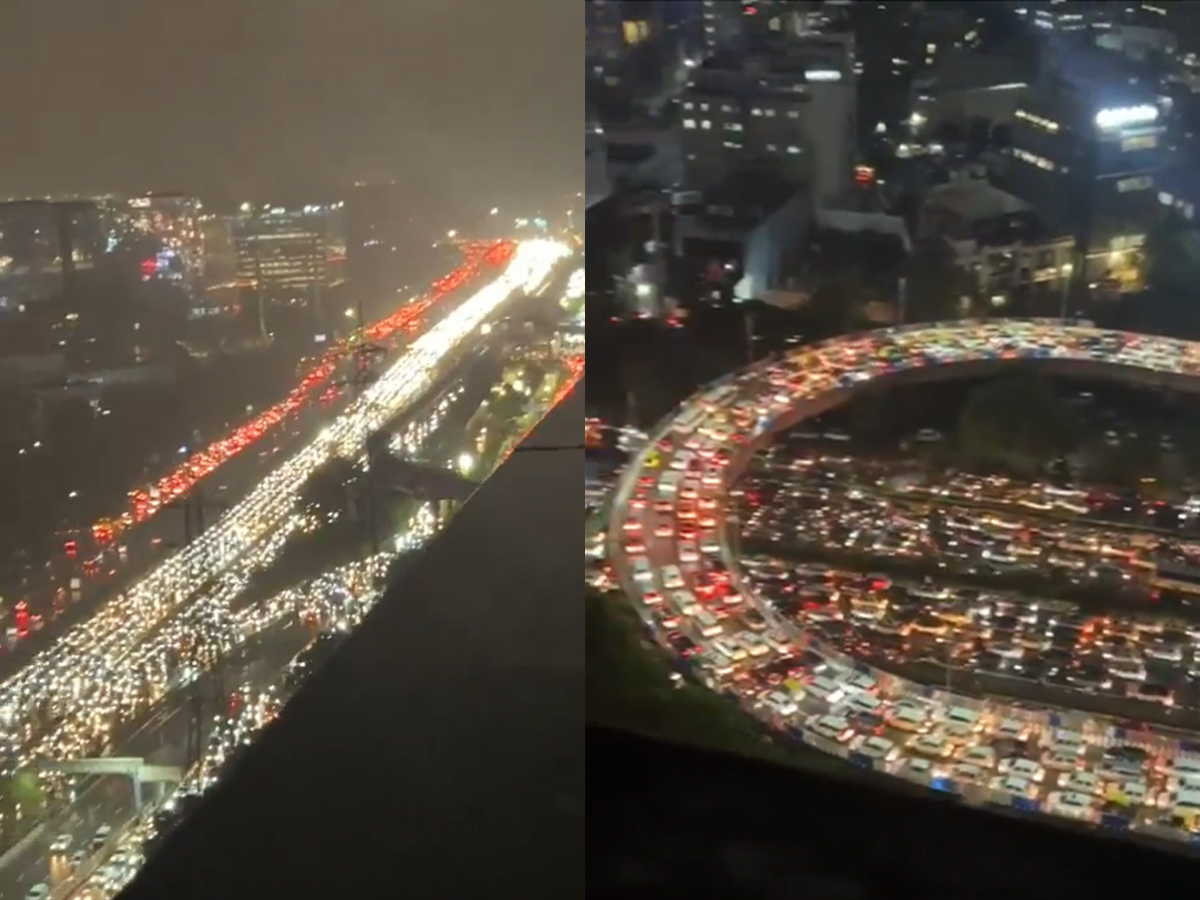
Torrential rain hit Gurgaon on Monday afternoon, which caused flooding in several parts of the city and caused massive traffic jams. The downpour started around 3:30 pm and continued for hours, leaving vehicles stranded and commuters stuck in chaos.
Waterlogging, two to three feet deep in some areas, blocked key stretches. A 4-km-long jam stretched from Hero Honda Chowk to Narsinghpur on NH-48. Vehicles moved at a snail’s pace, while many broke down in the middle of the road.
Areas Worst Hit by Flooding
According to district records, Gurgaon received an average of 45 mm of rainfall between 8 am and 5 pm. Wazirabad reported the highest with 85 mm, followed by Kadipur and Harsaru with 80 mm each. Other areas like Badshahpur, Sohna, Manesar, Pataudi, and Farukh Nagar also recorded heavy showers.
Gurgaon Traffic Nightmare After Rain! 🚨
Huge traffic jam on Delhi-Jaipur Highway. Thousands of vehicles stuck. People trapped for hours as rain stops the city. pic.twitter.com/OBGfebIV0O
— زماں (@Delhiite_) September 1, 2025
Narsinghpur was among the worst affected, with knee-deep water submerging streets.
Residents struggled to move through flooded lanes, while shopkeepers tried to block water from entering their stores, and two-wheelers were almost swept away by strong currents in some areas.
Commuters Stuck for Hours
The rain caused severe disruptions for commuters. Vishal Rajput, stuck on NH-48 near Hero Honda Chowk, pointed to vehicles struggling to move through the flooded road.
For many, short trips turned into hours-long struggles. “What is usually a 30-minute drive from Sector 30 to Sector 90 took me more than two hours,” said Ritu Malhotra, a marketing executive. Another commuter, Ansu Lal, added, “We didn’t move for 15 minutes near Signature Tower; the waterlogging made it impossible for traffic to clear.”
Several residential and commercial areas, including Sector 31, Sector 29, Sector 45, Sector 56, DLF Phase 3, and Palam Vihar, reported severe waterlogging. Basements of housing societies and offices were also flooded.
Residents Blame Poor Drainage
Locals said the problem happens every year during the monsoon. They blamed poor drainage and unplanned construction for the crisis. Despite repeated complaints, they claimed authorities had not provided a permanent solution.
GMDA’s Response
The Gurugram Metropolitan Development Authority (GMDA) said its Flood Control Office has been working around the clock since July. Officials said machinery, manpower, and helplines are in place to provide immediate assistance.
“The Flood Control Office has been set up to provide quick relief to residents during the rains. Necessary measures to keep roads safe and free of waterlogging are being taken through the deployment of manpower and machinery. Citizens can also submit their monsoon-related grievances via the GMDA helpline to enable swift action and resolution on the ground,” said GMDA officials.
IMD Issues Red Alert
The India Meteorological Department (IMD) issued a red alert for Monday, an orange alert for Tuesday, and a yellow alert for Wednesday. Officials warned that more heavy rain is expected in the next 36 hours.
Gurgaon recorded a minimum temperature of 24.9°C on Monday. The IMD also advised residents to avoid waterlogged areas and farmers to clear drainage in fields to prevent crop loss.
Across the region, Rupnagar in Punjab recorded the highest rainfall at 22 cm, followed by Jalandhar at 20 cm and Sirsa in Haryana with 13 cm. Chandigarh logged 8 cm during the same period.
The IMD warned of possible flash floods in low-lying areas and asked people to stay alert until the rains ease after September 3.