
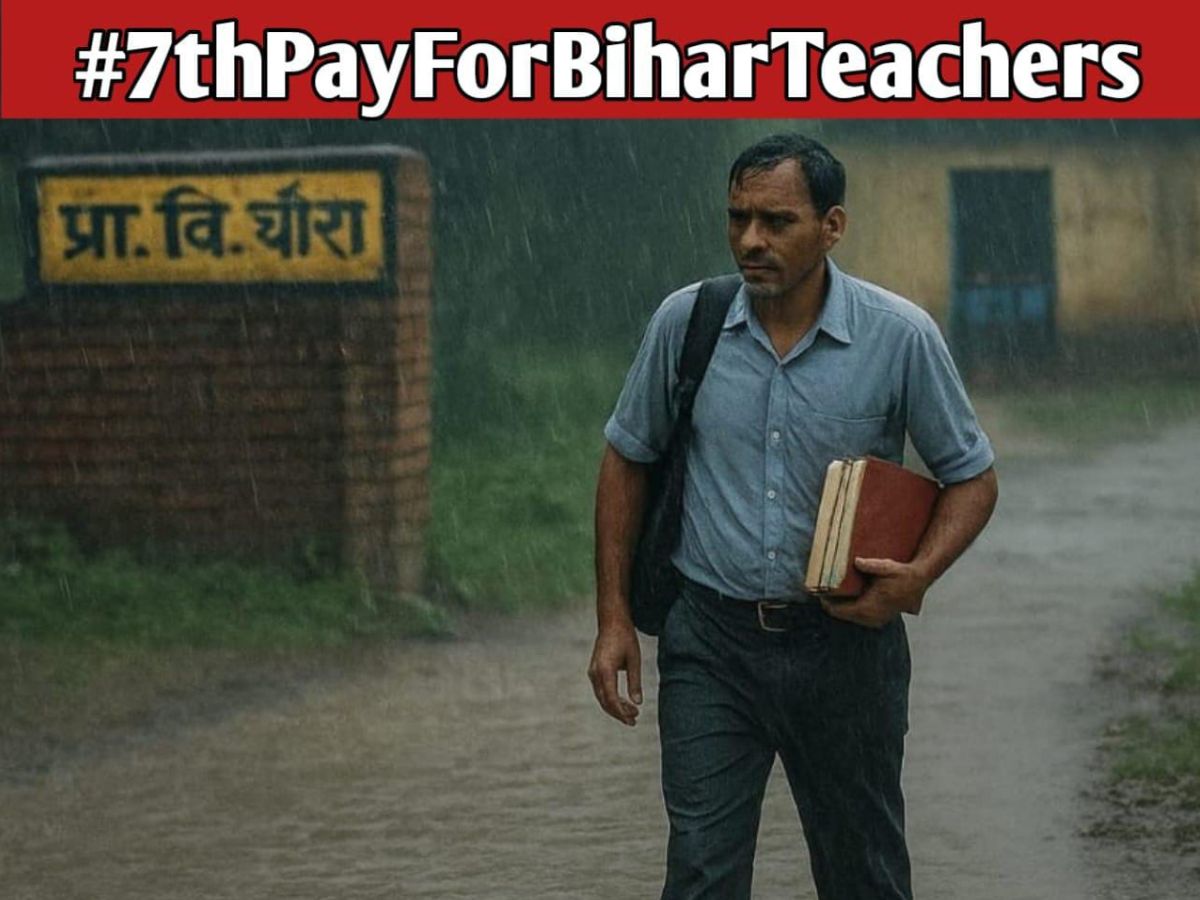
Bihar has been witnessing an increasing popular demand has been made for the implementation of the 7th Pay Commission proposals for teachers, echoing the rising frustration and ambitions of the state’s educators. Though the 7th Pay Commission has been applied to all Indian states, Bihar’s teachers continue to look for the government’s official endorsement of its increased salary and benefit package. The delay has triggered large-scale online as well as on-ground protests as teachers demand parity with their peers elsewhere. This may be a burning political issue in the upcoming state assembly elections.
Significance of the 7th Pay Commission for Teachers
The 7th Pay Commission, recommending increased pay scales, allowances, and facilities for public servants, is intended to provide economic relief and appreciation commensurate with increasing living expenses and duties. Although most other states have already integrated these recommendations, Bihar teachers lack this increment, resulting in discontent in different education sectors. Teachers who won their seats in the Bihar Public Service Commission (BPSC) have especially expressed themselves through a chain of social media campaigns and online agitations, making the demand more visible at state as well as national levels.
Digital Protests and Social Media Campaigns
This public appeal picked up steam over the last few months when Bihar teachers and teachers’ unions held a one-day online protest, all of them tweeting to Bihar Chief Minister Nitish Kumar, asking him to quickly implement the 7th Pay Commission. As per senior teacher leaders, this delay reduces the morale of the teachers, who are the backbone of Bihar’s education system. They maintain that on-time wage adjustments are necessary not just for individual well-being but also to hold on to talent and improve the quality of education in the state.
Physical Protests and Mass Demands
There have been physical protests along with social media demonstrations, such as organized marches and black badge protests in different districts, based on issues of frozen salaries and delayed payments. Permanent and contractual teachers have both shown disappointment, citing how delays impact their own economic stability in the face of inflation and increasing costs. They stress that Bihar teachers should be treated with the same respect as other state teachers who have been favored by the 7th Pay Commission’s new salary structure.
Pending Arrears and Government Response
Further complicating matters is the fact that several retired and serving teachers have pending arrears and pay revision claims extending back years, which the state government has yet to settle. The teachers’ unions have stressed that resolving these arrears, along with the full adoption of the 7th Pay scale, is crucial for restoring trust and motivation among educators. Consequently, Bihar’s government led by Chief Minister Nitish Kumar has shown that measures are in process to fulfill these demands. There have been declarations referring to the modifications in Dearness Allowance and consistent efforts directed towards implementing salary structure reforms. Yet, tangible implementation is still awaited, and teachers keep applying pressure on the government for early resolution.
Conclusion: Need for Timely Resolution
The public demand in Bihar for the 7th Pay advantage for teachers highlights a fundamental matter of educational well-being and governance. Since teachers uphold the support system of Bihar’s generations to come, addressing their rightful claims is essential in promoting a motivated teaching profession and enhancing the overall level of education in the state. The ongoing agitation sends a strong message to policymakers regarding the imperative necessity of delivering on their promise to Bihar’s teachers.