
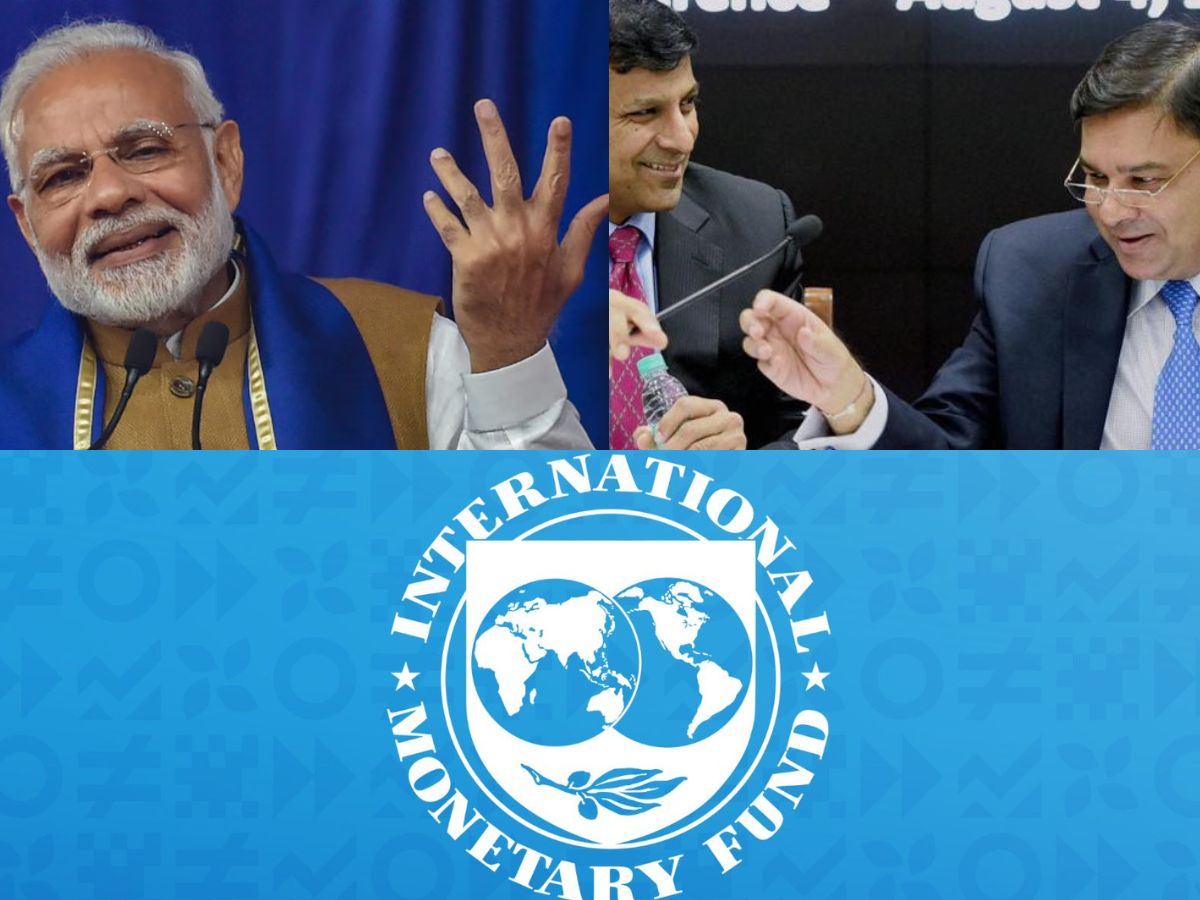
The Indian government has appointed former Reserve Bank of India (RBI) governor Urjit Patel as the Executive Director (ED) at the International Monetary Fund (IMF) for three years. This high-profile assignment was cleared by the Appointments Committee of the Cabinet as a notable part of Patel’s illustrious career in international economic governance. This may be seen as a rain check to the rumours fuelled by Modi government’s critics on Mr. Patel’s resigning as RBI’s governor prematurely, citing personal reasons. The resignation was seen as a display of the difference between the then RBI governor Urjit Patel and the Union Government.
Return to the IMF: A Full-Circle Career
Urjit Patel’s appointment to the IMF is a return to the organisation where he started his career more than three decades ago. Patel held a position as an economist at the IMF between 1990 and 1995, serving countries such as India. Subsequently, he worked on deputation from the IMF to RBI in the mid-1990s, counselling on key reforms in the banking and financial market.
Key Contributions and Roles at the RBI
Patel assumed office as India’s 24th RBI governor in September 2016, replacing Raghuram Rajan. His time in office was characterised by major monetary policy changes such as the adoption of inflation targeting, which had the effect of stabilising prices. Even with his technical success, Patel’s time in office was also characterised by conflict between him and the government concerning independence and regulation, culminating in his premature resignation in December 2018 on grounds of personal reasons. Although, some saw his leaving the RBI as a display of tensed turmoil between Mr. Patel and the Union government.
Responsibilities as IMF Executive Director
In his role as Executive Director at the IMF, Patel will act as representative of India and a coalition of regional nations such as Bangladesh, Sri Lanka, and Bhutan. On the Executive Board of the IMF, he will engage in monitoring the day-to-day activities of the institution, policy determination, and financing programs that assist member countries in economic challenges. The position is central to determining global economic stability and Indian engagement in international financial governance.
Broader Impact and Significance
Patel’s posting reflects India’s greater involvement and presence in multilateral financial institutions. His diverse experience in domestic monetary policy and international finance positions him well to address the intricacies of global economic policymaking. This assignment strengthens India’s voice at the IMF at a time of global economic uncertainty.
Academic and Professional Background
Urjit Patel was born in Nairobi, Kenya. He received his education at the London School of Economics, Oxford University, and Yale University. His wider career comprises working in India’s public and private sectors, advisory, and leadership positions at multilateral financial institutions like the Asian Infrastructure Investment Bank (AIIB).
In summary, Urjit Patel’s appointment as Executive Director for IMF is a return to a central position in global economic policy and a reflection on his abilities in guiding India’s economic interests globally. His professional integrity and dazzling experience talks about his competence and Indian Government seems to have trusted him once again with a critical responsibility.