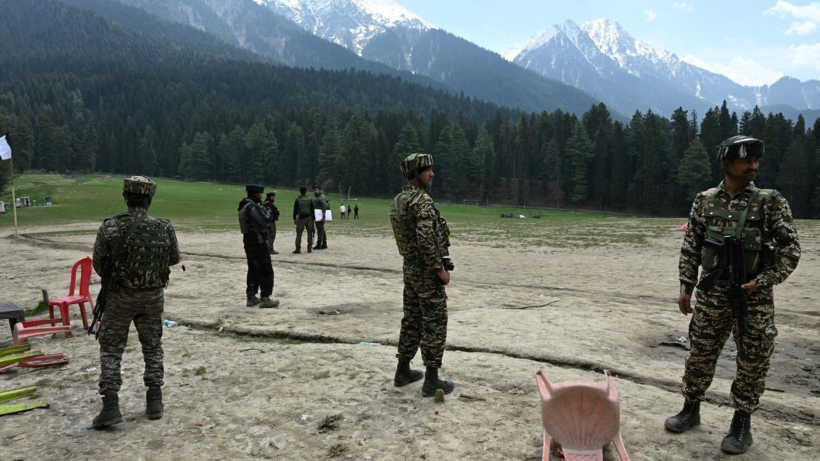
A funeral in absentia (Janaza-Ghaib) was recently held in Khai Gala, a village in Pakistan-occupied Kashmir (PoK), for Tahir Habib, a former Pakistan Army soldier and Lashkar-e-Taiba (LeT) terrorist. He was killed during India’s Operation Mahadev in Jammu & Kashmir. According to a report by The Times of India, this funeral serves as further proof of Pakistan’s involvement in the April 22 Pahalgam terror attack, which killed 26 civilians.
Locals Mourn, But Footage Raises Questions
Videos circulated on Telegram show elderly villagers in Khai Gala offering prayers for Tahir. He was reportedly a key figure behind the Pahalgam massacre, and his funeral adds to existing evidence that the attackers came from across the border, highlighting interstate and cross-border links to terrorism.
Internal Tensions Among Militants Surface
During the funeral, tensions escalated when LeT commander Rizwan Hanif tried to participate despite strong objections from Tahir’s family. A verbal clash followed, which shed light on rising divisions even within terror groups.
Tahir Was a High-Risk Threat to India
Tahir had been classified by Indian authorities as a Category ‘A’ terrorist due to his deep involvement in cross-border militancy. His death, along with two other operatives killed recently in Srinagar, was seen as a major success for Indian security forces.
Locals Threatened at Gunpoint, Now Push Back Against Radicalisation
According to a local source, some LeT operatives threatened villagers at gunpoint during the funeral, which sparked outrage among the residents. The source said, “People here have long been uneasy about radicalisation. After this incident, Khai Gala residents are planning a public boycott against terror recruitment.”
This reaction reflects a growing public backlash in PoK against militant groups and their recruitment efforts. It also shows how locals are increasingly resisting Pakistan’s use of terrorism as a political tool.
Broader Implications: Pakistan’s Hand and India’s Response
The Pahalgam terror attack, which took place on April 22, involved Pakistan-backed terrorists opening fire on tourists in one of Kashmir’s most visited destinations. The brutal assault left 26 civilians dead, making it one of the deadliest terror strikes in the region in recent years.
India responded with Operation Sindoor, a strategic counter-offensive aimed at neutralizing the masterminds behind the attack.
Pakistan’s Support for Terror Under Global Scrutiny
Pakistan has long been accused of using terror groups like Lashkar-e-Taiba and Jaish-e-Mohammed as part of its state policy, targeting civilians in Jammu and Kashmir and beyond. The funeral of Tahir Habib, a former soldier turned terrorist, and the events surrounding it, further expose Islamabad’s direct links to cross-border terrorism and the growing discontent even within PoK.