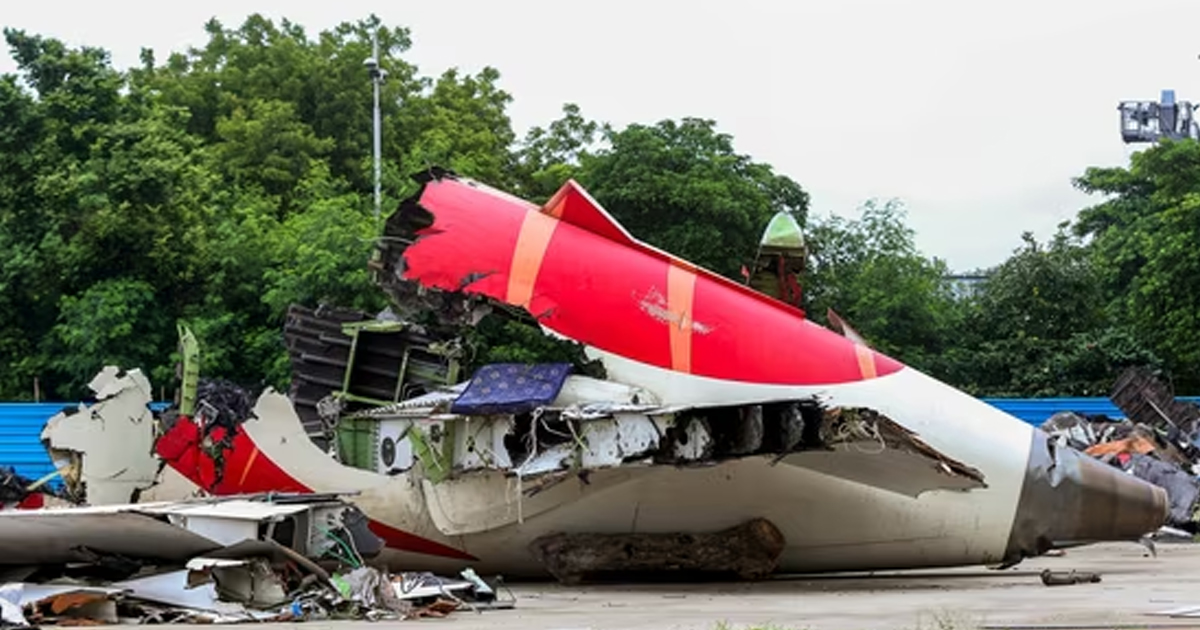
The probe into the devastating Air India crash that left 260 dead last month has turned dramatic with black box recordings and preliminary evidence pointing towards a potential intentional move by the captain of the aircraft. The Wall Street Journal (WSJ), quoting individuals familiar with the US investigation, has said that the flow of fuel to both engines was cut off a few minutes after takeoff on June 12.
The cockpit voice recorder, one of two black boxes that were recovered after the crash, recorded an instance when fuel switches were manually shut off in the middle of a climb. From the WSJ report:
“A black-box recording of conversation between the flight’s two pilots shows it was the captain who flipped off switches that regulated fuel running to the plane’s two engines.”
This discovery became a key part of the international investigation underway, a shift from faulting machine failure to cockpit behavior.
Pilot Responses Under Probe
The stress levels of the two pilots at the time of the incident were also documented and are now under close examination.
“The first officer said he was surprised, then panicked, these individuals said, while the captain appeared to keep a steady head,” the WSJ report added.
Experts indicate this difference in response—one pilot unruffled, the other stunned—may be crucial to an understanding of decision-making in those last few seconds.
Captain’s Role under Scrutiny, Report Indicates
While India’s Aircraft Accident Investigation Bureau (AAIB) has not made a formal assignment of fault, sources quoted by the WSJ indicate that the captain’s role is strongly implicated.
“Details in the initial report also indicate it was the captain who switched off the switches, according to those familiar with the case, US pilots and safety experts monitoring the investigation.”
An earlier AAIB report showed one pilot denying movement of the switch and the other one questioning responsibility, but not naming either.
The order and sequence of the switch motions are currently being scrutinized. The WSJ stated, “The switches were manipulated sequentially, one after another, a second apart,” and “Approximately 10 seconds later, both switches were restored to their on position.”
Experts state this is hard to accidentally do, which adds to suspicion regarding the act’s nature.
Possible Criminal Case Under US Review
Though Indian investigators have not concluded whether human failure or machinery failure led to the crash, US officials are said to view the reasons for a criminal investigation.
“The early information has stoked the perception among some U.S. officials that criminal authorities should examine the issue, as would also be the case if the crash had taken place on U.S. soil,” WSJ stated.
Such examinations routinely include the likes of the FBI in case intentional sabotage or criminal neglect is being investigated.
While Indian authorities continue to analyze all aspects—from potential mechanical defects to psychological triggers—the global limelight now falls squarely upon cockpit behavior. International bodies and experts in aviation are following the case closely in what is set to become one of the most controversial air crash probes in recent Indian civil aviation history.