
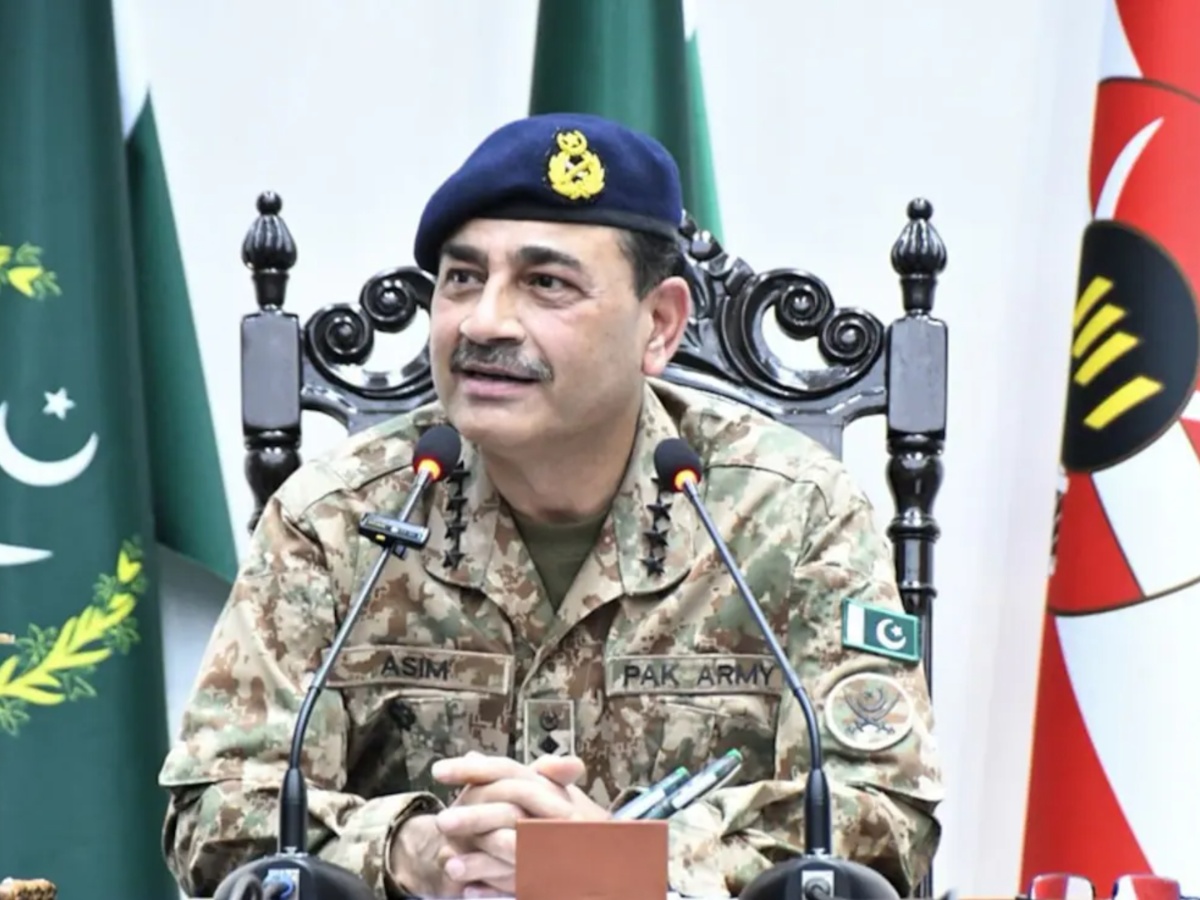
Pakistan Army Chief Field Marshal Asim Munir’s recent visit to the United States has ignited one of the sharpest diplomatic storms in years. In June, US President Donald Trump hosted Munir at the White House for an unprecedented two-hour lunch. Less than two months later, Munir returned to Florida to attend the change of command at the US Central Command. But it was not his official itinerary that drew headlines — it was the aggressive anti-India tirade he delivered during a private dinner, laced with veiled nuclear threats, that has now escalated regional tensions.
Courted by Washington
Munir’s Washington connections are deepening. His June 18 meeting with Trump broke protocol in its warmth and duration. On August 10, he joined global military leaders to witness Admiral Brad Cooper take over from General Michael Erik Kurilla as head of the US Central Command. Kurilla praised Pakistan’s “phenomenal” cooperation against ISIS-Khorasan and emphasized that the US could maintain strong ties with both India and Pakistan.
The Florida Dinner Speech
While in Florida, Munir attended a dinner hosted by Pakistani Honorary Consul Adnan Asad. About 120 members of the Pakistani diaspora were invited. Although guests were barred from carrying recording devices, details of Munir’s speech emerged. He warned that Pakistan would destroy any Indian dam built over the Indus River, framing it as an act of war. He hinted that depriving Pakistan of water could trigger a nuclear confrontation, claiming that if Pakistan went down, it would “take half the world with it.”
Munir also referred to a tweet he had commissioned — featuring a Quranic verse alongside an image of Indian tycoon Mukesh Ambani — seen as a threat to Indian industrial assets. He boasted that Pakistan had prevailed in “Operation Sindoor” and urged India to accept its losses.
Timeline: Asim Munir’s US Visits & Remarks
June 18, 2025 – US President Donald Trump hosts Asim Munir at the White House for an unprecedented two-hour lunch.
August 10, 2025 – Munir attends the change of command at US Central Command in Florida, where Admiral Brad Cooper replaces General Michael Erik Kurilla.
August 10, 2025 (Evening) – Munir speaks at a private dinner hosted by Pakistani Honorary Consul Adnan Asad. Guests barred from recordings, but reports emerge of anti-India threats.
Reported Remarks – Threat to destroy any Indian dam over the Indus River, nuclear escalation warning, veiled threats to Indian industry, and claims of victory in “Operation Sindoor.”
July 11, 2025 – India’s Ministry of External Affairs condemns Munir’s remarks as “nuclear saber-rattling” and vows to safeguard security.
August 11, 2025 – Pakistan’s Foreign Ministry rejects India’s statement as “immature” but does not deny Munir’s reported comments.
India’s Strong Response
On July 11, India’s Ministry of External Affairs condemned Munir’s remarks as “nuclear saber-rattling” and evidence of irresponsible nuclear command in Pakistan. It reaffirmed that India would not yield to nuclear blackmail and would take all necessary measures to safeguard national security.
Pakistan’s Official Defence
Pakistan’s Foreign Ministry rejected India’s statement as “immature” and “distorted.” It insisted that Pakistan opposed the use or threat of force and maintained a disciplined nuclear posture.
A Breach of Diplomatic Norms
Munir’s comments on US soil have raised serious diplomatic concerns. India may now press the US State Department to condemn his remarks. Yet Washington’s warming ties with Islamabad, and Munir’s personal rapport with Trump, could prevent a rebuke. For India, the episode underscores the need to closely monitor US-Pakistan military engagement, which appears to be regaining the closeness it once had.