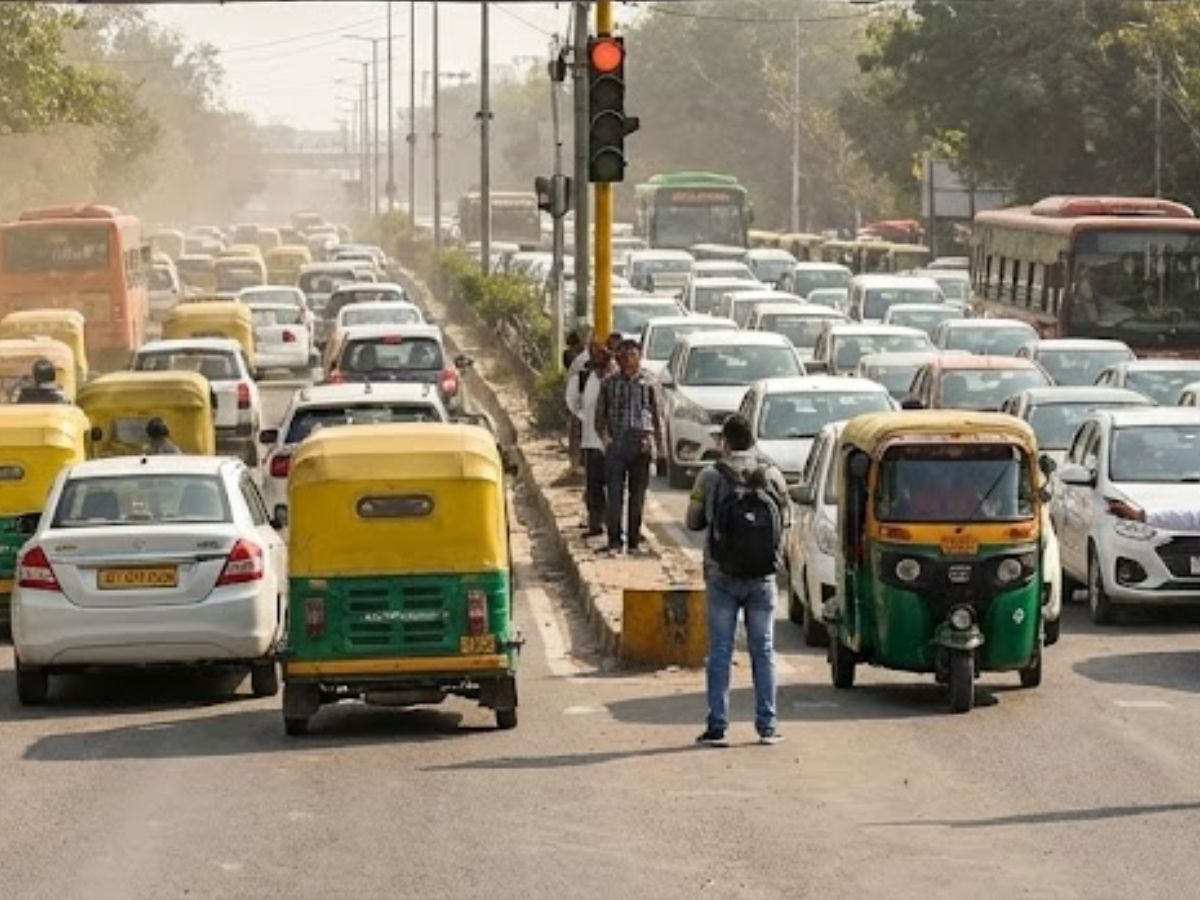
The Delhi government has mapped 62 critical traffic congestion hot spots across the city, launching a coordinated multi-agency plan to untangle these bottlenecks. Officials stated on Friday that these chronic choke points significantly contribute to the capital’s air pollution and will be addressed through a phased strategy involving short, medium, and long-term interventions.
Where Are These Traffic Bottlenecks Located?
The identified hot spots span nearly every district of Delhi. The list includes notoriously congested areas like Bhavbhuti Marg outside the New Delhi Railway Station, Madhuban Chowk, Mayur Vihar Phase III, South Extension, and the Punjabi Bagh roundabout. More than half of these 62 locations experience severe traffic jams during morning and evening rush hours. Key problem areas highlighted are Safdarjung Hospital, Ajmeri Gate, and the road outside Max Hospital in Saket. Only two locations, Guru Ravidas Marg and Najafgarh Road, were flagged as being heavily choked almost throughout the entire day.
Also Read: Trump Jr. in Udaipur After Taj Mahal Visit, Continues Indian Sojourn
What is Causing the Traffic?
A joint analysis by Delhi Traffic Police, PWD, MCD, and the transport department pinpointed recurring structural issues. These include narrow carriageways, broken medians, rampant illegal parking, hawker encroachments, and poorly designed intersections. The triggers are often hyperlocal. For example, near Tis Hazari courts, lawyers’ cars block bus stops, and in Majnu Ka Tila, construction work, tight lanes, and weekend crowds cause major traffic jams. In Burari, dug-up roads for water pipes and heavy school-time traffic slow things down every day.
What is the Government’s Action Plan?
The decongestion strategy is structured in three phases. Short-term steps, which should show results in 30 days, include putting more traffic officers on duty during rush hours, acting against illegal parking, removing encroachments, and doing quick repairs like repainting road lines and fixing potholes. The medium-term plan (30–90 days) covers redesigning junctions, adjusting signal timings, shifting bus stops, and improving signboards. For the long term (90+ days), the plan includes widening roads where possible, building foot overbridges and underpasses, and adding smart traffic systems. A joint task force will track progress with weekly reviews.
Also Read: Bigg Boss 19: Kunickaa Sadanand’s Journey Ends? Social Media Buzz Points To Bigg Boss Eviction
How is Traffic Linked to Pollution?
Experts have welcomed the focus on congestion as a direct pollution-control measure. Traffic jams are a major source of harmful pollutants, notably nitrogen dioxide (NO₂), which worsens respiratory conditions. Recent data showed monitors at high-traffic intersections like ITO and Mahipalpur recording NO₂ levels far exceeding national and WHO safety limits. While the decongestion plan is a critical step, environmentalists stress that the ultimate solution requires a larger shift towards robust public transport, safe cycling lanes, and walkable pathways to move people out of private vehicles.