
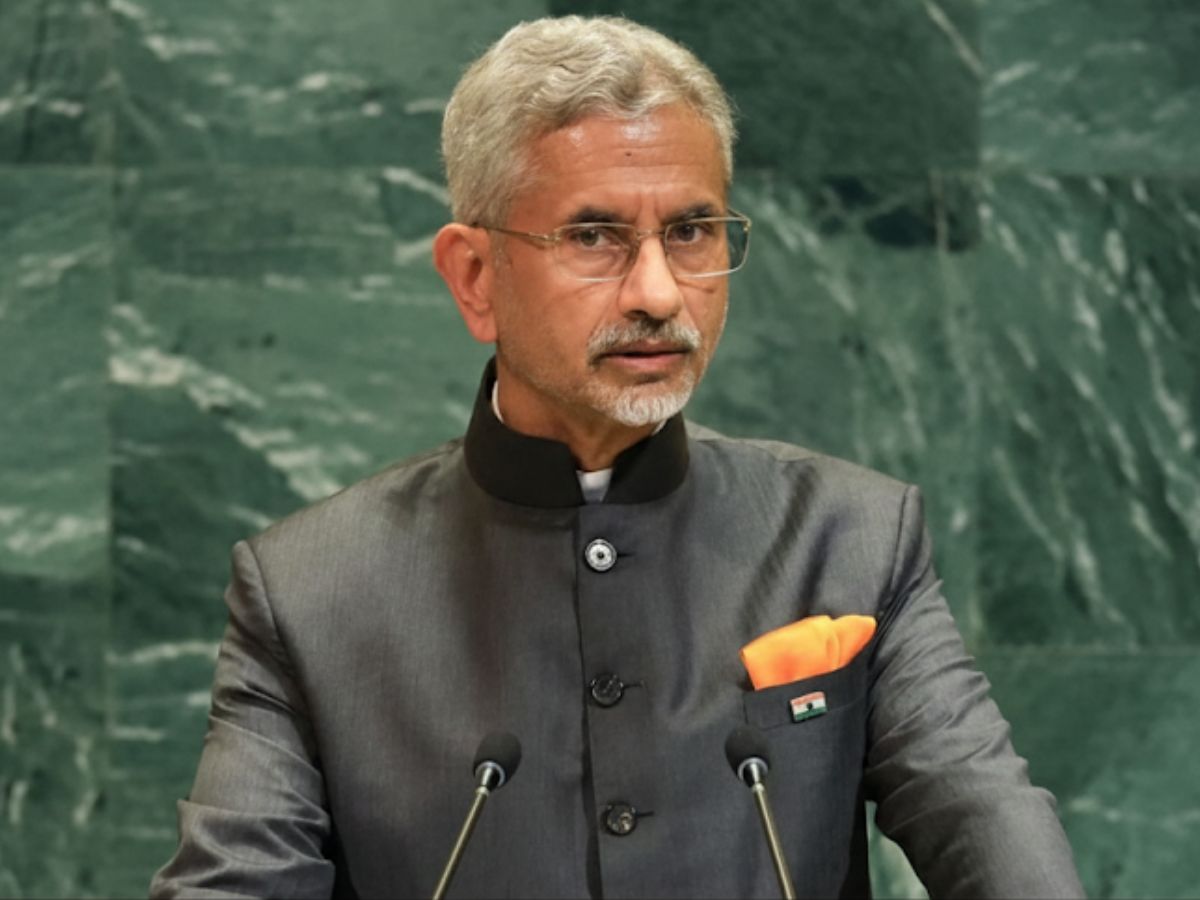
At the UNGA on September 27, Dr. S. Jaishankar, India’s External Affairs Minister, delivered a pointed speech condemning terrorism, singling out Pakistan as its global nucleus. His remarks were clear even if he did not specifically name the neighbor, which was a major development in the diplomatic spat between the two countries.
What Exactly Did Jaishankar Say About Pakistan?
Dr. Jaishankar left little to the imagination as he outlined the threats facing India. He stated that India has confronted the challenge of terrorism since its independence, “having a neighbour that is an epicentre of global terrorism.” He doubled down on this accusation, asserting, “For decades now, major international terrorist attacks are traced back to that one country. UN’s designated lists of terrorists are replete with its nationals.” He described terrorism as a force that “synthesises bigotry, violence, intolerance and fear.”
Also Read: ‘We Came to See Vijay Sir, But We Are…. Silence’: Death Toll Reaches 36 in Karur Rally Stampede
What Was the “Most Recent Example” Cited?
The minister pointed to the tragic Pahalgam attack in April 2025, which resulted in the deaths of over two dozen tourists, as the “most recent example of cross-border barbarism.” In a clear reference to India’s subsequent military response, Operation Sindoor, Jaishankar stated, “India exercised its right to defend its people against terrorism, and brought its perpetrators to justice.” This framed the action as a necessary measure of self-defence and accountability.
How Did India Respond to Pakistan’s Earlier Claims?
The context for Jaishankar’s strong words was set just hours earlier. Pakistan’s Prime Minister, Shehbaz Sharif, during his UNGA speech, claimed that Pakistan had “won the war” following India’s military action. India’s diplomatic representative, Petal Gahlot, delivered a sharp rebuttal, accusing Sharif of “glorifying terrorism.” She countered his claim of victory by reminding the assembly that it was Pakistan’s military that “pleaded with us directly for a cessation to the fighting,” adding sarcastically that if “destroyed runways and burnt-out hangars look like victory, Pakistan is welcome to enjoy it.”
Also Read: Is Your Ayurvedic Medicine Safe? The Hidden Dangers of Giloy | Explained
What is the Broader Global Context Provided?
Jaishankar positioned the problem of terrorism within a larger global context, going beyond the bilateral issues. He termed it a “shared threat to the world,” especially “when nations openly declare it as state policy,” a clear dig at long-standing allegations against Pakistan. Along with highlighting two significant current conflicts—in Gaza and Ukraine, he pointed out that “innumerable other hotspots don’t even make the headlines,” presenting terrorism as a widespread global issue that calls for increased collaboration to overcome.
The speeches from the Indian delegation presented a unified and forceful narrative, combining a direct rebuttal of Pakistani claims with a broader call for global solidarity against state-sponsored terrorism.