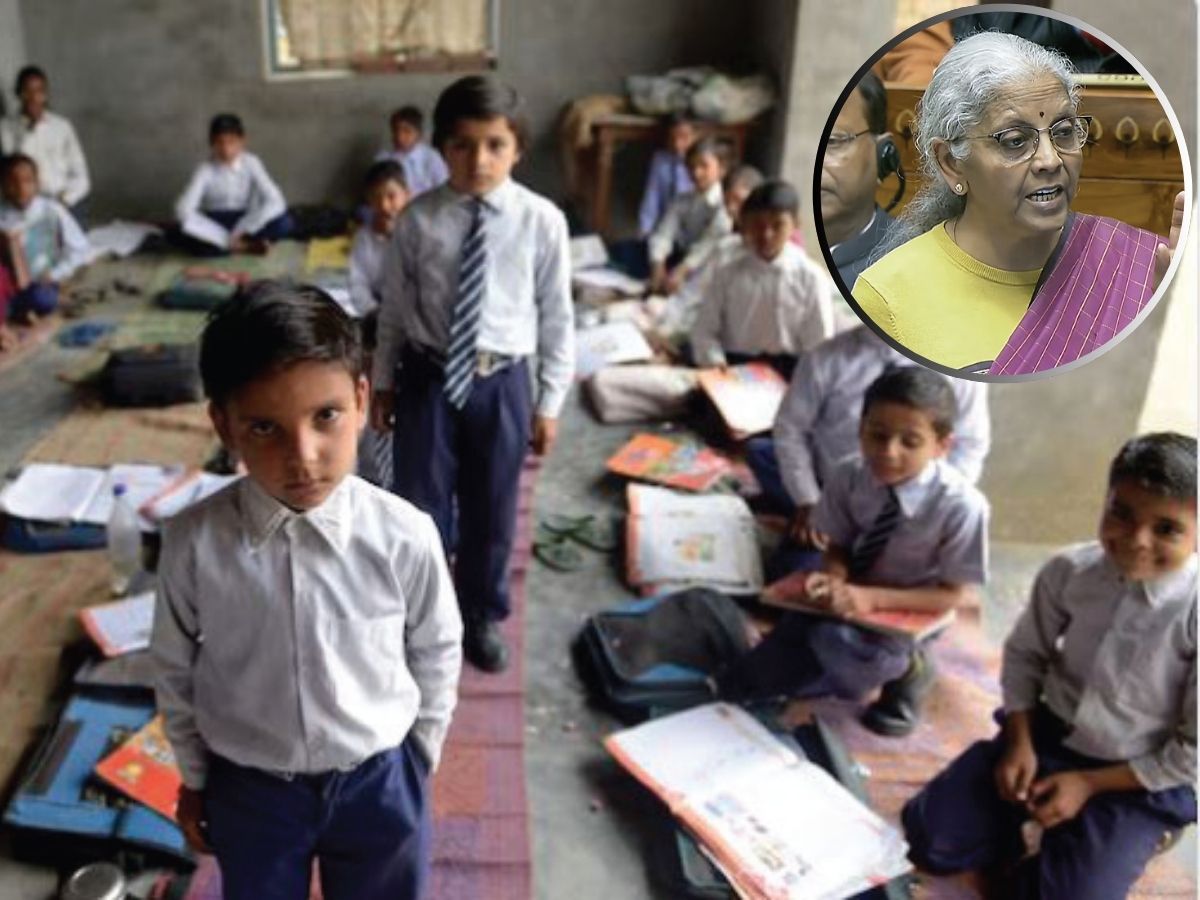
The Union government has increased its allocation for education in 2026–27, raising spending on school education, higher education institutions, student financial aid, and flagship schemes, while using the Budget speech to signal a sharper focus on skills, research, artificial intelligence, and education-to-employment linkages.
The Department of School Education and Literacy has been allocated a net Rs 83,562.26 crore for 2026–27, up from Rs 70,567.14 crore in the revised estimate for 2025–26. The increase is driven largely by higher transfers to states under centrally sponsored schemes, expanded funding for school infrastructure, and higher provisioning for nutrition programmes. Within school education, the flagship Samagra Shiksha scheme has been provided Rs 42,100.02 crore, compared with Rs 38,000.02 crore in the previous year, reflecting increased allocations for school infrastructure, teacher support, and inclusion initiatives. Spending under PM POSHAN, the mid-day meal programme, has risen to Rs 12,750 crore from Rs 10,600 crore, indicating higher nutrition support for students in Classes I to VIII. The PM SHRI schools programme sees a sharp rise in funding to Rs 7,500 crore, up from Rs 4,500 crore in 2025–26, as the government scales up its plan to develop model schools aligned with the National Education Policy. The STARS project has been retained at Rs 500 crore, while the New India Literacy Programme has been allocated Rs 160 crore, marginally higher than the previous year.
Spending on central autonomous school bodies has also increased. Allocations for Kendriya Vidyalaya Sangathan rise to Rs 10,129.41 crore from Rs 9,503.84 crore, while Navodaya Vidyalaya Samiti receives Rs 6,025 crore, up from Rs 5,750 crore. Funding for NCERT increases to Rs 681.79 crore, reflecting higher curriculum development and textbook-related expenditure.
In higher education, the Department of Higher Education has been allocated a net Rs 55,727.22 crore in 2026–27, compared with Rs 51,381.67 crore in the previous year. The increase is spread across central universities, Indian Institutes of Technology, National Institutes of Technology, student aid schemes, and research-linked initiatives. Funding for central universities rises to Rs 17,440 crore, while allocations for IITs increase to Rs 12,123 crore, up from Rs 11,525 crore in 2025–26. Support for NITs and IIEST has been raised to Rs 6,260 crore, compared with Rs 5,854 crore last year. Student support remains a key focus. The PM Uchchatar Shiksha Protsahan scheme has been allocated Rs 1,560 crore, while the PM Research Fellowship has been restored to Rs 600 crore, more than double the revised estimate of Rs 290 crore in the previous year. Transfers to states under the higher education reform scheme PM-USHA have been raised to Rs 1,850 crore from Rs 800 crore, signalling renewed emphasis on improving quality and research capacity in state universities. Spending on digital learning and research shows a mixed trend. Allocations for Digital India e-learning rise to Rs 670 crore from Rs 520 crore, while overall funding for research and innovation in higher education increases sharply to Rs 418 crore, compared with Rs 135.55 crore in 2025–26.