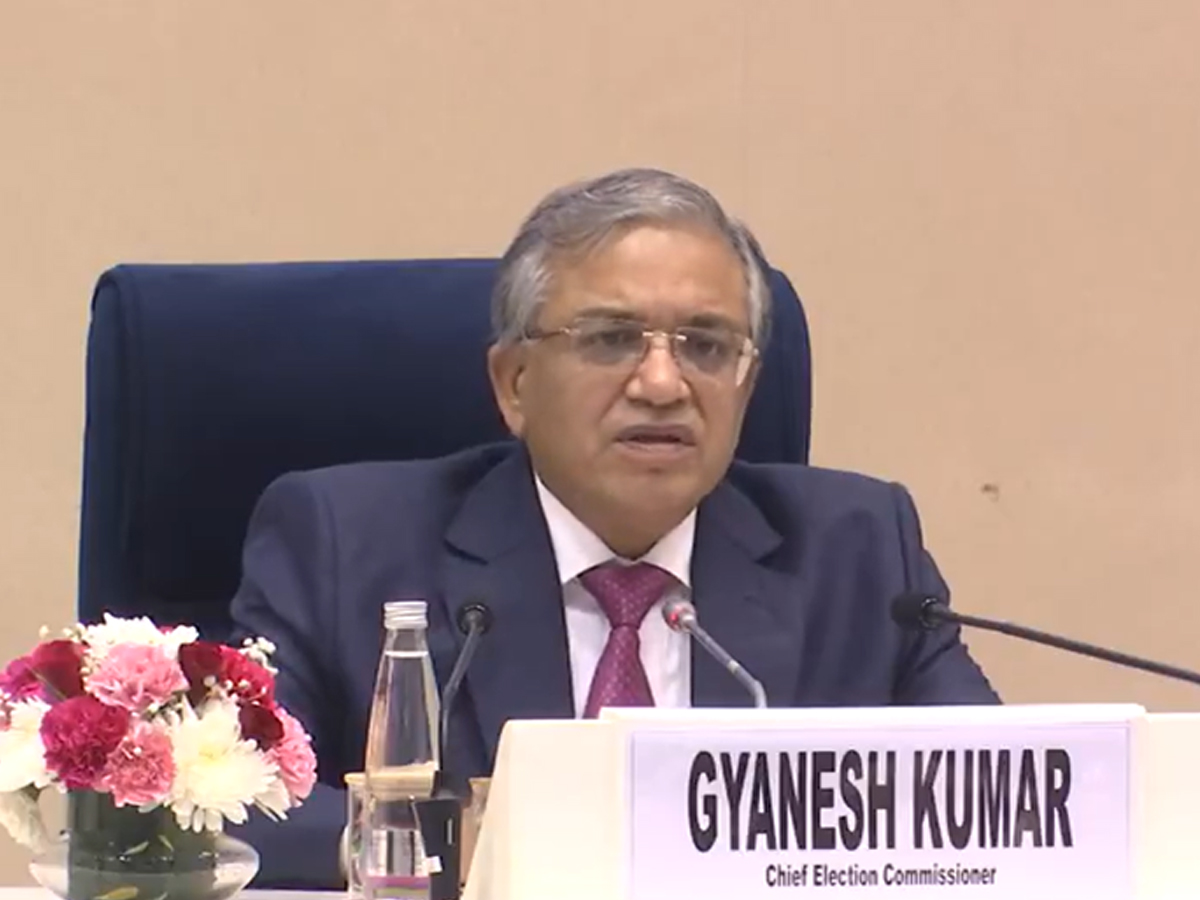
The Election Commission of India (ECI) has announced the launch of the second phase of the Special Intensive Revision (SIR) exercise across 12 states. Chief Election Commissioner Gyanesh Kumar made the announcement during a press conference held in New Delhi.
Second Phase of Voter List Revision
The SIR aims to update and verify the voters’ list to ensure accuracy before upcoming elections. The first phase was recently completed in Bihar, where assembly polls are due next month. The exercise will now expand to other states, including Tamil Nadu, West Bengal, Kerala, Assam, and Puducherry, which are scheduled to hold elections next year.
#SIR 12 States & UTs#ECI #SIRPhase2 pic.twitter.com/JA2CnyWulz
— Election Commission of India (@ECISVEEP) October 27, 2025
#WATCH | Delhi: Chief Election Commissioner Gyanesh Kumar says, “…The second phase of SIR (Special Intensive Revision) is about to be carried out in 12 States/UTs.” pic.twitter.com/bKE65UFDay
— ANI (@ANI) October 27, 2025
Kumar said, “The second phase of the Special Intensive Revision (SIR) exercise will be carried out in 12 states.” The initiative is crucial for maintaining transparency and fairness in the electoral process.
“SIR has already been done eight times from 1951 till 2004. Last SIR was done more than 21 years back in 2002-2004,” CEC Gyanesh Kumar said.
Voter List Revision Begins in 12 States
The SIR exercise aims to update and verify the voter database before the upcoming elections. The ECI recently concluded the first phase of the process in Bihar, where assembly elections are due next month. The exercise, which became a political flashpoint between the BJP and the Congress, ensured accuracy across 243 assembly constituencies in the state.
Now, the poll body will extend the revision to 12 more states and UTs, including Tamil Nadu, West Bengal, Kerala, Assam, and Puducherry, which are scheduled to go to polls next year.
Structure of the Revision Process
The Election Commission explained that each polling station has around 1,000 electors and one Booth Level Officer (BLO). Each assembly constituency comprises several polling stations, supervised by an Electoral Registration Officer (ERO), typically a Sub-Divisional Magistrate (SDM)-level officer.
Key Processes of #SIR#ECI pic.twitter.com/47OgdJWhXa
— Election Commission of India (@ECISVEEP) October 27, 2025
The ERO is responsible for preparing draft rolls, reviewing claims and objections, and publishing the final voter list. Supporting them are Assistant Electoral Registration Officers (AEROs) at the tehsil level.
The ECI also detailed the appeal structure, District Magistrates will hear first appeals against ERO decisions, while the Chief Electoral Officer (CEO) of the state or UT will handle second appeals.
BLOs’ Role and Voter Verification
During the SIR, BLOs will collect Form 6 and declaration forms for new voter inclusion and assist electors with matching or linking their details. They will make at least three visits to each household to verify details.
Voters can also submit forms online, especially urban residents or temporary migrants. BLOs will identify deceased voters, permanently shifted individuals, and duplicate registrations. The ECI clarified that no additional documents, apart from the Electoral Form (EF), are required during the enumeration phase.