
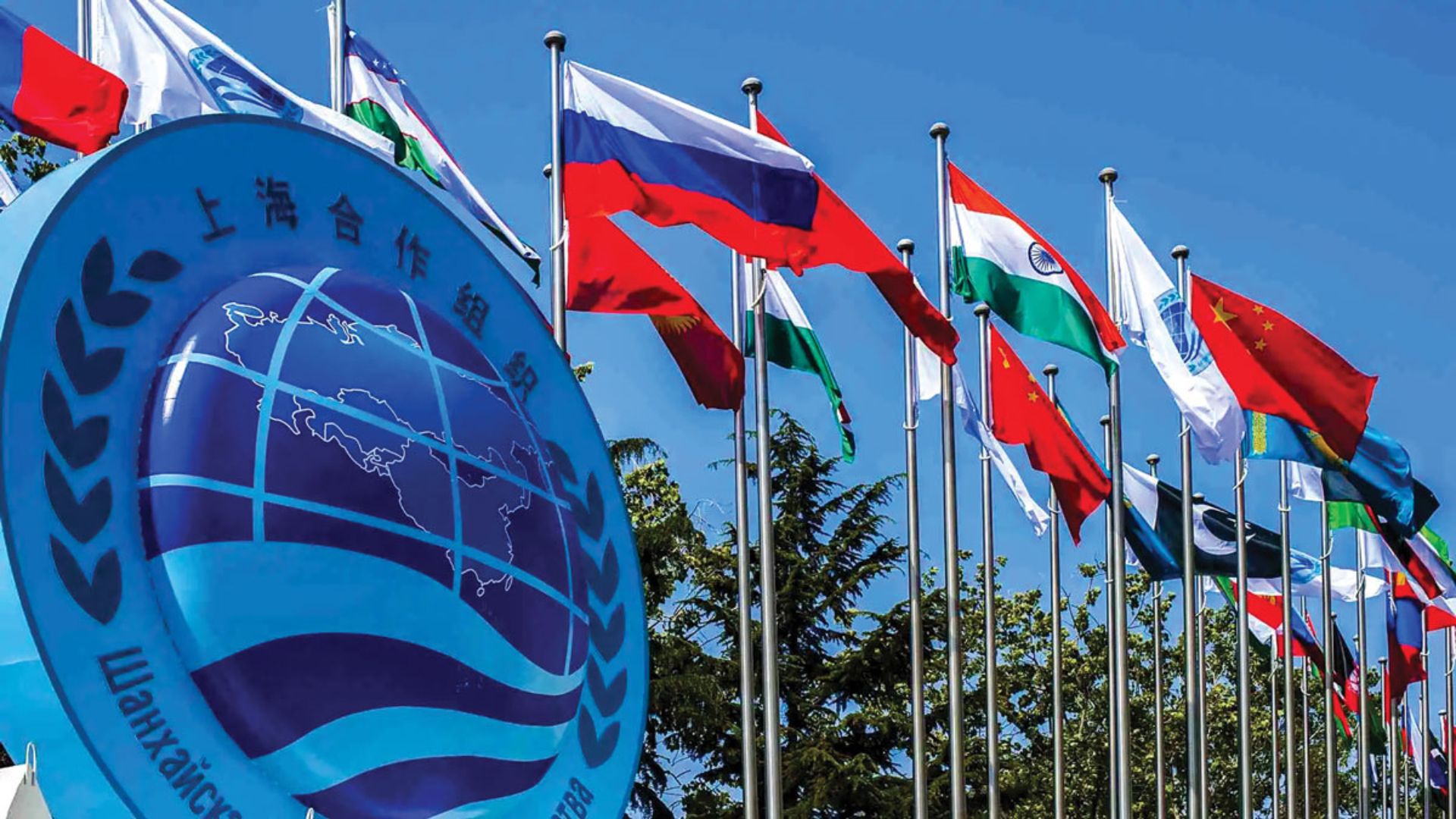
External affairs minister S. Jaishankar on Tuesday urged the Shanghai Cooperation Organisation (SCO) to adopt an uncompromising position on terrorism, hours after he met Chinese President Xi Jinping in Beijing. His remarks came during the SCO Council of Foreign Ministers meeting in Tianjin, which also included his Pakistani counterpart Ishaq Dar.
Meeting with Xi Jinping Highlights Bilateral Developments
Jaishankar, who is on his first official visit to China since the 2020 border tensions, met President Xi as part of a delegation of SCO foreign ministers. Following the meeting, he posted, “Apprised President Xi of the recent development of our bilateral ties. Value the guidance of our leaders in that regard.” He also extended greetings from President Droupadi Murmu and Prime Minister Narendra Modi.
Jaishankar had earlier met Chinese foreign minister Wang Yi on Monday and emphasized the need to resolve lingering border issues and promote stable ties based on mutual respect.
Pahalgam Attack Raised at SCO Meet
During the SCO conclave, Jaishankar strongly condemned the April 22 terror attack in Pahalgam, saying it was “deliberately conducted to undermine the tourism economy of Jammu and Kashmir, while sowing a religious divide.”
Referring to SCO’s core mission to fight terrorism, extremism and separatism, he stated, “It is imperative that the SCO, to remain true to its founding objectives, take an uncompromising position on this challenge.”
UN Statement on Pahalgam and India’s Response
Highlighting the global response, Jaishankar said, “The UN Security Council, of which some of us are currently members, issued a statement that condemned it in the strongest terms and ‘underlined the need to hold perpetrators, organisers, financiers and sponsors of this reprehensible act of terrorism accountable and bring them to justice’. We have since done exactly that and will continue doing so.”
India responded to the Pahalgam attack with Operation Sindoor on May 7, targeting terrorist camps in Pakistan-controlled regions. Hostilities between India and Pakistan continued for four days until a ceasefire understanding was reached on May 10.
Indirect Reference to China’s BRI and Past Blockades
Jaishankar’s tough tone came amid concerns over China’s repeated efforts to shield Pakistan-based terrorists at the UN and Beijing’s objection to references to the Pahalgam attack in past SCO statements. India’s defence minister had declined to endorse a joint communique at an earlier SCO defence ministers’ meet due to Pakistan’s opposition.
He also subtly criticized China’s Belt and Road Initiative (BRI), stating that cooperation within SCO must be based on “mutual respect, sovereign equality and in accordance with territorial integrity and sovereignty of member states.”
Economic Instability, Global Disorder Also in Focus
Addressing broader global challenges, Jaishankar noted that the SCO ministers were meeting amid “considerable disorder in the international system” and growing economic instability. He said, “The challenge before us is to stabilise the global order, de-risk various dimensions and through it all, address longstanding challenges that threaten our collective interests.”
India’s Support for Afghanistan and INSTC
Jaishankar also highlighted the SCO’s responsibility toward Afghanistan, urging increased development aid. “The compulsions of regional stability are buttressed by our longstanding concern for the well-being of the Afghan people. The international community, particularly SCO members, must therefore step up with development assistance. India, for its part, will certainly do so,” he said.
He also called for improved connectivity, pushing for greater focus on the International North South Transport Corridor (INSTC). The corridor, which connects India to Central Asia and Europe via Iran, is central to India’s regional transport strategy.
SCO Must Work Collectively Amid Multipolar World
Concluding his speech, Jaishankar stressed the importance of unity within the SCO in a changing global landscape. “The world is today moving towards greater multipolarity. This is not just in terms of redistribution of national capacities, but also the emergence of effective groupings like SCO,” he said. “That means taking everybody on board.”
His remarks reinforced India’s call for collective action in the face of terrorism, economic uncertainty, and evolving geopolitical alignments