
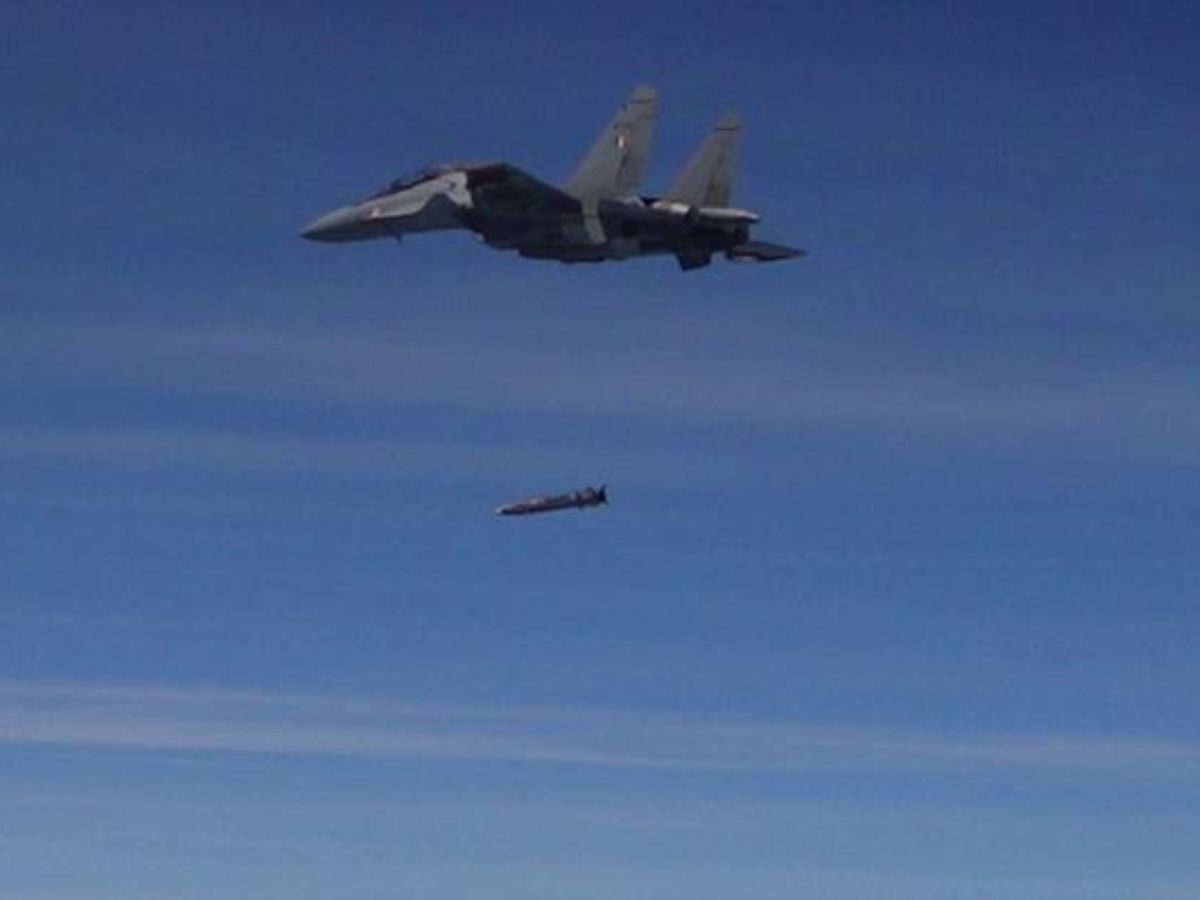
A major boost for India’s indigenous defence programme, the Defence Research and Development Organisation (DRDO) and the Indian Air Force (IAF) have successfully carried out flight-tests of the RudraM-II air-to-surface missile from an airborne platform. Conducted under demanding release conditions, the trials validated the missile’s performance and confirmed the effectiveness of its critical subsystems across challenging operational scenarios.
Officials said that after being launched from the aircraft, the missile successfully tracked and struck its designated target with a high degree of accuracy. All mission objectives were achieved, with the performance of the weapon system verified through flight data recorded by a range of tracking and monitoring instruments deployed by the Integrated Test Range (ITR) at Chandipur.
RudraM-II is a domestically developed air-to-surface missile intended to enhance the precision-strike capabilities of the Indian Armed Forces. The missile has been developed by the Research Centre Imarat (RCI), Hyderabad, which served as the lead DRDO laboratory for the programme.
The project was executed through the combined efforts of multiple DRDO laboratories, including the Defence Research and Development Laboratory (DRDL), High Energy Materials Research Laboratory (HEMRL), Armament Research and Development Establishment (ARDE), and the Integrated Test Range (ITR).
Several Development-cum-Production Partners (DcPPs) and defence-related organisations also played a crucial role in the missile’s development. Among them were Hindustan Aeronautics Limited (HAL), the Regional Centre for Military Airworthiness (RCMA), the Missile System Quality Assurance Agency, as well as a number of public and private sector industries that contributed to the programme’s successful execution.
Defence Minister Rajnath Singh praised the DRDO, IAF, Defence Public Sector Undertakings (DPSUs), development partners and industry stakeholders for the successful completion of the trials. He noted that the achievement reflects the increasing sophistication and reliability of India’s indigenous defence technologies and represents another milestone in the country’s pursuit of self-reliance in advanced weapon systems.
“The successful flight-tests underscore the growing strength of indigenous defence technologies and make a significant contribution to the vision of Aatmanirbharta in advanced military systems,” Singh said.
The Secretary of the Department of Defence Research and Development and Chairman of DRDO also congratulated the scientists, engineers and personnel involved in the project, describing the successful trials as an important achievement in India’s efforts to develop state-of-the-art indigenous missile technologies. The successful validation of RudraM-II is expected to enhance the Armed Forces’ precision-strike capabilities while further advancing India’s objective of achieving greater self-reliance in critical defence technologies.