
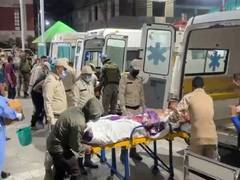
The midnight transfer of three injured Kuki-Zo youths from the Regional Institute of Medical Sciences (RIMS), Imphal, to Churachandpur Medical College on June 17 raises an uncomfortable question for Manipur: Has the state taken a step backward in its journey toward peace and reconciliation?
The three youths; Lunliandan Vaiphei (20), Genzamang Vaiphei (18), and Paogoulal Chongloi (18) were shifted under heavy security after two days of protests by Meitei and Naga groups who opposed their treatment at RIMS. The patients had suffered gunshot injuries during a June 15 clash near Leilon Vaiphei and Konsakhul in Kangpokpi district.
For the government, the transfer may have been a practical move to prevent further violence around the hospital. However, the larger symbolism of the decision cannot be ignored. RIMS is not just a hospital; it is Manipur’s premier medical institution and one of the few public spaces meant to serve all communities equally, regardless of ethnicity, religion or political affiliation.
When patients are moved from a state hospital because of pressure from protesting groups, questions naturally arise about the ability of public institutions to remain neutral during times of conflict. The incident suggests that even access to healthcare is increasingly being viewed through an ethnic lens.
The development comes at a sensitive time for the administration of Chief Minister Yumnam Khemchand Singh, who assumed office in February 2026 following President’s Rule. Since taking charge, the government has emphasized dialogue, rehabilitation and confidence-building measures among communities affected by the violence that began in May 2023.
Yet the RIMS episode highlights how deep mistrust continues to run across Manipur. The protests were fueled by anger over the recent recovery of the mutilated bodies of six abducted Naga civilians and suspicions surrounding the identities of the injured youths. What began as a law-and-order issue soon evolved into a larger debate about ethnicity, justice and state neutrality.
The concerns raised by healthcare workers are equally significant. The RIMS Nurses Association condemned the violence inside the hospital complex and pointed to the panic caused among patients, attendants and staff. Hospitals are expected to remain safe spaces even during conflict. Once medical institutions become arenas for ethnic confrontation, public confidence in healthcare systems can suffer.
The transfer may have helped defuse immediate tensions, but it also reflects the extent to which ethnic divisions continue to shape public life in Manipur.
Either way, the incident highlights that peace in Manipur remains fragile. More than three years after violence first erupted in May 2023, the state continues to grapple with unresolved issues involving land rights, political representation, rehabilitation, security and inter-community trust.