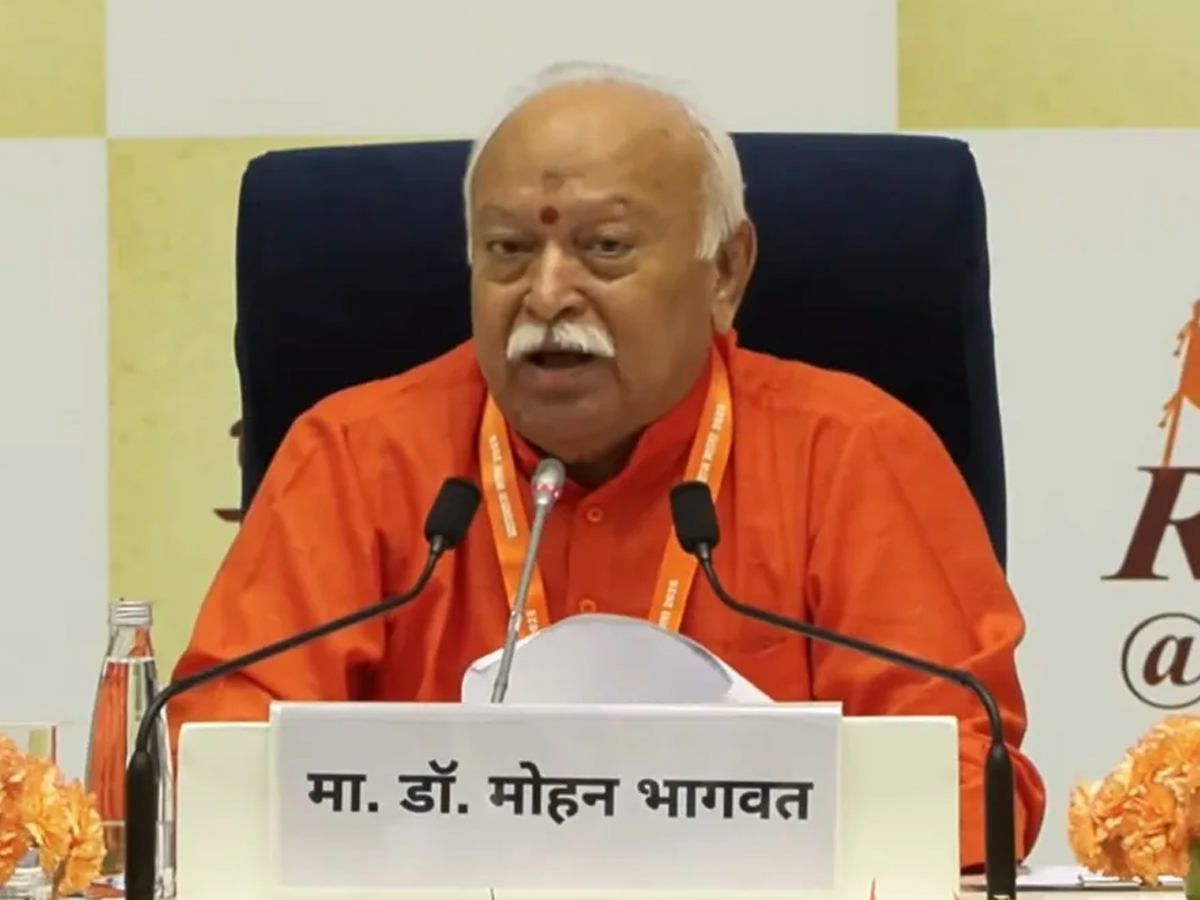
Rashtriya Swayamsevak Sangh (RSS) chief Mohan Bhagwat on Thursday dismissed claims that the organisation controls all decisions within the Bharatiya Janata Party (BJP).
Speaking on the delay in announcing the new BJP president, Bhagwat said that such assumptions are very baseless. “This is completely wrong… This cannot happen at all… I have been running the Sangh for many years, and they are running the government. Therefore, we can only give advice, not make a decision. If we were deciding, would it take so much time? We do not decide… Take your time,” he said.
He emphasised that while the RSS and BJP may have differences of opinion, there are never differences of heart. The RSS can offer suggestions, but the final decision always rests with the BJP. “On various matters, the Sangh can offer suggestions, but the decision always belongs to the BJP,” he added.
Coordination, Not Control
At an event marking the 100 years of the RSS, Mohan Bhagwat highlighted that the organisation maintains coordination with both the central and state governments. He reiterated that the Sangh does not interfere in governance or political appointments.
ALSO READ: Cloudburst Strikes Uttarakhand Again, Tehri Garhwal Sees Torrential Rain, Rivers in Spate
This clarification comes amid speculation in media and political circles about the RSS’s influence over BJP decision-making processes. Experts say Bhagwat’s statements aim to draw a clear boundary between advisory roles and political authority.
Integrating Gurukul Education with Mainstream Schools
The RSS chief also spoke about the integration of Gurukul education with mainstream education. He said Gurukul learning is about understanding India’s traditions, not living in an ashram.
Responding to a question, Bhagwat said he does not support making Sanskrit compulsory but stressed the importance of teaching the country’s history and traditions. “The 64 aspects of the Vedic era that are relevant should be taught. Gurukul education should be integrated into the mainstream, not replaced,” he said.
ALSO READ: Weather Update | Delhi Endures Sultry Day With Patchy Showers, IMD Warns of Humid Weekend Ahead
He compared the model to Finland’s education system, where teachers receive training at dedicated universities and education up to the eighth grade is taught in students’ mother tongues. “In Finland, which is a leading country in education, there is a separate university for training teachers. Many people come from abroad because the local population is small, so they accept students from all countries. Education up to the eighth grade is conducted in the mother tongue of the students, so Gurukul education is not about going and living in an ashram; it has to be linked with mainstream,” he added.
Modern Education Meets Tradition
By stressing integration rather than replacement, Bhagwat signals a push to modernise traditional Indian education while preserving cultural roots. Experts say this approach could bridge the gap between historical knowledge and contemporary learning methods.