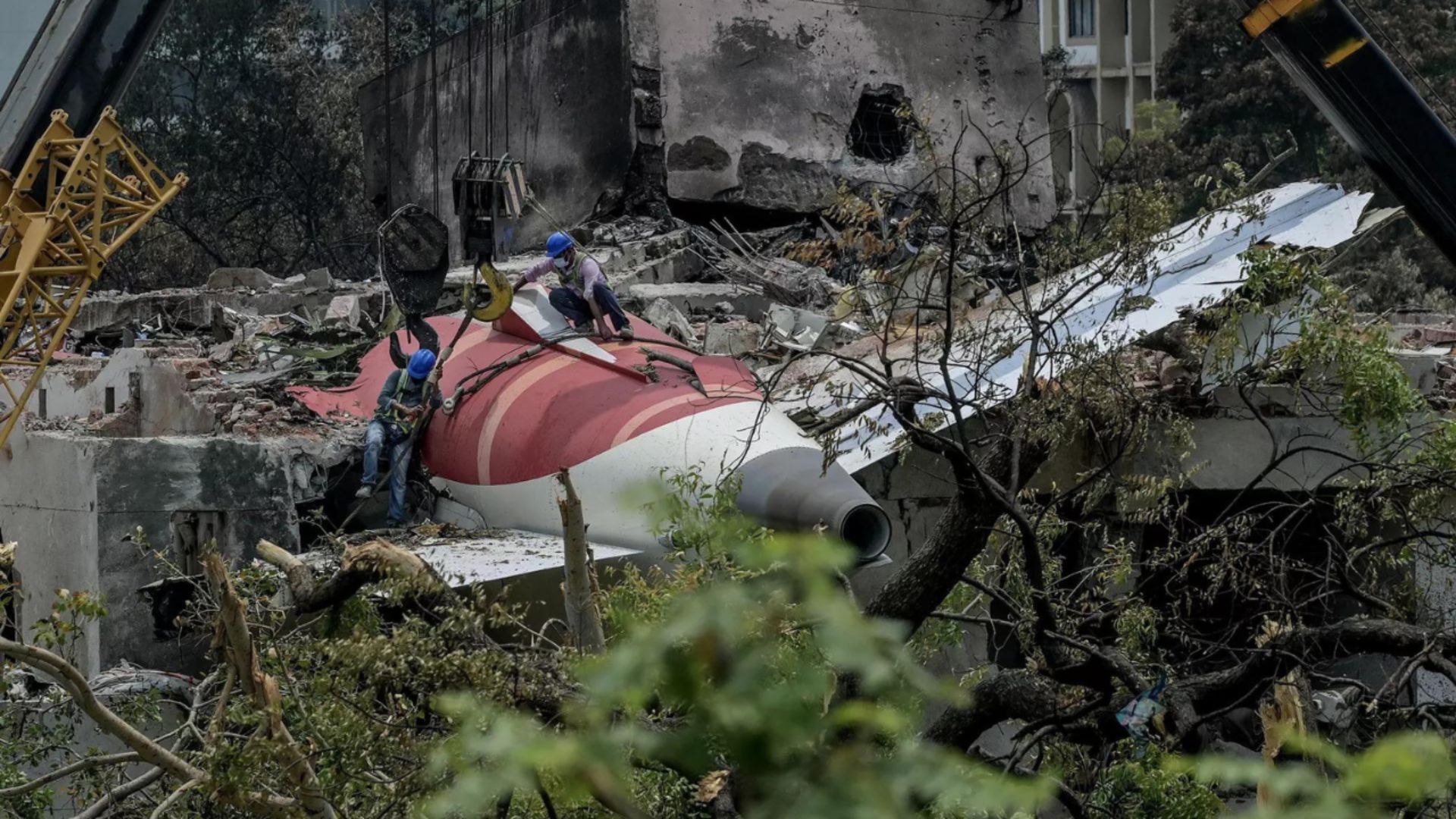
India’s civil aviation watchdog, the Directorate General of Civil Aviation (DGCA), on Monday directed all domestic airlines to inspect the fuel switch locking mechanism on all Boeing 787 and 737 aircraft by July 21. This comes just two days after a preliminary investigation into the Air India Flight 171 crash attributed the fatal incident to fuel being cut off to both engines shortly after takeoff.
The Aircraft Accident Investigation Bureau (AAIB), in its report, found the fuel control switches in the “cutoff” position, prompting concerns over pilot error or mechanical malfunction in what has become India’s deadliest single-aircraft disaster, claiming 260 lives.
“All air operators of the affected aircraft are hereby advised to complete the inspection required under SAIB Number NM-18-33, dated 17th December 2018, no later than 21st July 2025,” the DGCA advisory stated.
“Strict adherence to the timeline is essential to ensure continued airworthiness and safety of operations,” it added.
Global Scrutiny on Boeing and Honeywell Fuel Switches
The DGCA order has intensified global attention on the Honeywell 4TL837-3D fuel switches used in Boeing aircraft, particularly the 787 Dreamliner. The AAIB cited a 2018 FAA bulletin warning about potential problems with the locking mechanism. Although the FAA had not made inspections mandatory, it had urged operators to check that the switches could not be moved unintentionally.
Etihad Airways, based in the UAE, has already instructed its pilots to inspect these switches across its Boeing 787 fleet. The airline’s circular emphasized verifying that the locking feature engages properly, using light force without lifting the switch.
“Attempt to gently move (without applying excessive force) the Left (L) fuel control switch on the P10 Control Stand from ‘CUTOFF’ to ‘RUN’ without lifting the switch,” the circular noted. “If the switch cannot be moved without lifting, the locking feature is functional. No further action is required.”
An Etihad spokesperson said, “Etihad always ensures its maintenance is fully compliant,” while not commenting specifically on the circular.
Air India 171 Crash: Preliminary Findings
The 15-page AAIB report, released a month after the crash, revealed data from the aircraft’s black boxes, showing that both fuel switches moved to “cutoff” shortly after takeoff from Ahmedabad.
“At about 08:08:42 UTC (1:38pm, 42 seconds) and immediately thereafter, the engine 1 and engine 2 fuel cutoff switches transitioned from RUN to CUTOFF position one after another with a time gap of 01 sec,” the report said.
“In the cockpit voice recording, one of the pilots is heard asking the other why did he cutoff. The other pilot responded that he did not do so.”
The crew managed to restore fuel flow within 10 and 14 seconds, activating automatic engine restart, but the aircraft had already entered an irreversible descent.
The Throttle Control Module (TCM) housing the fuel switches had been replaced twice—in 2019 and 2023—on the same aircraft, as per Boeing directives.
While the report did not recommend global action for all Boeing 787-8 aircraft or their GE GEnx-1B engines, it sparked fears of design vulnerability and crew-interface failure.
Industry Experts Respond
Aviation experts had mixed reactions to the advisory.
Captain Sharath Panicker, former Air India Dreamliner pilot, said, “DGCA has issued the order mandating the fuel control switch checks as a matter of abundant caution.”
Mark Martin, CEO of Martin Consulting, remarked, “DGCA has full discretion at any time to issue a mandatory modification if it senses that safety or airworthiness is being compromised… some things have gone wrong or it’s a likely cause of that accident and therefore an airworthiness information bulletin has been elevated to a mandatory modification.”
Officials familiar with the matter confirmed that over half of Air India’s 787s and most 737s had already undergone checks, with 29 Dreamliners cleared. Four aircraft remain abroad for major scheduled maintenance.
The DGCA had earlier directed one-time enhanced checks after the crash, but Monday’s mandate signals a stronger regulatory response.
Martin added, “This order will also have an impact with global 787 operators… all regulators want to maintain the same safety and airworthiness standard. This is a good move by the DGCA.”
As global regulators observe India’s next steps closely, this inspection directive could trigger industry-wide design reassessments for fuel cutoff systems aboard commercial