
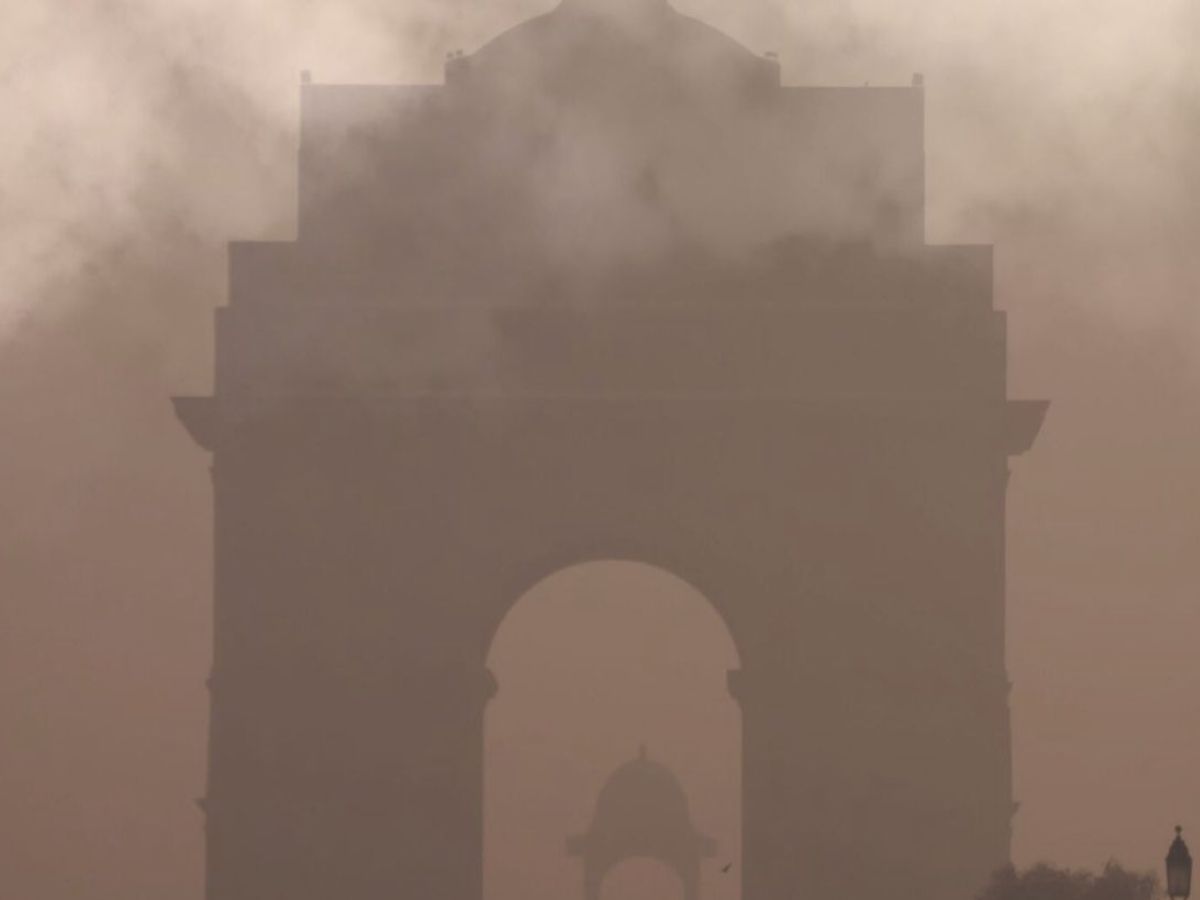
The air quality of Delhi increased sharply on Tuesday morning after there was widespread bursting of firecrackers all over the National Capital Region (NCR) on Diwali night. The Central Pollution Control Board (CPCB) data indicated that 34 out of 37 monitoring stations reported pollution levels in the ‘red zone’, which is from ‘very poor’ to ‘severe’.
At 6:05 am, the overall Air Quality Index (AQI) of the city remained at 347, firmly in the ‘very poor’ zone. The 24-hour average AQI of Delhi, made public by CPCB at 4 pm on Monday, was 345, slightly improved overnight.
Meaning of AQI Levels
As per CPCB’s air quality grading:
0–50: Good
51–100: Satisfactory
101–200: Moderate
201–300: Poor
301–400: Very Poor
401–500: Severe
These readings emphasize that the air quality in Delhi has now crossed levels that can lead to breathing issues even in healthy individuals, while critically impacting those who have pre-existing conditions.
Pollution Hotspots in Delhi
According to records from the SAMEER app (created by the CPCB), at least three stations have registered AQI readings over 400, which come in the ‘severe’ category:
- Bawana: 418
- Jahangirpuri: 404
- Wazirpur: 408
Only three locations reported relatively lower pollution levels, albeit unhealthy:
- DTU: 242
- IGI Airport (T3): 294
- Sri Aurobindo Marg: 209
Noida and Ghaziabad Also Choke
The air pollution emergency was felt outside Delhi as well. Noida’s AQI saw 324 and Ghaziabad’s 326 both under the ‘very poor’ band. Experts indicated that the levels could deteriorate further in the next couple of days as weather conditions keep pollutants close to the ground.
Authorities Step Up Measures
To counter the worsening air, the Commission for Air Quality Management (CAQM) has enforced Stage II of the Graded Response Action Plan (GRAP) in Delhi-NCR. This includes restrictions on construction, diesel generator use, and other pollution abatement measures to avoid further escalation.
On October 15, the Supreme Court had allowed the sale and usage of green firecrackers in Delhi-NCR but only for partial hours 6 am to 7 pm and 8 pm to 10 pm on the eve of Diwali and on Diwali day. But even with these limitations, mass violations have been witnessed in various areas, resulting in the recent peak in pollution.
Capital’s Air Expected to Worsen
Meteorologists and environmental experts predict that Delhi’s air quality could slip into the ‘severe’ category across more areas by Tuesday night and Wednesday, as wind speeds remain low and pollutants continue to accumulate.
The post-Diwali smog has once again highlighted Delhi’s recurring air pollution problem a toxic mix of firecracker smoke, stubble burning, and stagnant weather conditions that turns the city’s air hazardous every winter.