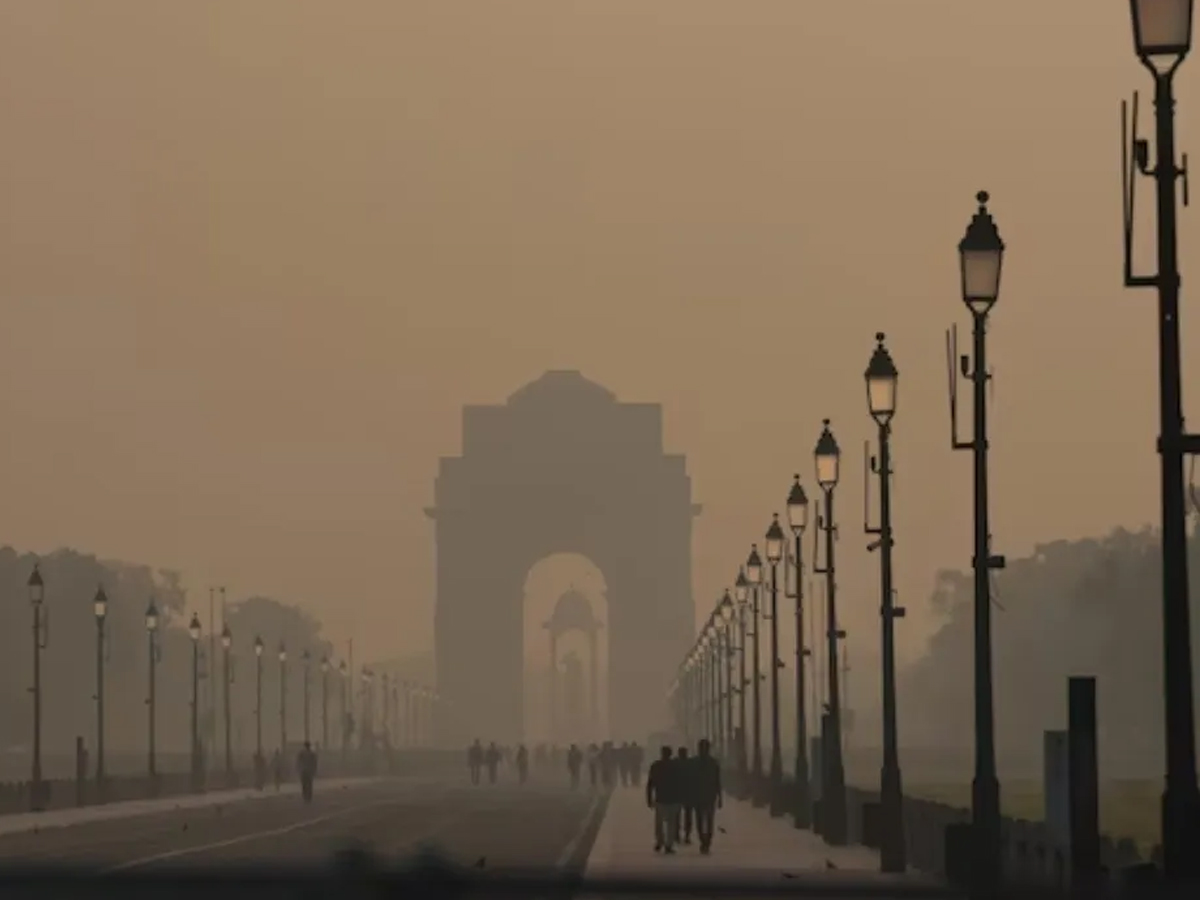
Delhi residents began Sunday with burning eyes and heavy air. A thick layer of smog covered the city from early morning. Air quality stayed deep in the ‘severe’ zone. Authorities issued fresh health warnings. Restrictions tightened as pollution reached alarming levels across all parts of the capital.
Delhi Pollution Today: What the Numbers Reveal in AQI
The Central Pollution Control Board recorded an AQI of 462 at 6 am. Every monitoring station in Delhi showed red on pollution charts. This marked one of the worst air quality readings of the season.
Rohini in northwest Delhi reported an AQI of 499. Jahangirpuri and Vivek Vihar followed closely at 495. Patparganj in East Delhi logged 488. Fine particulate matter, or PM2.5, remained the main pollutant across locations.
Delhi Pollution: Low Visibility Disrupts Daily Movement
Smog reduced visibility in many neighbourhoods. Roads appeared hazy even after sunrise. Drivers moved slowly and switched on their headlights.
Morning walks vanished from parks. Residents reported throat irritation and breathlessness soon after stepping outside.
What AQI Means and Why ‘Severe’ Is Dangerous
The AQI measures air pollution using eight pollutants, including PM2.5, PM10, ozone, nitrogen dioxide, and carbon monoxide. An AQI above 401 falls in the ‘severe’ category.
At this level, air becomes hazardous for everyone. Health experts advise people to avoid outdoor activity. Children, elderly citizens, and those with heart or lung problems face the highest risk.
Why Delhi’s Air Quality Worsened Suddenly
The Commission for Air Quality Management blamed weather conditions, not local emissions, for the sharp drop.
“This prevailing meteorological condition has caused a marked reduction in wind speed, at times becoming calm, a shift in wind direction from westerly to easterly, and an increase in moisture content in the lower atmosphere. Such conditions during the winter season are conducive to the formation of smog and fog, resulting in poor dispersion and trapping of pollutants near the surface. Owing to these adverse meteorological conditions, a sudden deterioration in air quality has been observed,” it said.
GRAP-4 Restrictions Now in Force: What is Open and What is Closed
Authorities activated the strictest pollution control measures under GRAP-4.
- Non-essential trucks cannot enter Delhi
- Only LNG, CNG, EV, or BS-VI vehicles are allowed
- Older diesel goods vehicles are barred
- Construction and demolition activities are banned
- Schools may shift Classes VI to IX and XI online
- Offices are advised to allow 50% work from home
These steps aim to cut emissions during peak pollution hours.
Health Advisory for Residents
Doctors urge people to stay indoors. Outdoor exercise should stop immediately. Masks are advised for essential travel. Air purifiers may help indoors. Any breathing trouble needs medical attention.
Delhi now waits for stronger winds or a weather shift to clear the air. Until then, the city remains on high alert.