
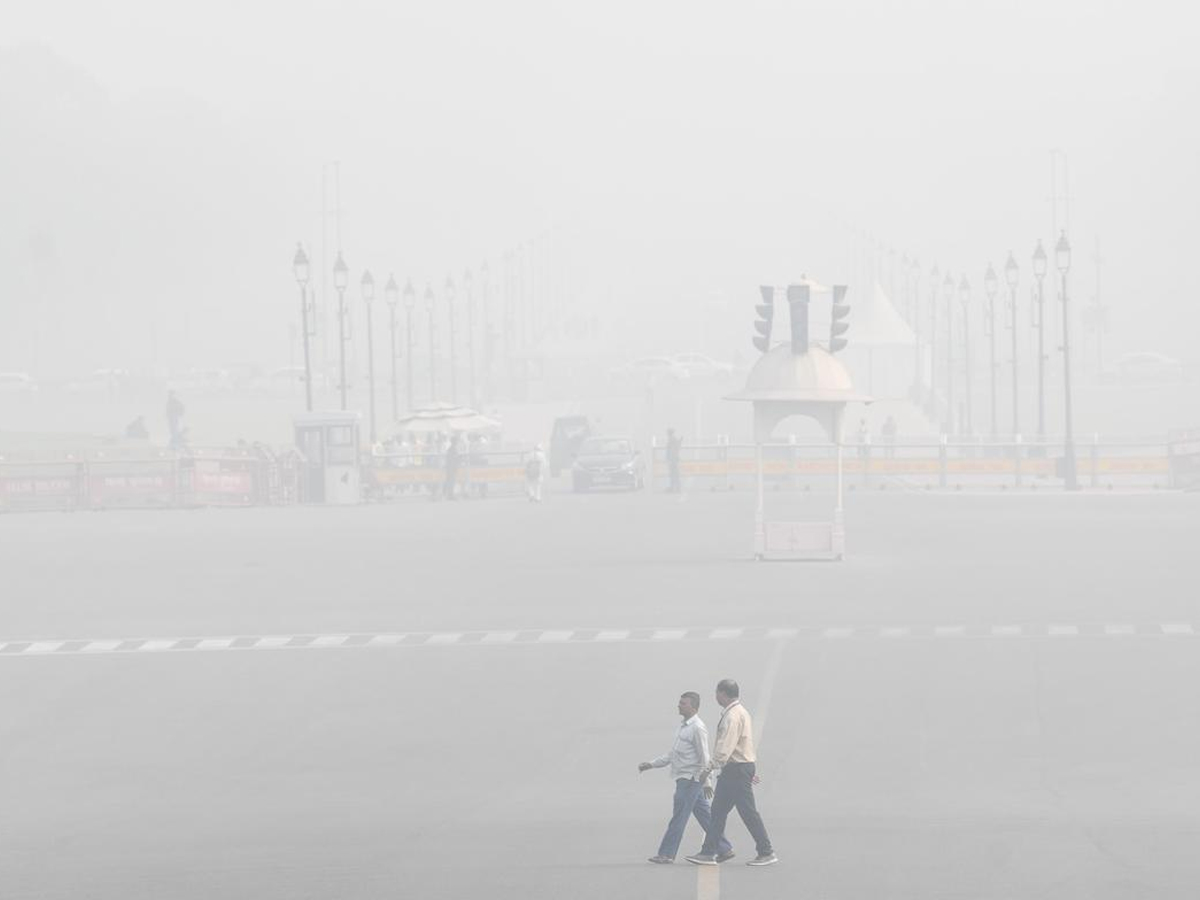
Delhi woke up to another grim morning on Saturday as thick smog covered the city and nearby areas. The air turned heavy. Breathing became difficult. Visibility dropped sharply. With pollution levels climbing close to the “severe” mark, concerns over public health have once again taken centre stage in the national capital.
Delhi AQI Today Nears Severe Category
Data from the Central Pollution Control Board showed that the overall Air Quality Index at 8 am stood at 390. This places Delhi in the “very poor” category. However, several localities recorded much worse conditions, slipping into the “severe” range.
Anand Vihar and Ghazipur recorded an AQI of 435 each. Jahangirpuri crossed 440. Rohini, Chandni Chowk, RK Puram, and Burari Crossing also reported dangerously high pollution levels. These numbers signal serious health risks, especially for children, the elderly, and those with breathing problems.
Smog and Fog Reduce Visibility Across the Capital
A combination of dense smog and shallow fog affected visibility during the early hours. Roads looked hazy. Buildings faded into the grey skyline. Morning commuters struggled as the air remained thick and polluted.
As per air quality standards, AQI levels above 400 fall under the “severe” category. Prolonged exposure at these levels can trigger respiratory illnesses even in healthy individuals. Doctors often warn that such air can cause coughing, eye irritation, and chest discomfort.
Delhi Airport Issues Low Visibility Advisory
The poor air quality also raised concerns over flight operations. Delhi Airport issued an advisory to passengers early Saturday.
In its message, the airport said, “Low visibility procedures are in progress at Delhi Airport. All flight operations are presently normal. Passengers are requested to contact the airline concerned for updated flight information.”
Authorities urged travellers to stay alert and check flight updates before heading to the airport.
Winter Pollution Returns as a Recurring Crisis
Delhi’s air quality worsens almost every winter. Cold weather traps pollutants closer to the ground. Vehicle emissions, construction dust, and other factors add to the problem.
Just a day earlier, the AQI stood at 386. Thick haze continued to hang over areas like Ghazipur and Anand Vihar. Despite brief improvements in recent weeks, toxic smog has returned with force.
Health Concerns Grow Amid Political Tensions
Experts warn that repeated exposure to polluted air can have long-term health effects. Schools often advise children to avoid outdoor activities. Many residents rely on masks and air purifiers to cope.
Meanwhile, the pollution crisis has triggered fresh political sparring. Different parties have blamed each other for failing to control air pollution. However, residents remain more concerned about clean air than political arguments.
Air quality readings between 301 and 400 are labelled “very poor.” Levels above 400 are “severe.” At these stages, even short exposure can be harmful. Authorities advise limiting outdoor activity and staying indoors when possible.