
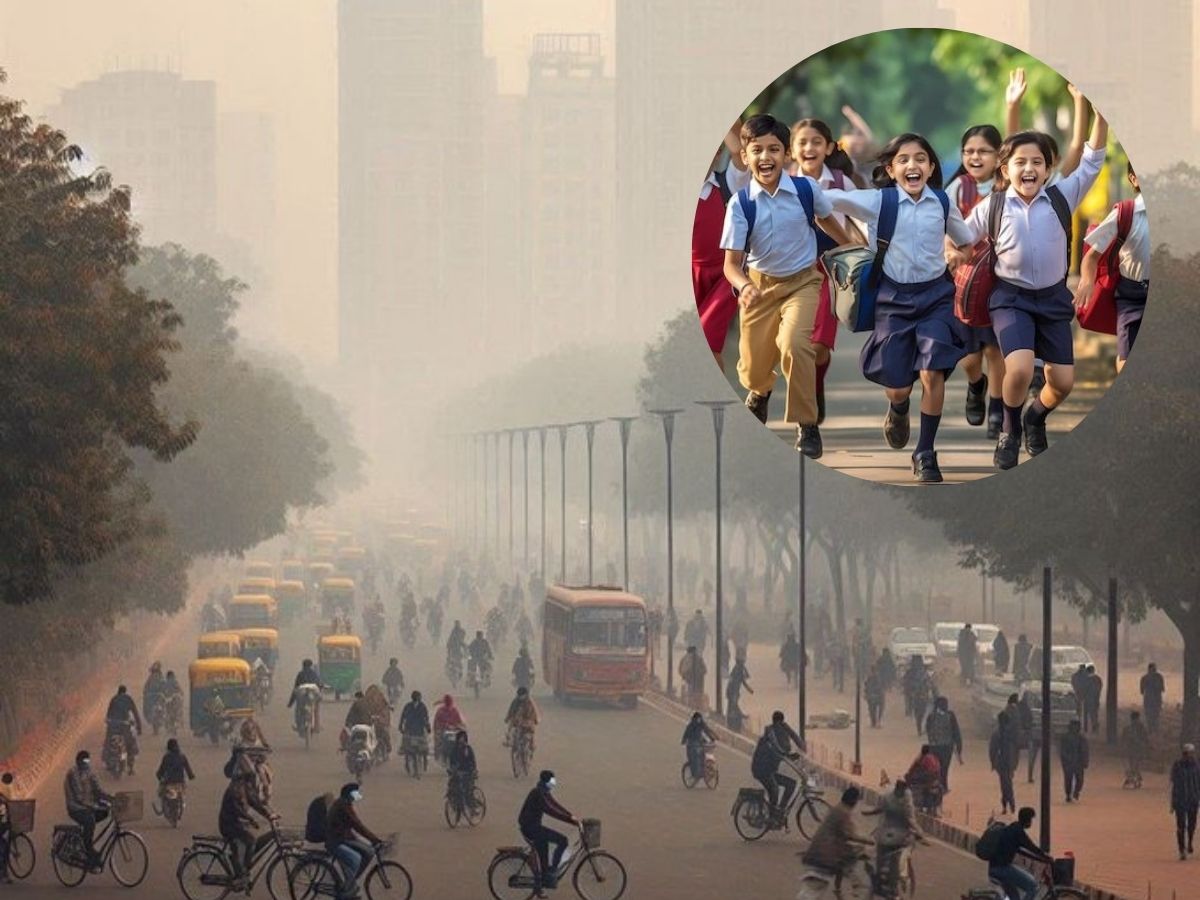
Air pollution in Delhi worsened and reached its severe levels, the Directorate of Education decided to shift many schools to a hybrid mode of learning.
This step was taken to reduce children’s exposure to harmful air while ensuring that their studies are not disrupted.
Government New Directive for Delhi School Students
Under the new directive, students from Classes 1 to 9 and Class 11 will at tend classes in a mix of online and offline formats wherever possible.
The order applies to all government, government-aided and private recognised schools under the Directorate of Education, NDMC, MCD and the Delhi Cantonment Board. Schools were asked to implement the decision immediately and continue until further instructions are issued.
Parents and students have been given the option to choose online classes where the facility is available. The move is aimed at protecting children, who are more vulnerable to respiratory problems caused by high pollution levels.
Also Read: Dhurandhar Actor Arjun Rampal Announces Engagement with Gabriella Demetriades on Podcast
Delhi-NCR Brings in GRAP Stage-IV Restrictions
The decision to shift schools to hybrid learning came after authorities enforced Stage-IV of the Graded Response Action Plan, also known as GRAP. These measures are triggered when air quality deteriorates sharply and poses serious health risks.
Earlier, Stage-III measures were already in place, which included partial online classes for younger students and restrictions on construction and demolition activities. As pollution continued to rise due to unfavourable weather conditions, stricter controls under Stage-IV were enforced to prevent the situation from worsening.
Work From Home Order Issued for Government & Private Offices
Along with schools, offices in Delhi have also been affected by pollution-related restrictions. Government departments have been directed to limit physical attendance to 50 percent of their staff. The remaining employees are required to work from home.
Senior officials and department heads must attend office regularly, while essential and emergency services will continue without interruption. Private offices have also been advised to follow similar rules, reduce office attendance and encourage staggered work hours to cut down traffic and vehicle emissions.
How the Odd-Even System Helps Reduce Pollution
The odd-even system is one of the emergency measures used to control pollution in Delhi. Under this rule, private vehicles are allowed to operate on alternate days based on the last digit of their registration number. This helps reduce the number of vehicles on roads, easing traffic congestion and lowering emissions.
Which Sectors Remain Open and Closed
During severe pollution episodes, essential services such as hospitals, pharmacies, public transport, power supply and emergency services remain operational.
However, non-essential construction activities, certain industrial operations and high-emission activities are often restricted or temporarily halted to control pollution levels.