
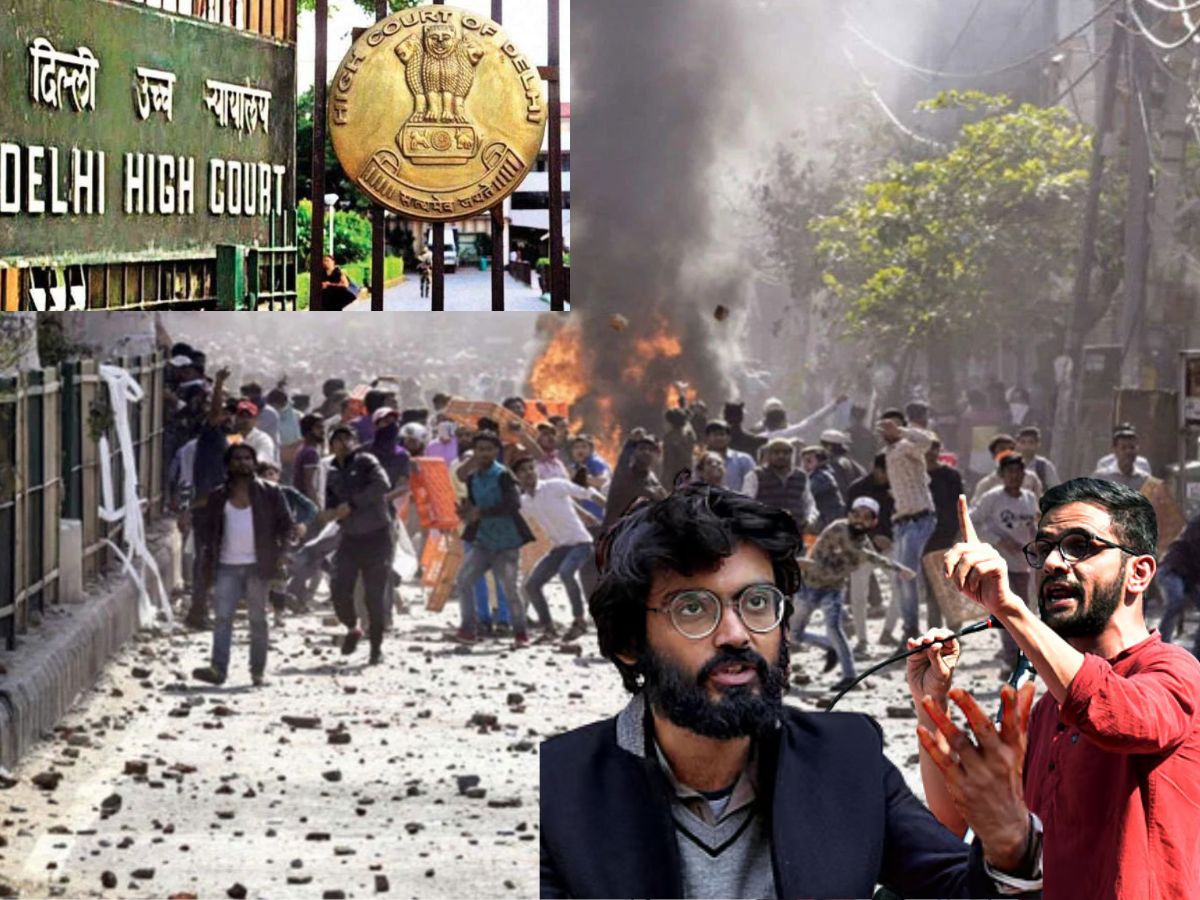
The recent court proceedings regarding February 2020 Delhi riots remains unfolding as the courts in the National Capital have acquitted many of the accused, revealing some serious issues regarding the integrity of investigation and the quality of the evidence before courts. Reports suggest that in nearly one-fifth of 93 acquittal cases reviewed, the courts have red-flagged planted evidence, doctored witness statements, and serious lapses by the police that could potentially compromise justice.
Flaws in Investigation and Artificial Witnesses
Judges have cited cases in which complaints seemed to be dictated by police, witnesses appeared coached or fictional, and evidence was pumped with unverifiable assertions. Some acquittals seemed influenced by “artificial” claims by police officials or identification full of uncertainties. Courts have characterised cases being imposed on defence-less accused and emphasised violation of human rights. These observations have questioned the impartiality of the entire investigation process and exposes the botch-up these investigations turn into.
Acquittals in the Face of Mass Convictions Controversy
In 695 cases filed by Delhi Police related to the riots, verdicts have been delivered in only 116, of which 97 were acquittals and 19 were convictions. While there have been some high-profile conspiracy cases with convictions, repeated judgments by courts on evidence forged in many acquittals have led to mass controversy over police accountability and sincere in probing those riots.
Police Criticism and Accountability Demands
In one landmark ruling, a Delhi court acquitted six persons including Ishu Gupta and Raj Kumar, and was severely critical of the investigating officer for “padding evidence”, turning a blind eye to grave faults. The court pointed out how false cases were being framed just to “work out a case,” pointing out that the accused persons were “completely unreliable” for police stories. Such rulings have led to demands for disciplinary and otherwise action against rogue police officers for shaking confidence in the justice system.
Bail Pleas and Ongoing High-Profile Trials
Even though there have been acquittals for most accused, bail pleas of key accused in conspiracy cases such as leading student activists Umar Khalid and Sharjeel Imam have been continuously turned down by the Delhi High Court on the grounds of serious conspiracy charges. The ongoing trials, with massive evidence and elaborate legal examination, indicating the focus of the state to prosecute what it calls premeditated violence against internal national security.
Balancing Justice and National Security
Courts hold the responsibility of balancing the protection of individual rights while ensuring national unity. The Delhi High Court made it clear that violence packaged with the cover-fire of protest would not be shielded under free speech and denied bail pleas accordingly. Widespread acquittals due to weak investigations, however, expose the vulnerability of the legal system, highlighting the need of immediate reforms to deliver justice to all concerned parties in the riots.