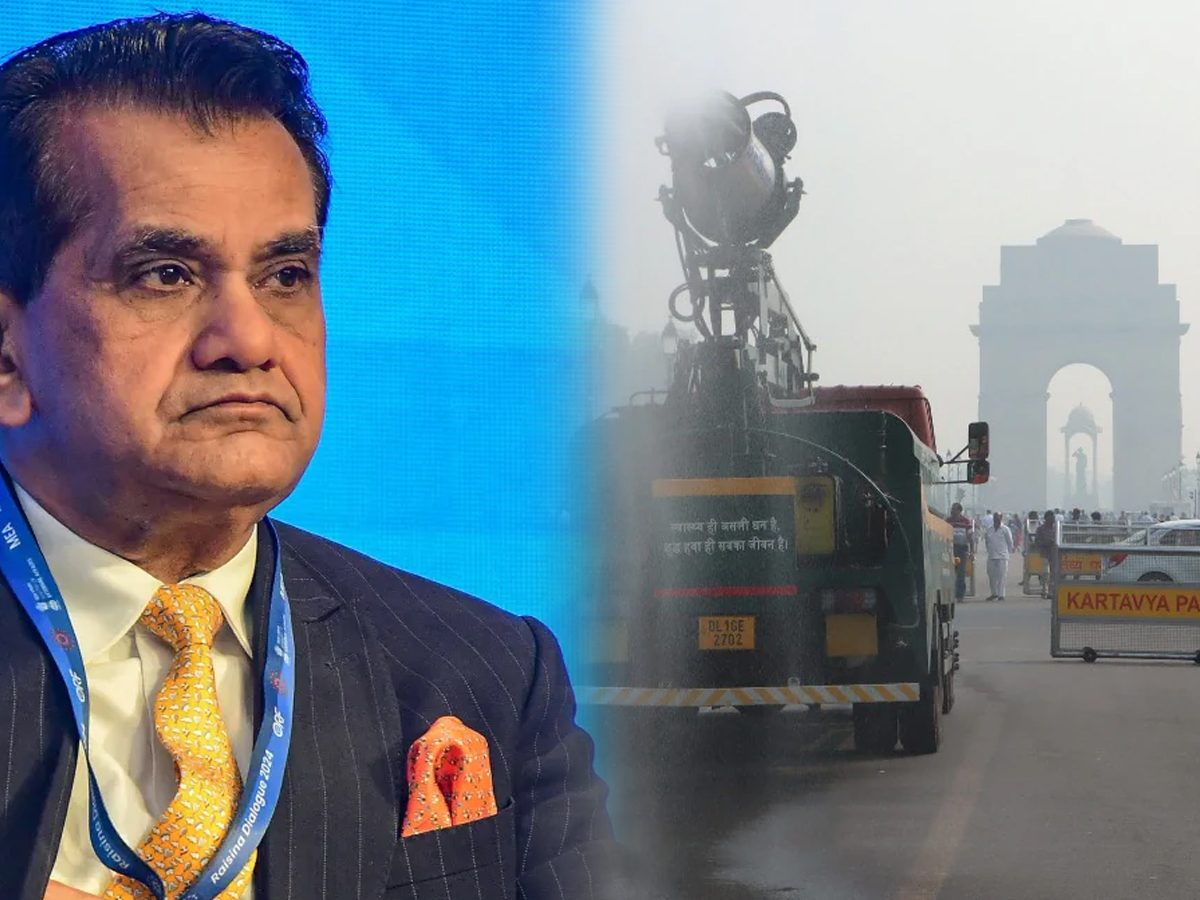
Delhi woke up to a heavy layer of smog after Diwali celebrations, raising concerns about public health and the environment. The capital’s Air Quality Index (AQI) reached 357 at 1 pm, falling in the ‘very poor’ category, according to the Central Pollution Control Board.
Former NITI Aayog CEO and 2023 G20 Sherpa Amitabh Kant slammed the situation, warning that only “ruthless and sustained execution” of pollution control measures can save Delhi from an impending catastrophe.
Amitabh Kant’s Warning on Delhi Pollution
“Delhi’s air quality lies in shambles: 36/38 monitoring stations have hit the ‘red zone,’ AQI is above 400 in key areas. The Hon. Supreme Court in its wisdom has prioritised the right to burn crackers over the right to live and breathe. Delhi remains among the world’s most polluted capital. If Los Angeles, Beijing, and London can do it, why can’t Delhi? Only ruthless and sustained execution can save Delhi from this health and environmental catastrophe,” Kant wrote on X, sharing news about the air emergency.
Delhi’s air quality lies in shambles: 36/38 monitoring stations have hit the ‘red zone,’ AQI is above 400 in key areas. The Hon. Supreme Court in its wisdom has prioritised the right to burn crackers over the right to live and breathe. Delhi remains among the world’s most…
— Amitabh Kant (@amitabhk87) October 21, 2025
He emphasized the need for a unified approach: “A unified action plan is vital – to end crop and biomass burning, shut or modernise thermal power plants and brick kilns with cleaner tech, shift all transport to electric by 2030, enforce strict construction dust control, ensure full waste segregation and processing, and redesign Delhi around green, walkable, transit-focused living. Only such decisive & relentless execution can restore the city’s blue skies and breathable air.”
Supreme Court Lifts Crackers Ban
Earlier this month, the Supreme Court allowed Delhi residents to burst green crackers on Diwali, adopting what it called a “balanced approach” that considered both environmental concerns and the festival tradition. Residents were permitted to burst crackers between 6 am–7 am and 8 pm–10 pm for two days. Despite this, reports suggest fireworks continued past midnight in several parts of Delhi-NCR.
Public Concerns and Debate
Social media visuals showed thick smog across Delhi on Thursday morning. While many blamed Diwali firecrackers, others pointed to stubble burning in neighboring states as the main contributor. The debate over the primary cause of pollution continues, highlighting the urgent need for a long-term strategy.
The Need for Urgent Measures
Experts agree that temporary measures like green crackers are insufficient to curb Delhi’s chronic pollution. Persistent issues such as crop burning, vehicular emissions, construction dust, and industrial pollution require strict enforcement and sustainable solutions. Amitabh Kant’s call for comprehensive, sustained action underscores the severity of the air quality crisis and the immediate need for decisive policy interventions.