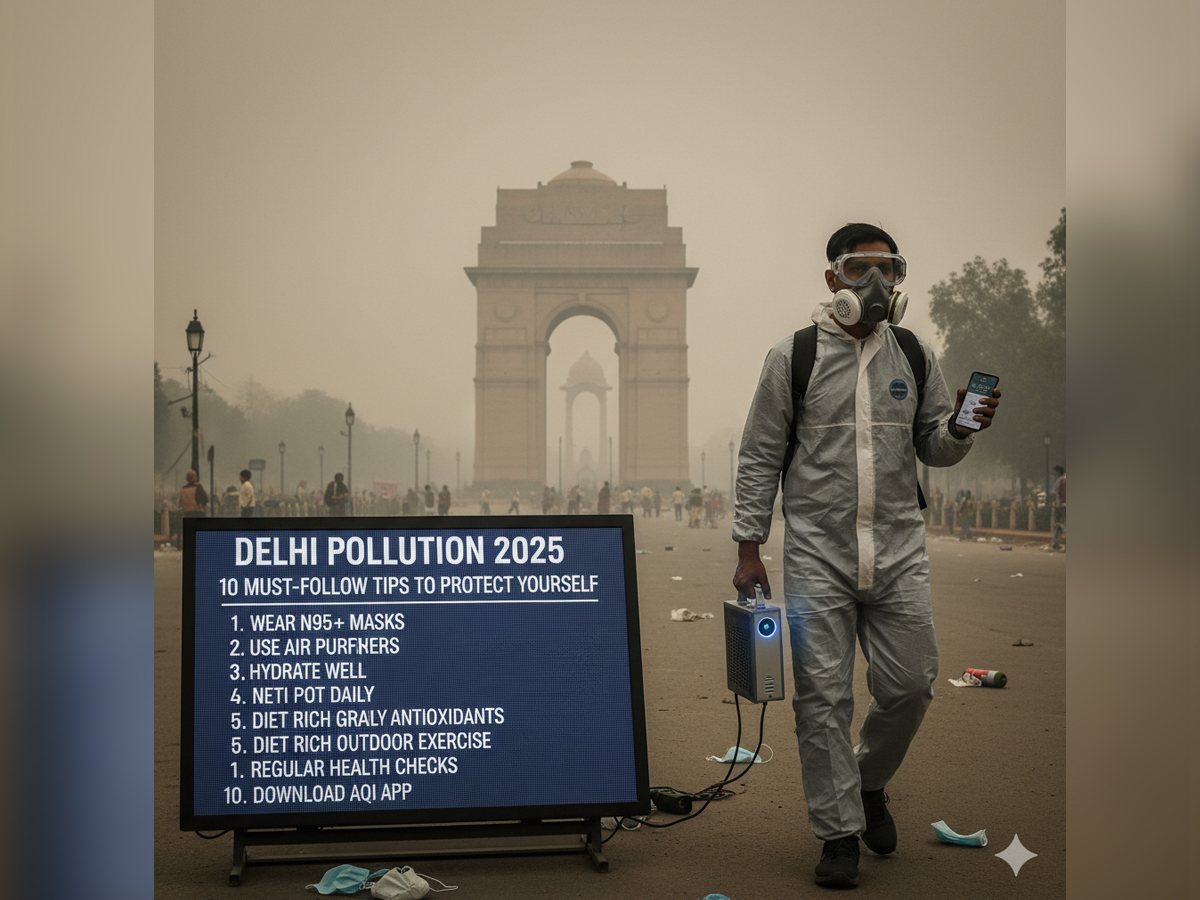
Delhi is currently facing severe air pollution, and it’s not too late, but the another day after Diwali. The smog has become thick and persistent, making it hard to breathe. It irritates the throat, causes coughing, and increases the risk of viral infections. People with asthma, heart problems, or respiratory issues are especially vulnerable. In these conditions, taking preventive steps is crucial to protect your health.
1. Avoid Strenuous Outdoor Exercise
Exercising outdoors when pollution is high can be dangerous. Running, jogging, or even walking increases your intake of harmful particles. Breathing heavily allows pollutants to enter your lungs faster. Specialists advise postponing outdoor physical activity until air quality improves.
2. Always Wear a Face Mask Outside
N95 or N99 masks are recommended whenever you step out. Experts say that three things matter in the mask: the filter size, quality standards, and fitting. Masks should filter particles smaller than 2.5 microns and cover your nose and mouth snugly.
3. Add Indoor Air-Purifying Plants
Plants like Aloe Vera, Ivy, and Spider Plant can improve indoor air quality. They reduce pollutants and are easy to maintain. Place them at home or in your workplace for cleaner air.
4. Use an Air Purifier
Air purifiers can significantly reduce indoor pollution. Vulnerable groups—children, the elderly, and pregnant women—should always have access to clean air in their rooms.
5. Take Regular Steam Baths
Inhaling steam helps relax your airways and clear harmful particles. Adding a few drops of eucalyptus oil can boost the benefits for your lungs.
6. Eat a Healthy, Nutrient-Rich Diet
Consume foods rich in vitamins A, C, and E. Eat carrots, sweet potatoes, lemon, amla, oranges, rice bran oil, and almonds. Omega-rich and magnesium-rich foods help strengthen immunity and reduce inflammation caused by pollution.
7. Monitor the Air Quality Index (AQI)
Check your local AQI regularly using trusted websites or mobile apps. Identify high-pollution areas and avoid outdoor exposure during peak hours. Air quality monitors can also help track pollution along different routes.
8. Check Your Home Cleaning and Personal-Care Products
Some products release harmful VOCs even when not in use. Choose low- or no-VOC products and avoid strong perfumes or irritants. Store high-VOC products in a separate room.
9. Maintain Proper Ventilation
Increase airflow in your home when the air quality is good. Proper ventilation reduces indoor pollutant levels, especially when cooking or cleaning.
10. Don’t smoke and keep Smoke smoke-free environment
Avoid smoking, burning incense, or using scented candles indoors. Smoke adds to indoor pollution. Non-scented candles or LED lights are safer alternatives.
By following these 10 steps, you can protect yourself and your family from the harmful effects of Delhi pollution. Share these tips with others to help them stay safe in this polluted season.