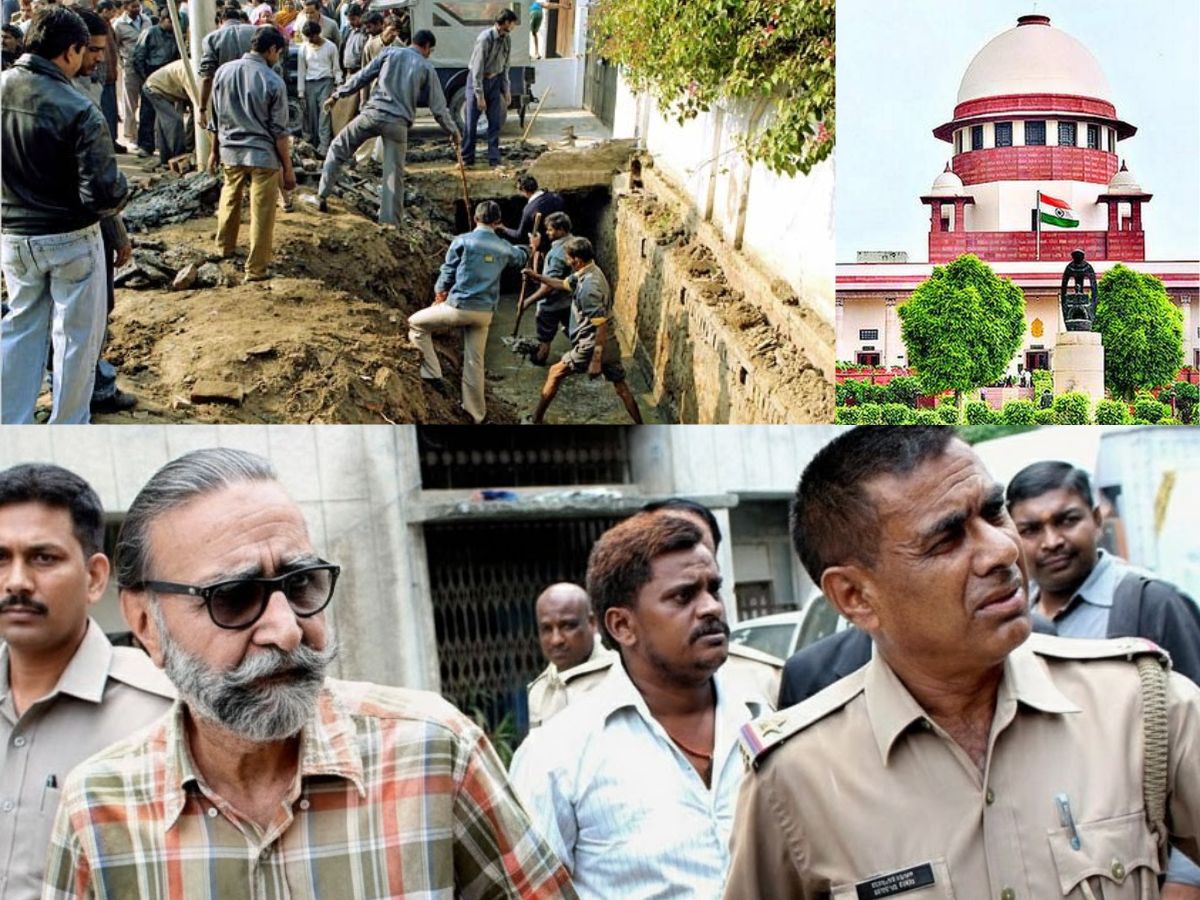
The Supreme Court has acquitted Surendra Koli, the main accused in the 2005–2007 Nithari serial killings, ending a legal battle that lasted almost two decades. The move overturns his final conviction and clears the way for his release.
What Was the Supreme Court’s Final Ruling?
A bench comprising Chief Justice of India Gavai, Justice Surya Kant, and Justice Vikram Nath delivered the decisive verdict. Justice Vikram Nath, pronouncing the order, stated that Koli was acquitted of all charges in the final case. The court explicitly recalled and set aside its own 2011 judgment that had upheld his conviction, as well as a subsequent 2014 order that had dismissed his review petition. The Sessions Court judgments from 2009 were also overturned. The court directed that Koli be released immediately if he is not required in any other case, effectively ending his incarceration linked to the Nithari killings.
Also Read: Delhi Chokes, GRAP-III Kicks In: What’s Shut Down and What’s Allowed
Why Did the Court Overturn the Conviction?
The Supreme Court’s decision was based on major inconsistencies in the evidence across the various cases. The judges said it would be a “travesty of justice” to uphold the 2011 verdict since Koli had already been acquitted in 12 other cases built on the same facts. The court noted that in this one last case, his conviction was based only on the confessional testimony he provided and the confiscation of a kitchen knife. Importantly, the same pieces of evidence were determined to be shaky and unreliable, which led to his acquittal in the other 12 cases.
Nithari killings: SC acquits Surinder Koli in last pending case; orders release
Read @ANI Story | https://t.co/JVgygMvQ3U#Nithari #Nitharikillings #SC #SurinderKoli #SupremeCourt pic.twitter.com/XuAzvenxVo
— ANI Digital (@ani_digital) November 11, 2025
How Does This Relate to the Other Accused?
This decision is consistent with the legal outcome of Moninder Singh Pandher, the other accused, who was likewise found not guilty in the cases brought against him. The Allahabad High Court’s earlier acquittals of both men in several cases played a crucial role. It ruled that the accused’s police statements and evidence recovered at their request could not be used in court. The bench also noted that the trial court appeared to have given in to “media trial” pressure, where public outrage might have shaped the verdict. CJI Gavai, however, praised the High Court judges for staying above media influence and ruling purely on legal grounds.