
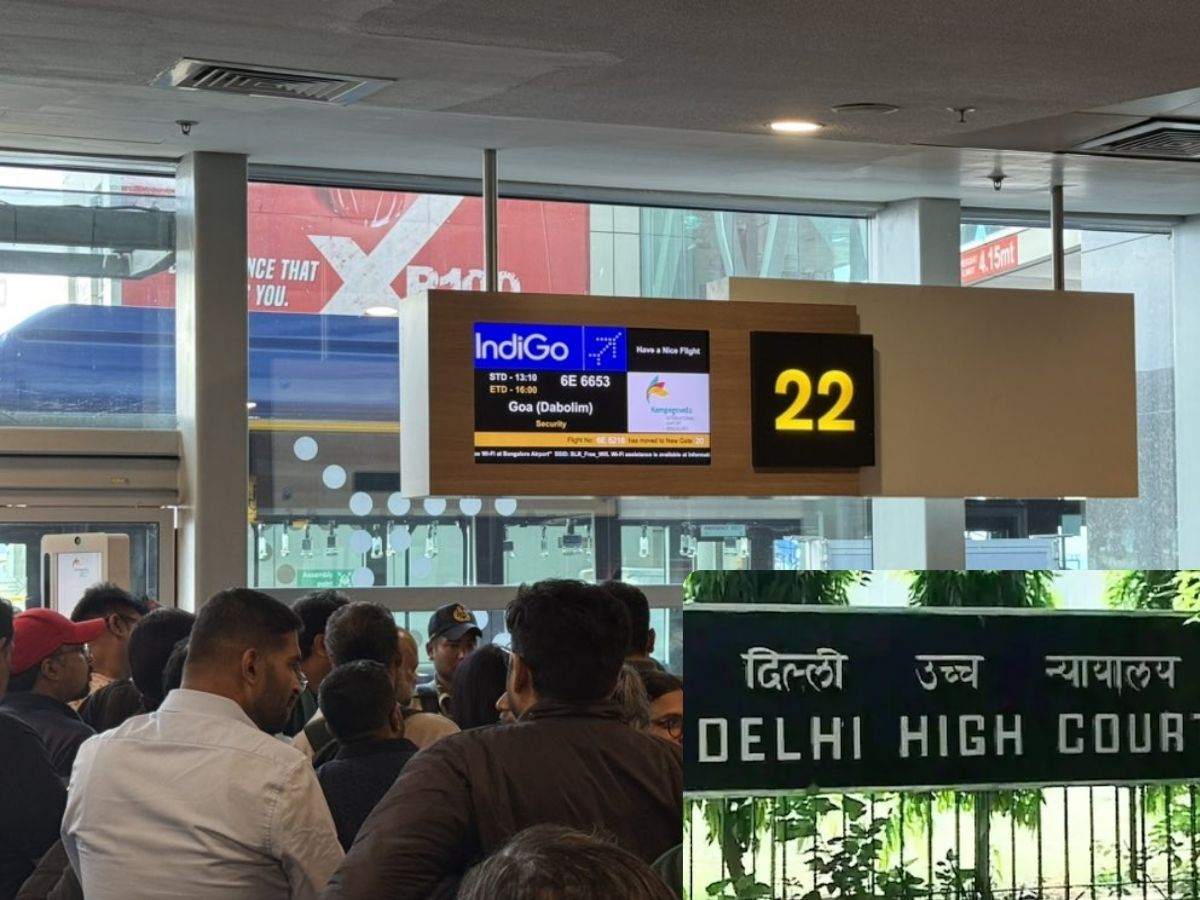
The Delhi High Court on Wednesday sharply questioned the Central government over the steep rise in domestic airfares and its response to the ongoing IndiGo crisis, noting that passengers were being forced to pay nearly Rs 40,000 for a one-way ticket.
Court Flags Crisis and Seeks Accountability Over Spike In Airfare During IndiGo Crisis
While hearing a petition on the massive flight disruptions caused by IndiGo’s operational breakdown, the Bench told the Additional Solicitor General (ASG), “It is quite a crisis.”
The judges stressed that the issue was not limited to stranded travellers but had wider economic implications. They asked why the government failed to act sooner, stating,
“We appreciate your efforts but what was the failure on the government’s part to precipitate this situation? It’s not just a question of individual passengers stuck at the airport. The question is also about loss to the economy? What action have you taken to provide help to people and compensate them?”
Court Seeks Measures to Prevent Passenger Harassment Amid IndiGo Crisis
The High Court also demanded details on steps taken to ensure that airline staff treat stranded travellers properly. It questioned what mechanisms existed to protect passengers during crises of this scale.
Delay in Pilot-Duty Guidelines At Indigo Under Scrutiny
A major concern raised by the Bench was the government’s delayed implementation of revised Flight Duty Time Limitations (FDTL) the pilot-working-hours rules that triggered roster failures at IndiGo. The Bench asked, “And most importantly, why did you not implement the guidelines on time?”
Government Defends Fare Caps but Court Pushes Back
Responding to the criticism, the ASG said, “Let me tell you what the true picture is,” and explained that the government had imposed fare caps as a “very strict measure.”
However, the court pointed out that the intervention came too late, remarking, “After how many days? After 4–5 days.” When the ASG claimed that the fare caps were imposed “within 2 days,” the Bench noted that prices had already skyrocketed from Rs 4,000–5,000 to Rs 30,000 by then.
Also Read: Why SpiceJet Shares Have Raised 19% in Four Consecutive Sessions Amid IndiGo Flight Cuts