
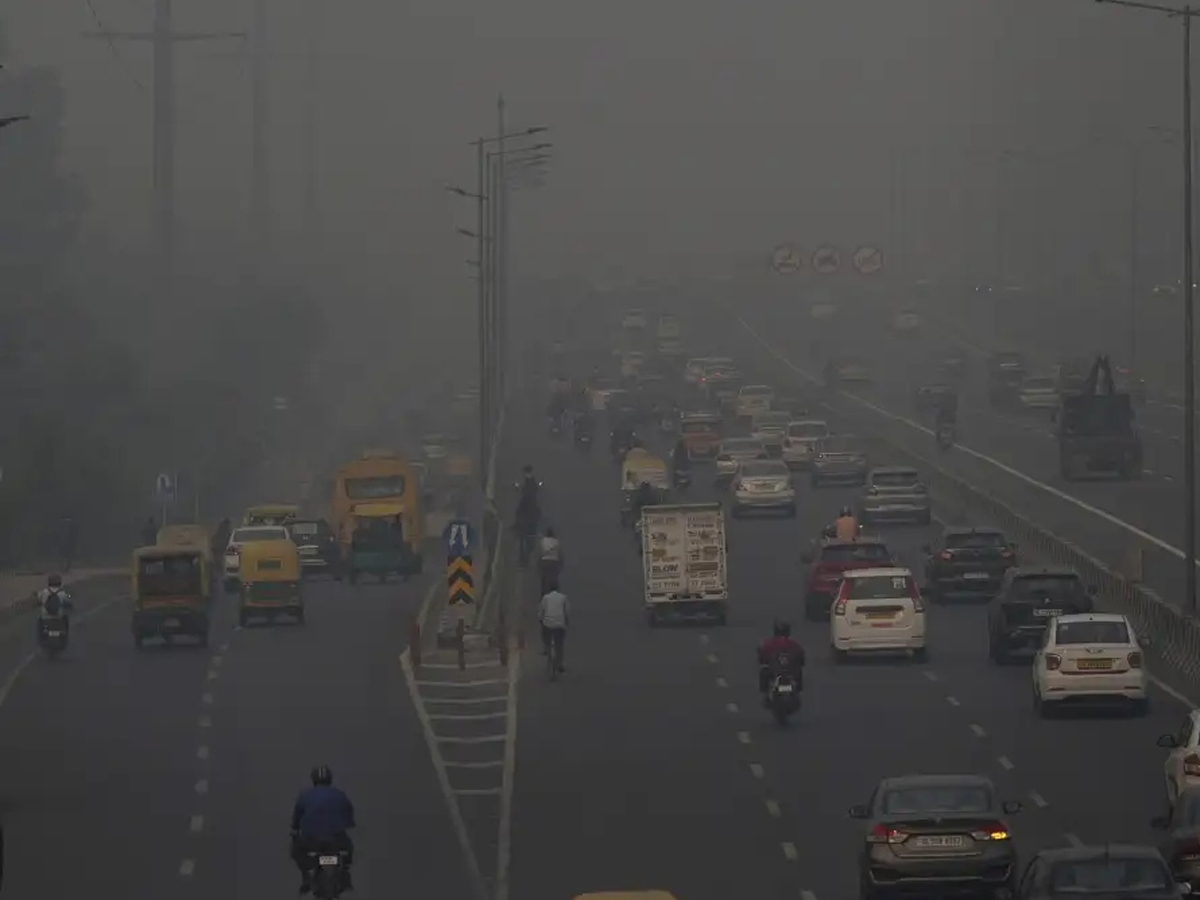
As Delhi continues to choke under heavy smog, the city government has decided to alter office timings to reduce traffic congestion and curb air pollution. The Delhi Government and the Municipal Corporation of Delhi (MCD) will soon follow staggered working hours to help ease vehicular load during peak times.
New Timings for Winter Season
Delhi Chief Minister Rekha Gupta announced on Friday that both the Delhi government and MCD offices will operate on revised timings for the winter season, from November 15, 2025, to February 15, 2026.
According to the new schedule:
- Delhi Government offices: 10:00 AM to 6:30 PM
- MCD offices: 8:30 AM to 5:00 PM
The aim is to reduce traffic pressure during rush hours by ensuring that not all government employees hit the roads at the same time.
Reason Behind the Change
Currently, Delhi Government employees work from 9:30 AM to 6:00 PM, while MCD staff follow 9:00 AM to 5:30 PM schedules. This 30-minute gap leads to heavy congestion during office opening and closing hours, worsening the city’s air quality.
A government statement said, “The current 30-minute gap between Delhi government and MCD employees’ office timings leads to heavy traffic congestion during peak hours, further deteriorating air quality.”
The move comes as part of the government’s broader plan to tackle air pollution during the winter months when smog levels rise drastically.
Pollution Levels Hit ‘Very Poor’ Category
On Friday, Delhi’s air quality dropped further into the ‘very poor’ zone. The Central Pollution Control Board (CPCB) reported that 29 out of 38 monitoring stations in the city recorded Air Quality Index (AQI) levels above 300.
According to the CPCB’s Sameer app, the city recorded a 24-hour average AQI of 322 as of 4 PM, placing it firmly in the ‘red zone’. The most dominant pollutant was PM2.5, which is known to cause severe respiratory issues.
Experts estimate that the transport sector alone could contribute 15% to PM2.5 levels on Saturday and 14% on Sunday, making traffic management a key factor in reducing pollution.
NCR Also Suffers Poor Air
The toxic air is not confined to Delhi. Surrounding NCR cities are also struggling.
Ghaziabad recorded an AQI of 314,
Noida reported an AQI of 306,
Both cities fall under the ‘very poor’ category, indicating that air pollution has spread across the entire region.
Forecast Shows Little Relief Ahead
The Air Quality Early Warning System has predicted that Delhi’s air quality will continue to remain in the ‘very poor’ range for the next few days. Calm winds and lower temperatures are likely to trap pollutants closer to the ground, worsening the smog situation.
Government Urges Public Cooperation
Officials have urged residents to avoid unnecessary travel and to use public transport whenever possible. Carpooling and remote working options are also being encouraged during peak pollution days.
Chief Minister Gupta added that the new office schedule is “a necessary step to balance work efficiency and environmental responsibility.”