
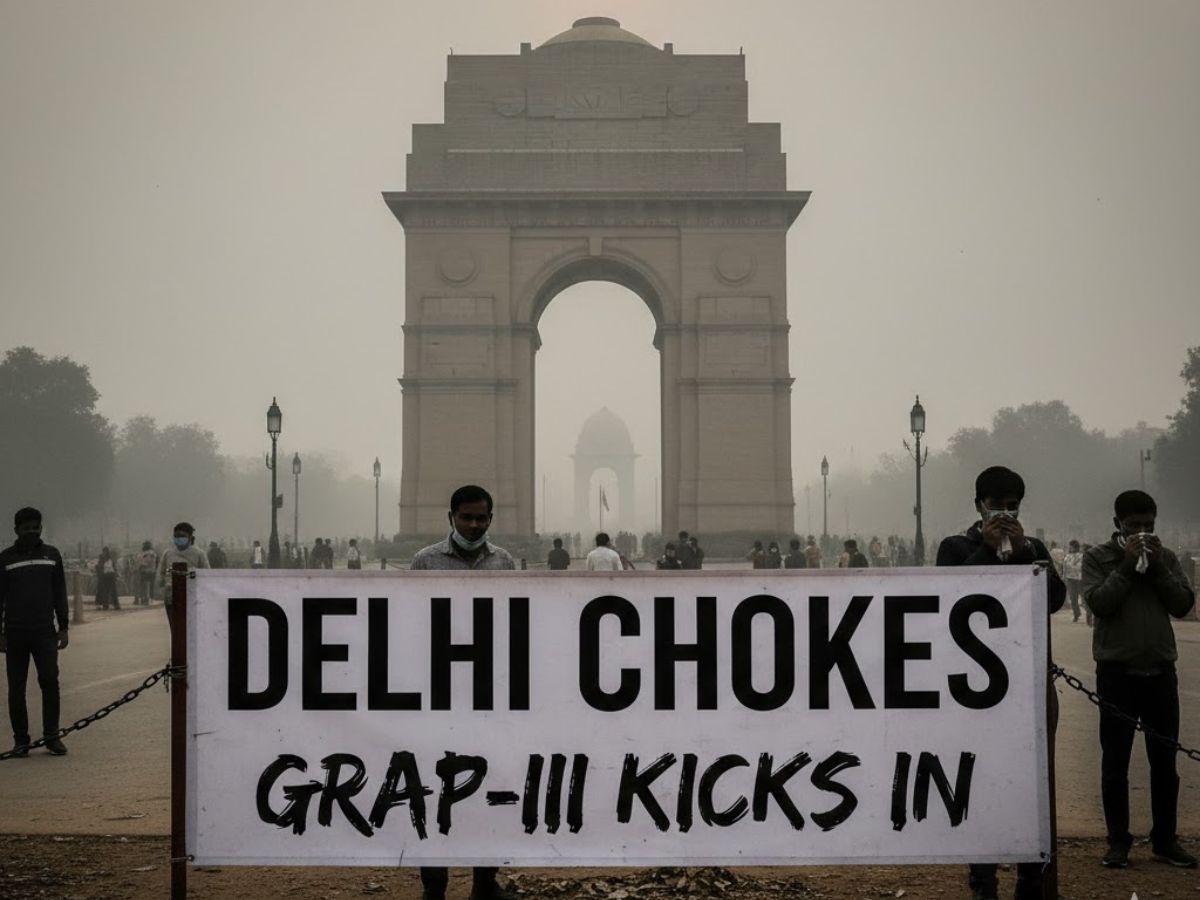
Delhi’s air quality has fallen into the ‘severe’ zone for the first time this season, prompting authorities to enforce Stage-III of GRAP. With the AQI above 400, tougher curbs have come into effect across the capital to tackle the worsening pollution.
How Bad is the Air Quality Crisis?
The situation deteriorated rapidly on Tuesday morning. The overall Air Quality Index (AQI) soared from 362 on Monday to a alarming 429. Data from the Central Pollution Control Board’s (CPCB) Sameer app revealed the widespread nature of the problem. Around 11 am, 38 of 39 active monitoring stations in Delhi-NCR showed ‘severe’ pollution levels. Areas such as Mundka (AQI 464), RK Puram (AQI 458), and ITO (AQI 452) were among the worst affected, showing thick smog across the region.
Also Read: From Parliament to Markets: Delhi’s Long and Painful History with Terror
What’s Banned Under GRAP-III? List of Restrictions
The new regulations focus on the main causes of pollution. Activities listed below are no longer permitted:
Non-essential Construction & Demolition: All such activities are banned. This includes:
- Earth excavation and piling work.
- Laying of sewer lines and electric cables through open trenches.
- Operation of Ready-Mix Concrete (RMC) batching plants.
Vehicle Restrictions: The following vehicles are not allowed to ply on roads:
- Private BS-III Petrol and BS-IV Diesel four-wheelers in Delhi, Gurugram, Faridabad, Ghaziabad, and Noida.
- Non-essential BS-IV Diesel Medium Goods Vehicles.
- BS-IV and lower Diesel Light Commercial Vehicles registered outside Delhi, except those carrying essential goods.
What’s Still Allowed? List of Exemptions
Despite the stringent bans, essential services and projects are permitted to continue under specific conditions.
- Essential Construction Projects: Projects in the public sector pertaining to airports, railroads, metro services, defense, sanitation, and healthcare are permitted. They must follow strict dust and waste management norms.
- Essential Transport: The ban does not apply to vehicles involved in essential work or goods transport.
- Public Advisories: Offices are being asked to adopt work-from-home or hybrid systems, and schools to explore online teaching, though closures haven’t been ordered yet.
Also Read: ‘Will Not Be Spared’: PM Modi Pledges Justice for Delhi Red Fort Attack
Disclaimer: The restrictions are dynamic and may be intensified if the air quality deteriorates to the ‘Severe Plus’ category