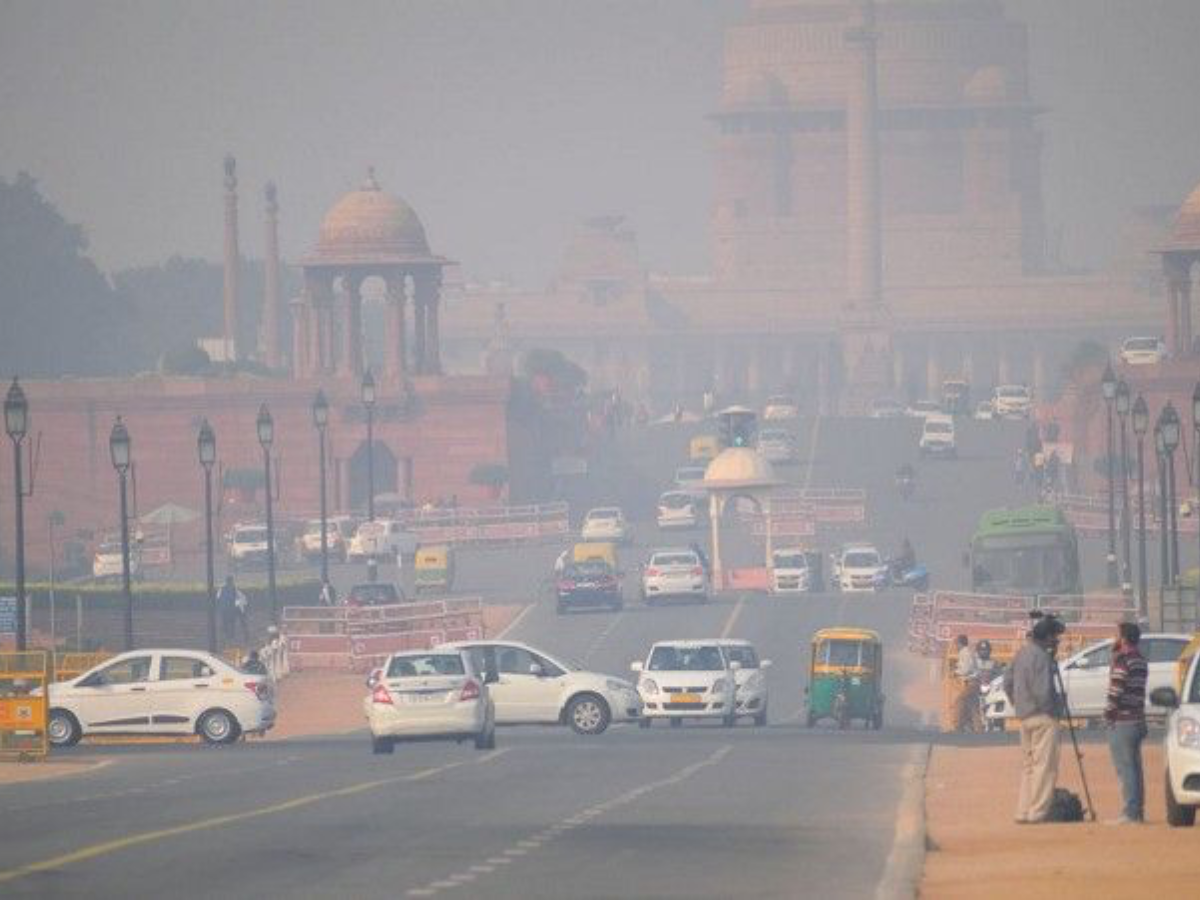
Delhi Air Pollution: A new satellite based assessment from the Centre for Research on Energy and Clean Air has confirmed what locals already recognize by instinct each winter as Delhi is India’s most polluted region.
The population weighted level of PM2.5 in the national capital has reached an alarming figure of 101 micrograms per cubic meter and more than twice India’s own air-quality benchmark and about twenty times the World Health Organisation’s recommendation.
Indo-Gangetic Plains: A Persisting Hotspot
The study also reinforces a long-standing trend. Pollution remains consistently severe across the Indo-Gangetic Plains from Punjab to Bihar, many districts are afflicted by stagnant air, crop-residue burning, high vehicle density and industrial emissions; all these collective pressures make the region one of the world’s worst pollution hotspots.
How Pollution Widespread across States
The study, covering March 2024 to February 2025 and found Chandigarh in the second place with a PM2.5 average of 70 g/m, followed by Haryana (63) and Tripura (62). Several other states including Assam (60), Bihar (59), West Bengal (57), Punjab (56), Meghalaya (53) and Nagaland (52), also exceeded the national annual limit of 40 g/m.
ALSO READ: Delhi AQI 337: Toxic Haze Persists as 13-Day Smog Streak Sparks Fresh Health Concerns
Seasonal Spikes & Winter Emergencies
While air quality deteriorates across much of India, the winter months push pollution to extreme levels. According to the analysis, 82% of districts violate national PM2.5 limits during winter.
The situation improves briefly during the monsoon, when rain disperses particulate matter, but levels surge again by post-monsoon. Delhi, Haryana, Punjab and several northeastern states record violations in nearly every season.
District Level Breaches Across the Map
Data reveals a worrying national panorama: 447 districts out of 749 exceed India’s annual PM2.5 standard. Delhi and Assam report 11 districts each in the top 50 most polluted list, followed by Haryana and Bihar. States with fewer urban centres also show infractions throughout as Tripura and Meghalaya are two examples.
ALSO READ: Cyclone Senyar Near Indonesia: IMD Warns of Heavy Rain for Tamil Nadu, Kerala & Andaman
Southern States: A Window of Opportunity
The southern states still kept PM2.5 levels below the national threshold, unlike the northern region. This places them in a good position to adapt to tighter regional norms and move toward WHO’s interim targets. Their relative success underlines the role of local policies, stronger monitoring and tailored interventions.
Why These Findings Matter Now
The report marks a wake-up call for all levels of government. The concentration of pollution in so many regions is no longer a seasonal inconvenience but a growing public-health emergency.
With scientific evidence pointing to chronic exposure risks, India needs stronger enforcement, cleaner energy transitions and district-specific action plans that go beyond temporary restrictions.
ALSO READ: Cabinet Approves Mega ₹7,280-Crore Permanent Magnet Plan to Scale Up Rare-Earth Magnet Production
Disclaimer: This article have available data from independent assessments and does not assign blame to any individual or institution.