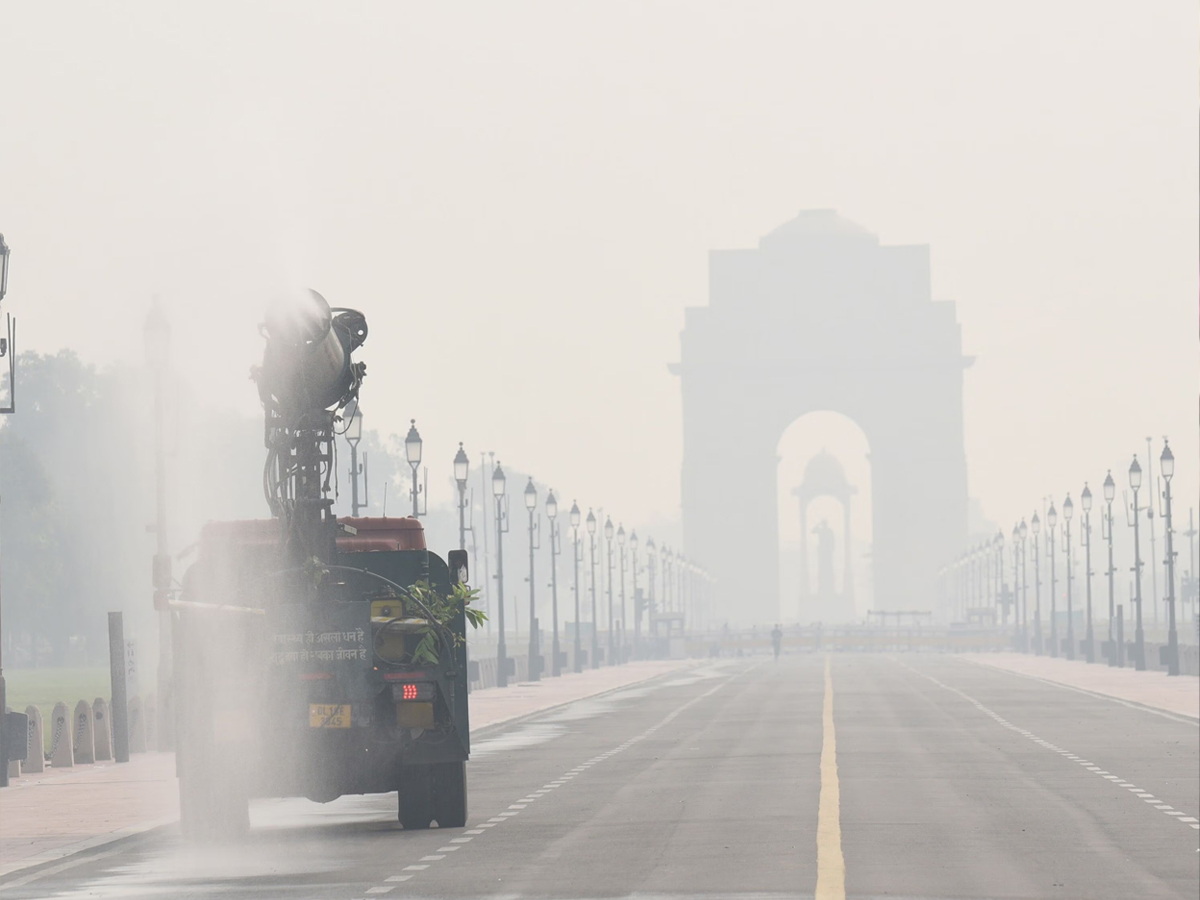
Delhi’s first cloud-seeding experiment to bring artificial rain has been completed, but residents will have to wait a little longer for results. The aircraft used for the trial returned to Kanpur after completing the exercise, officials said. The national capital, battling severe air pollution and choking smog after Diwali, now hopes for rainfall to improve air quality.
Rain May Take Time to Arrive
According to sources, rain is unlikely before 5 pm because the moisture content in clouds over Delhi is currently below 20 per cent. Low moisture makes rain formation difficult, even after cloud seeding. However, if the weather improves or the first attempt fails, another aircraft may be sent from Kanpur for a second trial.
The Delhi government signed a Memorandum of Understanding (MoU) with the Indian Institute of Technology (IIT) Kanpur in September to conduct five cloud-seeding trials. The total cost of the project is ₹3.21 crore, and all trials will take place in northwest Delhi. The timeline for these operations runs from October 1 to November 30.
What Is Cloud Seeding?
Cloud seeding is a weather modification technique used to induce artificial rain. It involves dispersing chemicals such as silver iodide nanoparticles, iodized salt, or dry ice into the atmosphere. These substances encourage the formation of water droplets in clouds, which can then lead to rainfall. The process can be carried out using aircraft, rockets, or ground-based machines.
This method is commonly used in regions facing drought, water shortages, or persistent smog. It can also help reduce hail or clear fog in specific conditions.
Why Delhi Needs Artificial Rain
Delhi has some of the worst air quality in the world. Every year, pollution levels rise sharply after Diwali due to a combination of firecracker smoke, vehicle emissions, and crop burning in neighboring states. The cold winter air traps pollutants close to the ground, worsening the smog.
This year, despite a 77.5 per cent drop in farm fires, the city’s air quality hit a five-year low after Diwali. PM2.5 levels averaged 488 micrograms per cubic meter, which is nearly 100 times higher than the safe limit recommended by the World Health Organization (WHO). Pollution levels also saw a 212 per cent spike compared to pre-Diwali readings.
Pollution’s Impact on Health
The Air Quality Index (AQI) across Delhi remains hazardous. As of Tuesday morning, several areas, including Siri Fort, RK Puram, Bawana, Burari, and Dwarka, recorded AQI readings above 300. Long-term exposure to such pollution can cause serious health problems.
A report by the Energy Policy Institute at the University of Chicago revealed that air pollution reduces the life expectancy of Delhi residents by an average of 11.9 years compared to WHO guidelines.
What’s Next for Delhi?
If successful, the artificial rain could bring temporary relief by washing away pollutants and improving visibility. Officials are monitoring conditions closely to decide whether a second cloud-seeding flight will be needed.
For now, Delhiites continue to hope the skies will open up soon, bringing much-needed rain and a breath of cleaner air.