
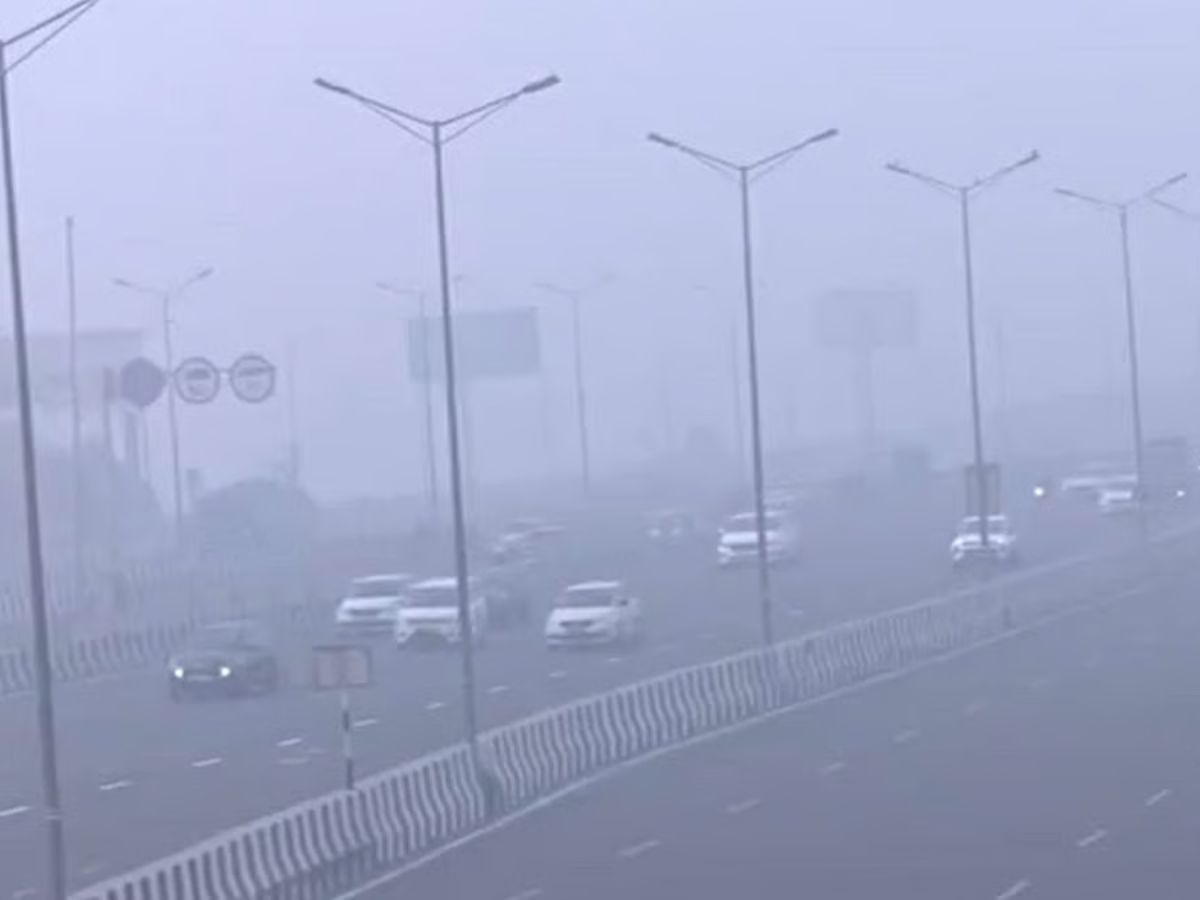
Delhi’s air quality has dipped again, forcing the government and private offices in the national capital to switch to 50 per cent on-site attendance. The remaining employees will work from home. The move follows the activation of the Graded Response Action Plan level 3 (GRAP-3), issued by the Commission for Air Quality Management (CAQM), as the city continues to choke under toxic winter pollution.
Delhi Implements GRAP-3 Restrictions
The CAQM activated GRAP-3 after air pollution levels crossed the severe threshold. GRAP-3 mandates strict measures, including restrictions on industrial activity, construction, and workforce movement.
Officials confirmed that both government and private offices must now operate with half their staff present physically. The remaining employees must switch to remote work until further notice.
The Delhi government said these steps are essential to slow down pollution levels that rise sharply every winter. Schools have also been issued advisories. Authorities said children must not play outdoors when pollution levels reach ‘extremely poor’.
Government Offices Holiday: Public Holiday & WFH
Government offices were expected to record lower attendance on Tuesday. The Delhi government declared a public holiday to mark the 350th Shaheedi Purab of Guru Tegh Bahadur. The GRAP-3 instructions, however, will remain in force beyond the holiday.
Delhi relies on GRAP levels to decide how much disruption the city must tolerate to protect public health. The CAQM monitors weather patterns and the average air quality index across the National Capital Region. Based on this data, it coordinates with multiple agencies to issue directives.
AQI Levels Triggering Restrictions
Delhi follows a graded system based on the AQI:
GRAP 1 is implemented when the AQI is between 201–300.
GRAP 2 applies when the AQI touches 301–400.
GRAP 3 kicks in between 401–450.
GRAP 4, Strictest Level Comes Into Force
On Saturday, the Delhi government had already told private offices to limit physical attendance to 50 per cent as a precaution. Officials said these directions were issued after the CAQM advised tighter control on activities contributing to pollution.
Delhi Environment Minister Manjinder Singh Sirsa said the government is taking the plan seriously. He added, “The government is implementing all pollution-control measures under GRAP 3 with full seriousness and round-the-clock monitoring”.
Authorities have also asked people to avoid the open burning of waste and biomass. Residents have been urged to report violations through the Green Delhi app.
Experts Warn of Long-Term Impact
Environmental experts say repeated pollution emergencies could hurt workforce productivity in the long run. With Delhi witnessing such alerts every winter, companies may increasingly opt for hybrid setups. Analysts say businesses may have to redesign office schedules to prepare for future GRAP-triggered restrictions.
Economists believe pollution-linked shutdowns could cost the city crores in lost output each year if conditions persist. They stress that long-term solutions like clean energy adoption and regional emissions control are essential.