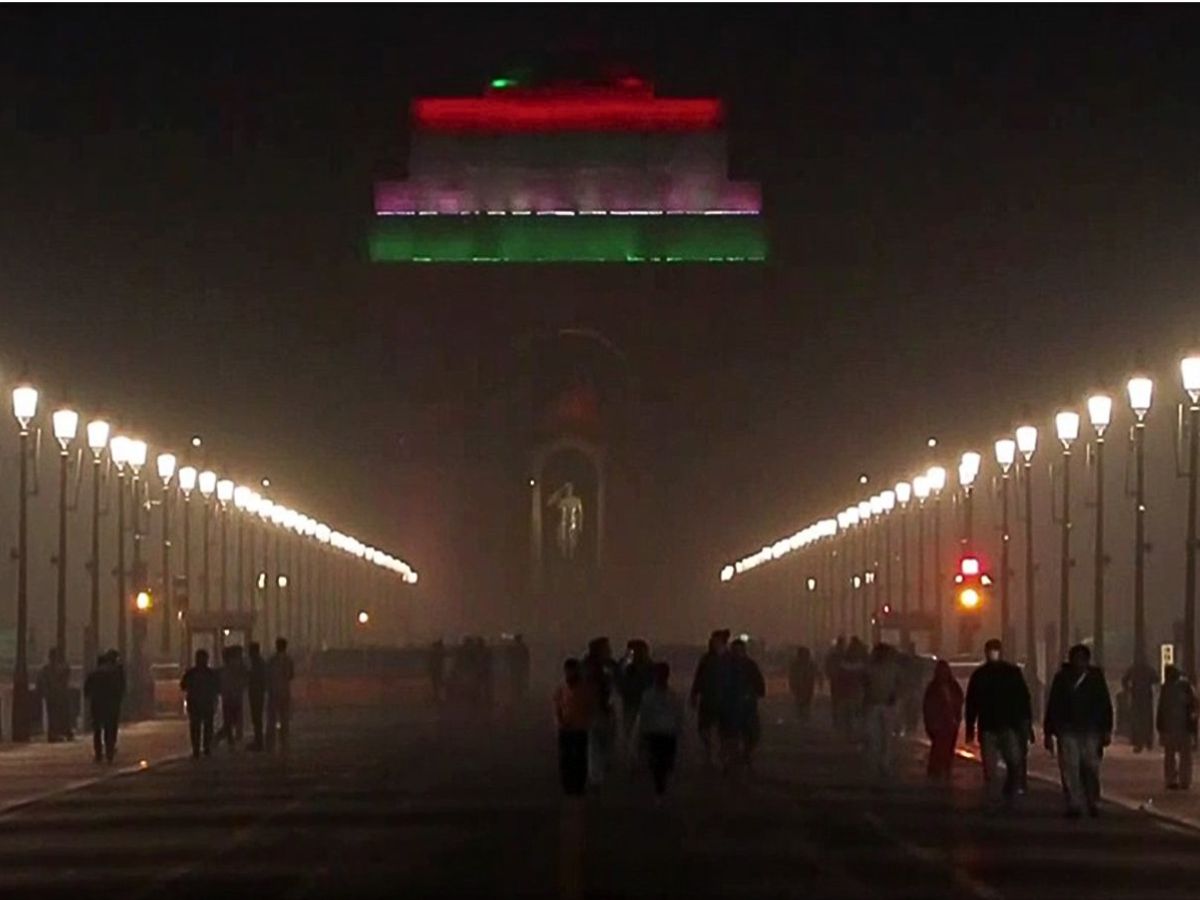
Delhi AQI: Delhi started off the day with toxic air, with its AQI touching 364 at 7 am well into the ‘Very Poor’ category. Several monitoring stations across Delhi recorded alarmingly high numbers: Anand Vihar at 401, ITO at 379, Najafgarh at 332, Narela at 377, Punjabi Bagh at 391 and Wazirpur at 400. Neighbouring cities such as Noida, Greater Noida and Gurugram also reported severe pollution levels.
Even with the series of mitigation measures, including the recent cloudseeding experiment to induce artificial rain, pollution levels continue to rise as Delhi enters peak winter smog season.
Reasons for Air Quality Getting Worse in Delhi
Meteorological factors and those related to the levels of emissions are contributing to the pollution spike. Low wind speed, temperature inversion and cool, stable air prevent pollutants from dispersing.
Vehicular emissions, industrial activities, and construction dust coupled with seasonal biomass burning contribute to higher levels of both PM2.5 and PM10. As winter conditions start to set in, the city’s pollution load gets trapped close to the surface and deteriorates the AQI.
How will the Volcanic Ethiopian Ash affect Delhi’s AQI?
The ash cloud from the recent Hayli Gubbi volcanic eruption in Ethiopia travelled thousands of kilometres and reached parts of western and northern India.
At present, the plume is passing at very high altitudes and it is likely to move across Delhi-NCR in the coming few hours.
Meteorologists have suggested, however, that the effect on pollution at ground levels should be minimal. Because the mass of ash is circulating in higher levels of the atmosphere, its near-ground effect remains limited.
Residents may notice a hazier sky, diffused sunlight, or slight rise in temperature, but a major spike in AQI is not expected owing to the ash. The primary impact is expected in aviation, with some flight delays already being reported due to reduced visibility and rerouted air paths.
What’s new in the New pollution-response framework?
In response to deteriorating air quality and recent judicial observations, the Commission for Air Quality Management has tightened Delhi-NCR’s action plan. The revised Graded Response Action Plan now triggers several restrictions earlier than before.
While earlier, the measures were applicable only when AQI touched the ‘Very Poor’ range, now these will be triggered the moment the air quality turns ‘Poor’.
These include staggered office timings, the option of work-from-home for certain departments, expansion of public transport services, stricter checks at construction sites, and earlier restrictions on diesel generators and industrial emissions.
What can residents do today?
With pollution levels hovering in the hazardous range, health experts advise:
- Avoid exercising outdoors during morning hours.
- Wear N95 or equivalent masks when going outdoors.
- Keep the windows closed during peak pollution times.
- If possible, use indoor air purifiers.
- Prefer public transport to decrease vehicle emissions. Monitor AQI updates throughout the day.