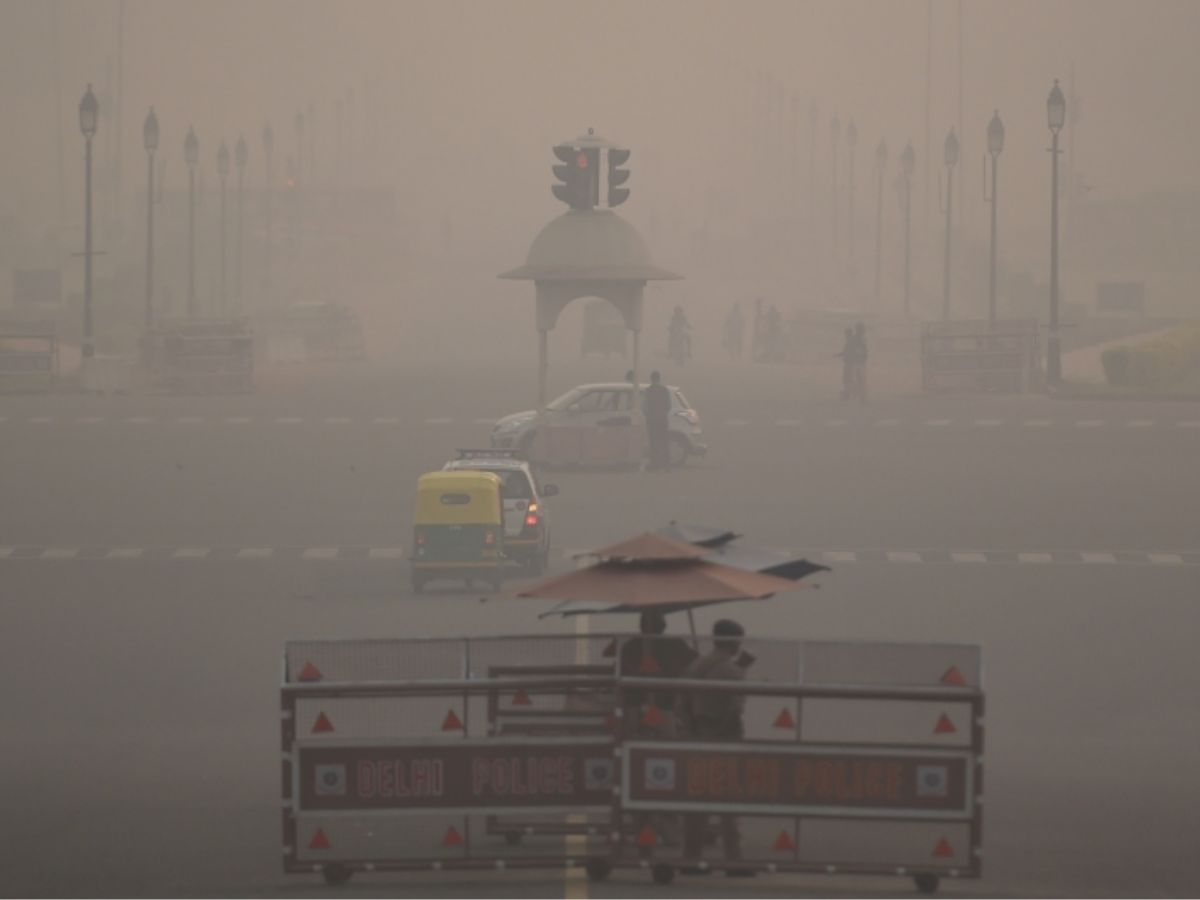
Delhi AQI: The national capital remained shrouded in a thick layer of toxic smog for the 13th day running on Wednesday as hazardous air quality continued to affect the city. Delhi’s overall AQI was recorded at 337, firmly in the “very poor” category, with 34 of the city’s 39 monitoring stations recording dangerous pollution levels and the remaining five registering “poor” air quality.
Air Quality in different areas of Delhi
Rohini remained one of the worst-hit localities with an AQI of 376. Other big hotspots included Delhi Technological University with 367, Anand Vihar with 364, Bawana with 382, Ashok Vihar with 364, Burari with 347, Alipur with 344, ITO with 360, and Dwarka with 361, all showing consistent deterioration, mirroring the acute and widespread nature of the pollution crisis.
Neighbouring Noida also reported similarly alarming readings: Sector 1 recorded an AQI of 355, Sector 62 logged 304, Sector 116 touched 372 and Sector 125 climbed close to the “severe” mark at 399. Greater Noida presented a mixed picture with Knowledge Park-III reporting a “poor” 290, while Knowledge Park-V reached a “very poor” 359. Ghaziabad continued to struggle too, with most stations reporting “very poor” levels.
Gurugram and Faridabad fared comparatively better but still fell under the category of “poor”, offering little comfort to the denizens of the larger Delhi-NCR region.
Why is Delhi’s Air Quality Refusing to Improve?
Multiple overlapping factors, according to experts, are responsible for the persistence of smog. Emissions from vehicles, industries, and construction dust are considered the largest contributors, while garbage burning and localized buildup of particulate matter add to the already toxic mix.
The geographical layout of the region essentially traps pollutants close to the surface, surrounded by plains and at the mercy of weak dispersive winds. In winter, the stagnant air, combined with low temperatures and inversion layers, prevents toxins from rising and dispersing but instead causes them to linger for days, if not weeks.
Although stubble burning in the neighboring states typically contributes to Delhi’s pollution in winters, this week the contribution has been very low. Yet, the air quality remains alarmingly poor, indicating that local emissions are dominating the pollution load currently.
Is the Weather Making Air Quality Worse?
Seasonal changes have aggravated the crisis. A combination of calm winds, shallow mixing heights, and lower temperatures has created ideal conditions for smog formation. Forecasts also indicate the presence of moderate fog, adding to the already limited visibility and trapping more pollutants near the surface.
But the recent eruption of the Hayli Gubbi shield volcano in Ethiopia’s Afar region earlier this week sparked concerns that the ash-laden air might drift toward India. Although the early model outputs suggested a possible impact over parts of northwestern India, the ash clouds shifted toward China instead, thus providing some relief from an additional source of pollution.
Will Delhi’s Air Improve Anytime Soon?
According to the forecast by the Air Quality Early Warning System, the pollution levels are expected to stay in the “very poor” category from November 26 till November 28. The conditions may fluctuate between “very poor” and “severe” in the next couple of days, with no significant relief likely in the near future.
With the haze persisting, health experts are continuing to advise residents – particularly children, elderly, and people with respiratory diseases to limit outdoor exposure, use masks, and rely on indoor air purifiers. People in Delhi-NCR are now bracing themselves for many more days of suffocating smog, awaiting a change in weather conditions to bring respite.