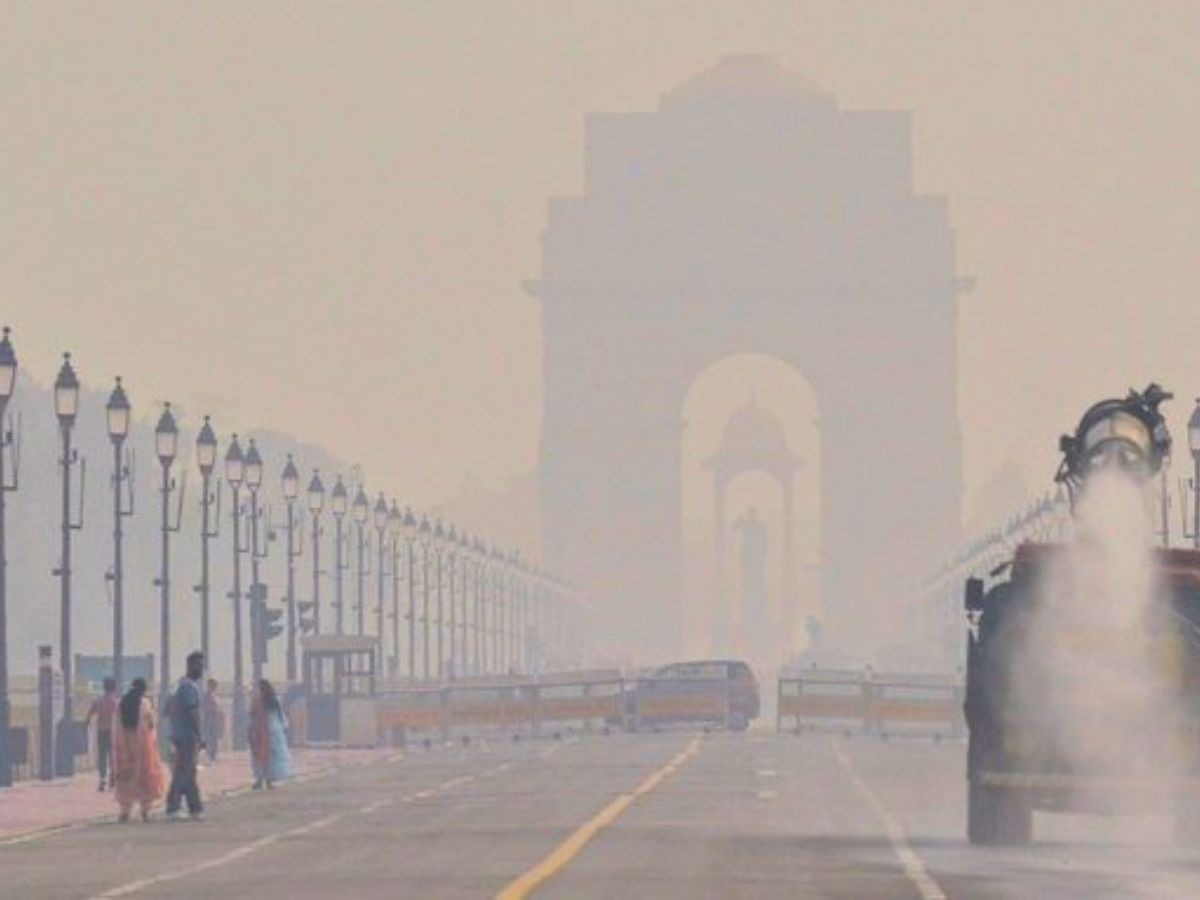
Delhi breathed toxic air once again on Saturday as the Air Quality Index (AQI) shot past 400. A thick layer of smog covered the city and pushed pollution levels into the ‘severe’ category. The Central Pollution Control Board (CPCB) recorded Delhi’s AQI at 419 at 11:00 AM, as wind speeds fell and temperatures dipped.
The national capital has now stayed near the severe mark for six straight days. There is still no sign of improvement despite the implementation of emergency measures under the Graded Response Action Plan (GRAP) Stage III.
Major Pollution Hotspots in Delhi With ‘Severe’ AQI
Several monitoring stations across the city registered AQI levels above 400. The Sameer app of the CPCB showed extremely toxic readings from multiple locations.
Key hotspots include:
- Wazirpur: 430
- Anand Vihar: 419
- RK Puram: 376
- Punjabi Bagh: 380
- Mundka: 405
- Jahangirpuri: 419
- Burari Crossing: 378
- Chandni Chowk: 366
- Bawana: 414
Lodhi Road reported the lowest AQI at 312, which still falls in the ‘very poor’ range. As per CPCB standards, an AQI of 301–400 is ‘very poor’, while 401–500 is ‘severe’.
GRAP-IV Measures to be Taken in Delhi
Officials say Delhi is now close to the threshold that triggers GRAP Stage IV, the highest emergency level under India’s pollution control plan. GRAP-IV comes into force when the AQI crosses 450 or when the air quality is expected to remain in the ‘severe plus’ range.
If activated, GRAP-IV will enforce the strictest curbs in the capital. These include a ban on all non-essential construction, restrictions on the entry of polluting trucks, closure of stone crushers and several industrial units, and possible suspension of app-based taxi services depending on the severity. Authorities may also consider closing schools and allowing government employees to work from home.
Officials say they are monitoring the situation hour by hour. They warn that if wind speeds remain low and pollution levels continue to rise, Delhi may experience GRAP-IV restrictions in the coming days.
Very Poor Air Expected for the Next 6 Days
The Indian Institute of Tropical Meteorology (IITM), Pune, predicted continued pollution. Its Decision Support System shows that Delhi will remain in the Very Poor category until 24 November. The air quality will stay very poor for the next six days.
GRAP Stage III restrictions have been active since November 11. The Commission for Air Quality Management (CAQM) ordered stricter curbs on construction, industrial operations and vehicle movement to slow emissions.
Centre Issues Health Advisory for Vulnerable Groups
The Centre issued a nationwide advisory for states and Union Territories this month. It warned of rising health risks linked to toxic air. The advisory highlights that children under five years, elderly people, pregnant women, patients with asthma or heart disease, low-income groups and outdoor workers face the highest risk.
MCD Intensifies Dust-Control Operations
The Municipal Corporation of Delhi (MCD) reviewed the worsening air pollution situation on Wednesday. The Standing Committee chairperson, Satya Sharma, asked the zonal deputy commissioners to enforce strict dust control measures.
She ordered mechanical sweeping machines to operate on all shifts and submit daily reports. She also directed officials to repair any breakdowns within 72 hours. Officers must clear loose soil, debris and accumulated dust from roads within 24 hours, according to Mint.
Experts Warn of Longer Toxic Winters Ahead
Environmental experts say Delhi’s pollution crisis may now extend beyond the usual winter months. They warn that early fog formation, increasing construction activity, and shrinking winter wind movement could make toxic conditions last longer each year.
They add that the overlap of weather patterns and persistent local emissions creates a “lock-in effect”, trapping pollutants for longer durations. Many experts fear that without aggressive year-round pollution control, severe AQI days may rise sharply in the coming years.