
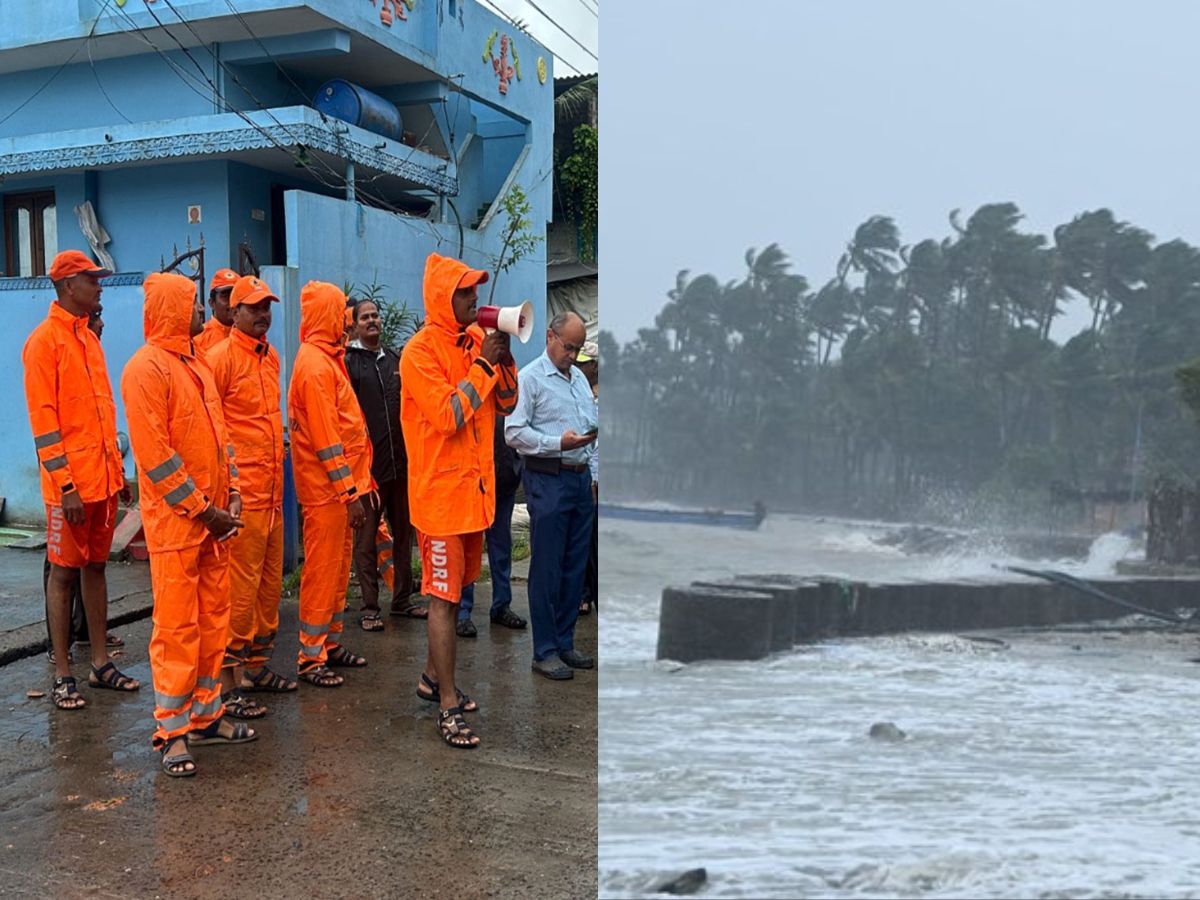
Tamil Nadu is preparing for Cyclone Ditwah, which is expected to bring heavy rain and strong winds this weekend. The National Disaster Response Force (NDRF) has deployed eight teams in vulnerable regions. Each team includes 30 trained personnel equipped for emergency response. Six teams are positioned across six districts in Tamil Nadu, while two teams are stationed in Puducherry.
Officials said that more teams from nearby states will join the operation if needed. Each NDRF team carries essential equipment, including rubber boats, first aid kits, communication tools, diving gear, and tree-cutting machines. The force has also deployed four trained detection dogs that can sense human presence under debris after a disaster.
Cyclone Ditwah: CM Reviews Preparedness Measures
On Thursday (27th Nov), Chief Minister MK Stalin chaired a high-level meeting with senior officials to review the state’s preparedness. He directed the Revenue, Police, Fire and Rescue, Fisheries, and Health Departments to work together and “serve the people” during the cyclonic event.
Cyclone Ditwah: IMD Tracks Storm Movement
According to the Indian Meteorological Department (IMD), Cyclone Ditwah is currently positioned between the Tamil Nadu and Sri Lanka coasts. It is less than 100 km northwest of Batticaloa, Sri Lanka, and about 500 km south of Chennai. The cyclone is expected to move north-northwest and approach the North Tamil Nadu–Puducherry–South Andhra Pradesh coast by early Sunday (30th Nov).
The IMD has issued heavy rainfall warnings for Friday and Saturday. Districts including Nagapattinam, Thanjavur, Tiruvarur, Pudukottai, Cuddalore, Villupuram, and Chengalpattu are likely to receive heavy to extremely heavy rain.
On Sunday, Chennai and nearby districts may experience intense showers. Fishermen have been advised not to venture into the sea due to very rough conditions. Wind speeds near the coast may reach up to 100 kmph as the cyclone approaches land.
Cyclone Ditwah: Part of a Larger Monsoon Pattern
Cyclone Ditwah is part of the typical weather activity seen during the Northeast monsoon, active from mid-October to mid-December. This season accounts for more than 50% of the annual rainfall in Tamil Nadu and coastal Andhra Pradesh.
Weather systems forming in the Bay of Bengal often bring heavy rain and sometimes lead to flooding. However, the rains also help recharge groundwater and refill reservoirs, which are crucial for the region.
Power and Communication Teams on Standby
In addition to emergency response teams, the Tamil Nadu government has placed power and communication restoration units on standby. Officials said that the state aims to ensure a quick recovery if the cyclone disrupts electricity lines or mobile networks.
The Tamil Nadu Generation and Distribution Corporation (Tangedco) has arranged special squads to attend to outages, while telecom operators have kept backup generators and mobile towers ready for rapid deployment.
Authorities have also identified shelters in coastal districts and started shifting vulnerable families to safer locations as a precaution.