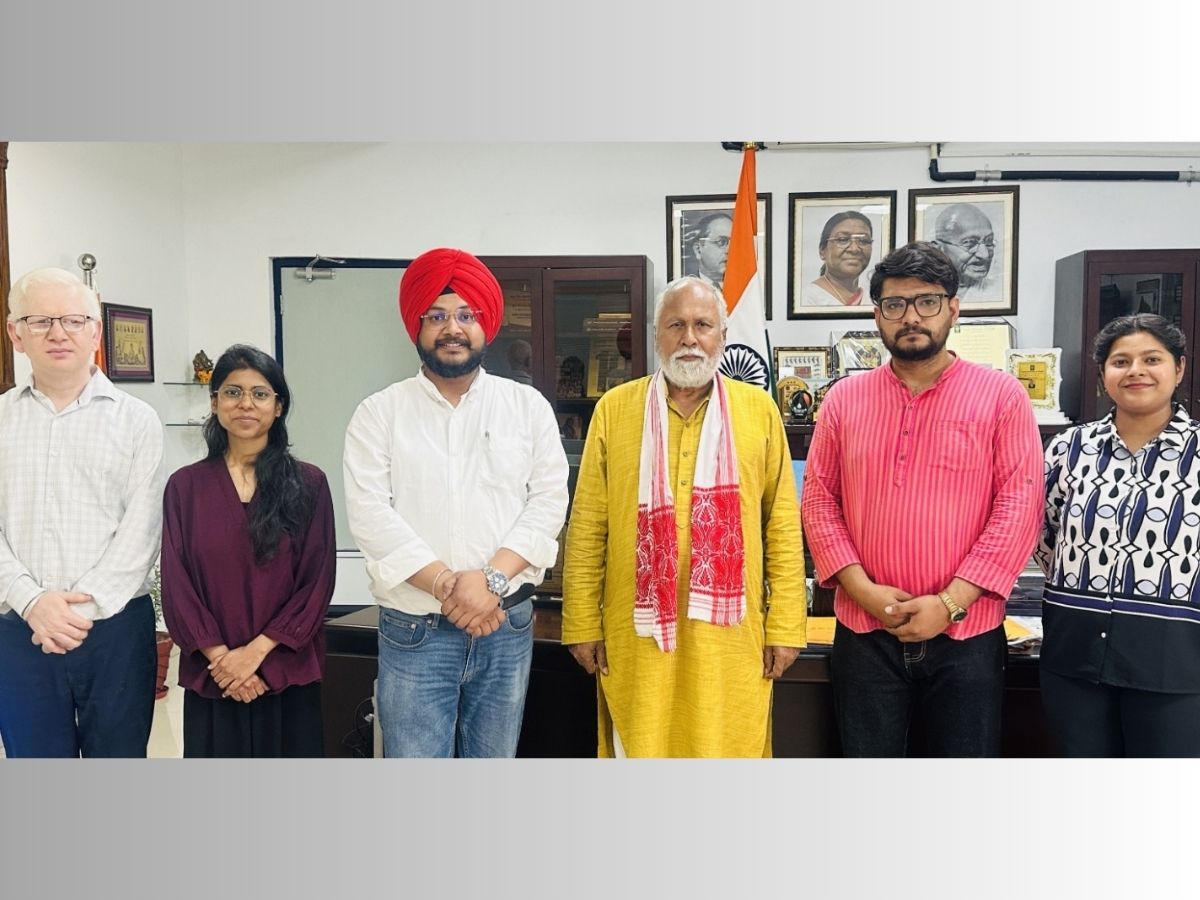
In a significant achievement for Indian social sciences and health communication research, the Central University of Punjab (CU Punjab), Bathinda, has received global recognition after its pioneering study on cancer misinformation was formally accepted by the International Agency for Research on Cancer (IARC), the specialized cancer research body of the World Health Organization (WHO).
The research titled Cancer Misinformation in the Digital Age: A global synthesis of research trends and key themes have been selected for presentation at the prestigious IARC@60 conference to be held in Lyon, France. The study originates from the Interventions Design and Effects Lab (IDEL) of the department of mass communication and media studies at CU Punjab. The acceptance marks an important milestone for the university, positioning it among institutions contributing to global public health communication research.
The selection is particularly noteworthy because the research successfully passed the highly demanding scientific consensus review, regarded as one of the most rigorous evaluation processes in global academia. Unlike conventional peer review, this process requires a panel of international oncologists, epidemiologists and researchers to reach a unanimous agreement on the study’s methodology, reliability of data and relevance for public health policy.
Under the leadership of Vice Chancellor Raghavendra P. Tiwari, the university has been actively promoting globally competitive research through its vision of “Research for Resurgent Punjab.” The Vice Chancellor described the recognition as a validation of the institution’s research ecosystem that encourages interdisciplinary collaboration between social sciences and health studies.
The research project is spearheaded by Rubal Kanozia, Associate Professor and Head of the department of mass communication and media studies. According to Dr. Kanozia, the IDEL lab focuses on developing evidence-based strategies to address the growing problem of misinformation related to cancer and other health issues in the digital age.
The study’s primary work has been carried out by PhD scholar Naman along with researcher Ritu Arya, with contributions from other IDEL Lab members including Robin Jindal, Ragendu and Raktima Gupta. Their research analyses patterns of misinformation circulating on digital platforms and aims to support the development of effective communication strategies for health agencies.
With the acceptance of the study, the findings are expected to contribute to policy discussions and global strategies related to health literacy and combating misinformation. The development also strengthens CU Punjab’s position as an emerging research hub for health communication and infodemiology in South Asia.